Worth remembering
- The Lysefjord is roughly 40 kilometres long and up to 422 metres deep, and the inner reaches are usually much flatter than the open sea outside them.[1]
- Take tablets before you board, sit low and toward the middle of the boat, keep your eyes on the horizon, and step out on deck for fresh air when you feel off.
- The Stavanger electric fjord cruise to Lysefjord and Preikestolen runs 3.5 hours, from US$75, with an audio guide in English and Norwegian.[2]
- Wind against tide is what makes a crossing uncomfortable, and free cancellation up to 24 hours in advance keeps a rough forecast from spoiling your plans.[2]
- Preikestolen rises 604 metres above the fjord, so low cloud can hide the plateau while the water below stays flat and the boat keeps moving.[3]
- Top choice Electric fjord cruise from US$75 Duration3.5 hours[2]Rated4.62 from 9,730 reviews[2]On boardWheelchair accessible[2]CancellationCancel up to 24 hours ahead[2] Check availability
- Low-emission cruise from US$76 Duration2.5 hours[4]Rated4.81 from 2,256 reviews[4]On boardWheelchair accessible[4]CancellationCancel up to 24 hours ahead[4] See this tour
- Lysefjord RIB tour from US$126 Duration2 hours[5]Rated4.92 from 1,526 reviews[5]On boardSkip the ticket line[5]CancellationCancel up to 24 hours ahead[5] See this tour
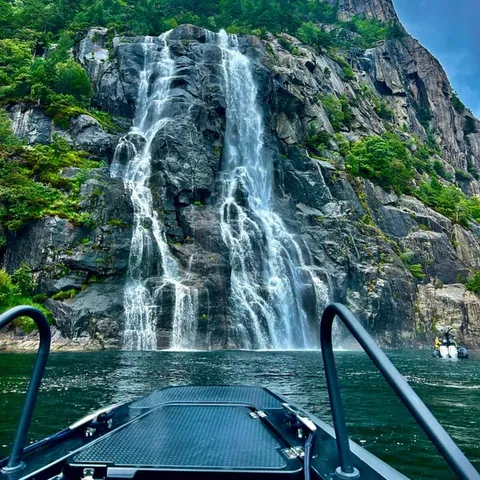
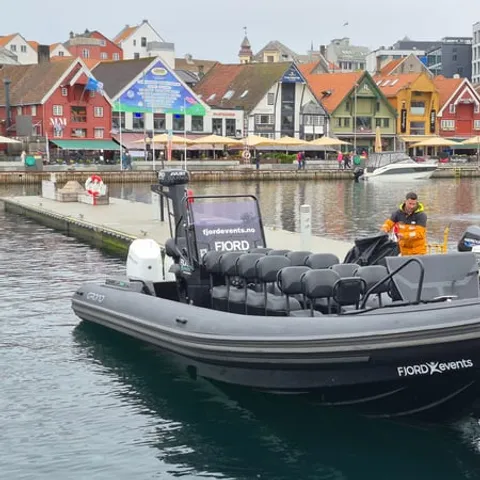
Flørli is popular for its 4444 steps right up the mountain - the longest wooden stairway in the world.
Is the fjord crossing worth it in rough or grey weather?
Before you board
- Warm layers: the air on the water is colder than in town, so bring a windproof jacket and a hat with a strap.
- Seasickness tablets and bands: take them well before departure, not once you already feel unwell.
- Booking: reserve now and pay later, with free cancellation[2]
- Getting there: cruise ships berth at Skagenkaien, Strandkaien or Skansekaien in Vagen[6]
On the water
- Listen to the briefing: know where the life jackets are stowed and how they fasten.
- Deck rules: sit rather than stand when the boat rolls, and keep one hand on a rail as you move.
- Budget: the electric fjord cruise starts from US$75[2]
- Step-free access: the electric fjord cruise is wheelchair accessible[2]
How the Lysefjord crossing usually feels
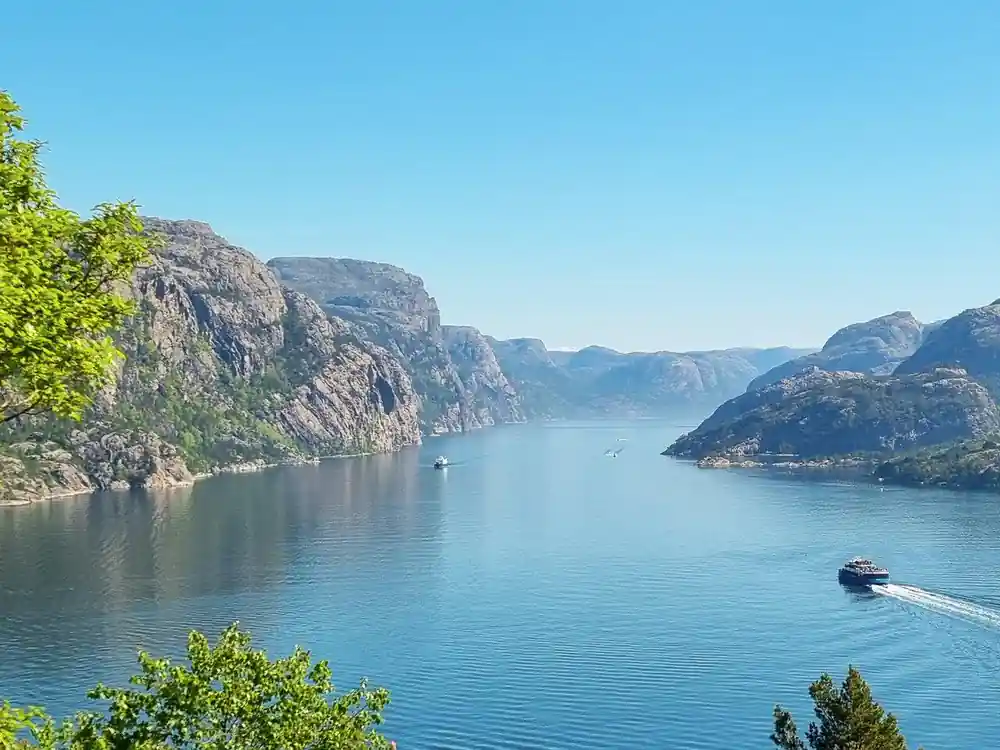
The Lysefjord is a deep, narrow trench cut into the mountains, roughly 40 kilometres long and up to 422 metres deep, and it shallows to only 13 metres near Oanes and Forsand.[1] Deep water and steep walls make for a still, dark surface along much of the run, and once the boat is inside the fjord the wind has far less room to build waves. On many days you can stand on deck in a jacket, watch the walls slide past, and barely notice any motion at all.
The bumpy part, if there is one, comes earlier, in the open water between Stavanger and the mouth of the fjord, where swell from the North Sea can catch the boat broadside. That is where anyone who is going to feel queasy usually feels it first, and it is also where the trip feels most like a boat trip. It helps to know how long each option takes: the electric fjord cruise to Lysefjord and Preikestolen runs 3.5 hours,[2] the Rodne Lysefjord cruise from Stavanger lasts 3-3.5 hours,[7] and a Lysefjord RIB safari is a two-hour boat trip.[8]
One thing worth knowing is how the water behaves. The fjord was formed during the last Ice Age, about 10,000 years ago, when colossal glaciers carved deep valleys into the landscape,[9] and the result is a channel with almost no shallows to trip up a swell. Waves need shallow water to stand up, and inside the Lysefjord there is very little of it. That is why a cruise can feel almost lake-like while the open coast a few miles away is white with spray.
Sea conditions, safety, seasickness
Motion is smallest low down and close to the middle of a boat, and largest high up at the front and back. If you know you are sensitive, head for the lower deck and sit roughly amidships instead of claiming the front row for photographs. Facing forward and watching a fixed point on the horizon settles the inner ear far better than looking down at a screen, and the horizon is easy to find here because the fjord walls give you a steady line to follow.
It pays to prepare before you step aboard. Seasickness tablets and bands work best taken well before departure rather than once you already feel ill, and a light breakfast sits better than a heavy one. If you would rather stay inside, the electric cruise has a cabin and an audio guide in English and Norwegian,[2] so you can follow the commentary without standing on deck. The same boat is wheelchair accessible,[2] which makes it one of the easier fjord options for anyone who cannot move around a pitching deck.
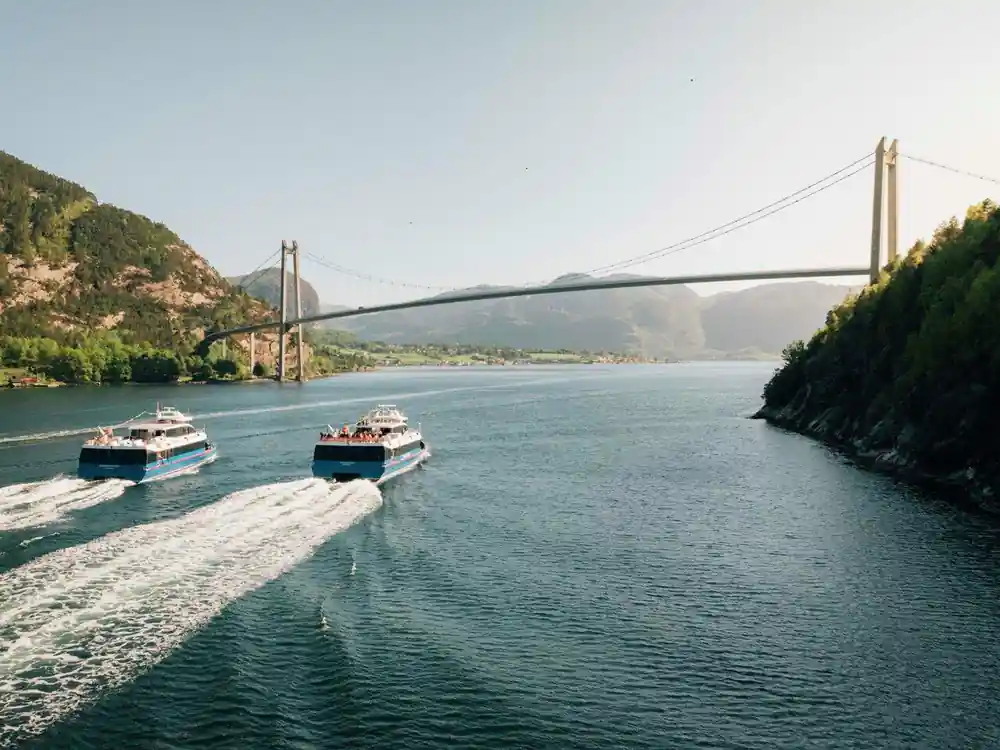
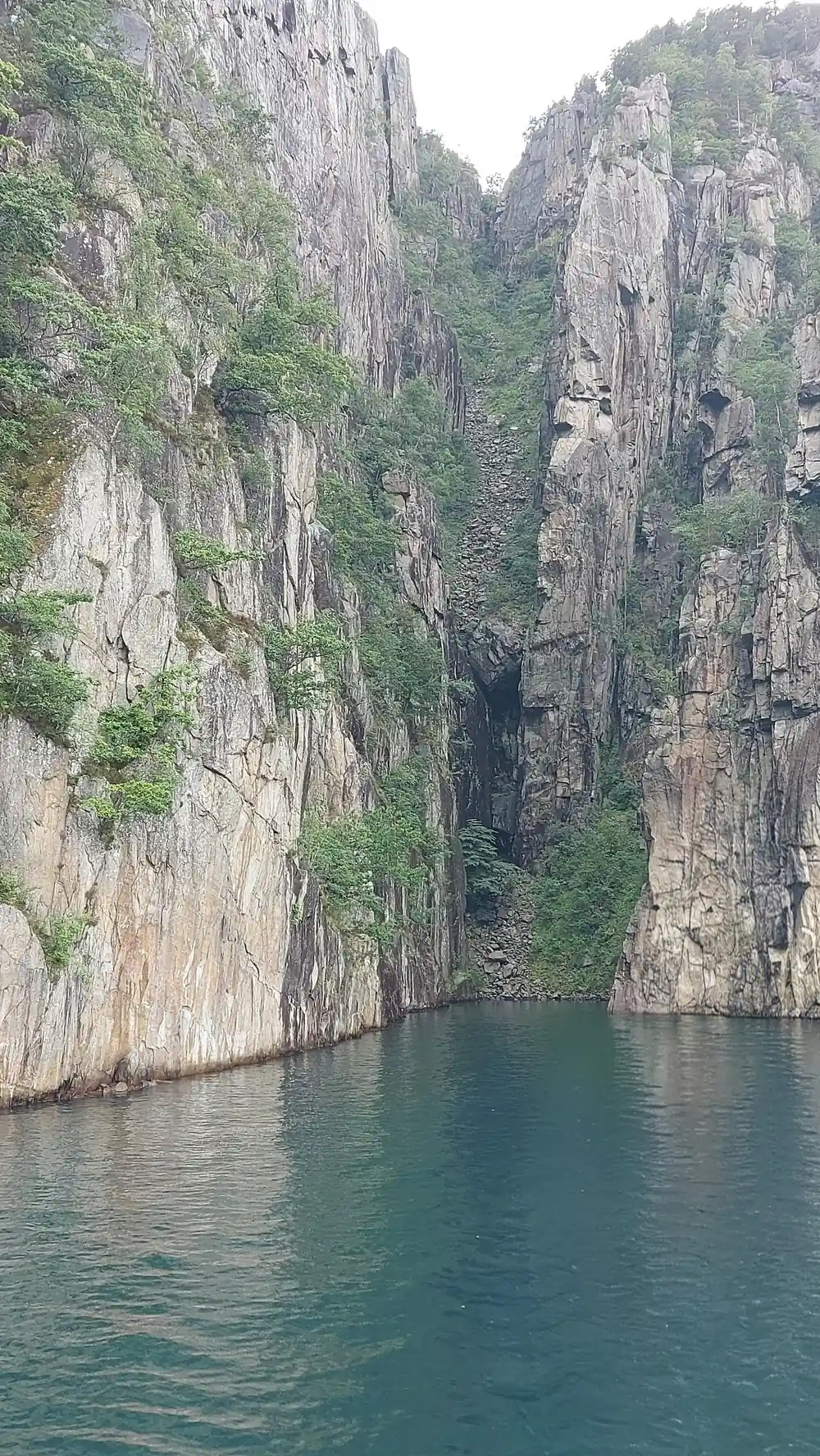
The fjord narrows near Fantahala, where the walls close in and the water turns deep green.
The safety briefing and life jackets before departure
Every commercial boat on the fjord begins with a short briefing before it casts off, usually in English and often in more than one language. Crew point out where the life jackets are stowed, how they fasten, where the exits are, and what to do if someone goes overboard. Listen properly even if you have heard it many times before: the layout differs from boat to boat, and the locker on a small catamaran is not in the same place as on a RIB.
Practical habits matter more than nerves. Keep one hand free for a rail whenever the boat is moving or turning, sit down while it manoeuvres away from the quay, and leave gangways and stairs clear for the crew. Children should stay within arm's reach on open decks, and anyone who starts to feel unwell should tell a crew member rather than quietly disappearing below. Crews would far rather bring you water and a seat in the fresh air than deal with a problem once it has grown.
When wind forces a turn-back or a route change
Wind against tide is what makes the fjord uncomfortable, and the exposed stretch is usually the water between Stavanger and the fjord entrance, plus the shallow sill near Oanes and Forsand where the fjord shallows to only 13 metres.[1] When the forecast is poor, skippers have a few options. They can shorten the route and stay in the lee of the islands, run a slower line closer to shore, or cancel the departure altogether. The call is usually made in the morning, once the actual wind is known.
Most operators build flexibility into the booking, which matters on a coast where the weather changes between breakfast and boarding. The electric fjord cruise to Lysefjord and Preikestolen offers reserve now and pay later, plus free cancellation up to 24 hours in advance for a full refund.[2] If a route is shortened you may miss one stop, but the fjord itself, the cliff and the waterfall all sit inside sheltered water, so a modified route rarely feels like a wasted trip.
from US$75
The electric fjord cruise to Lysefjord and Preikestolen runs 3.5 hours from Stavanger and is wheelchair accessible.[2]
How fog changes your view of Preikestolen and Hengjanefossen
Preikestolen rises 604 metres above the Lysefjord,[3] and cloud can sit across that height like a lid, hiding the plateau completely while the water below stays glassy and still. A Preikestolen fog day is simply a different kind of day on the fjord. The boat continues along the wall at Fantahala and past the cliff base,[2] you hear water and birds before you see anything, and when the cloud lifts for a minute the rock appears far higher than photographs suggest.
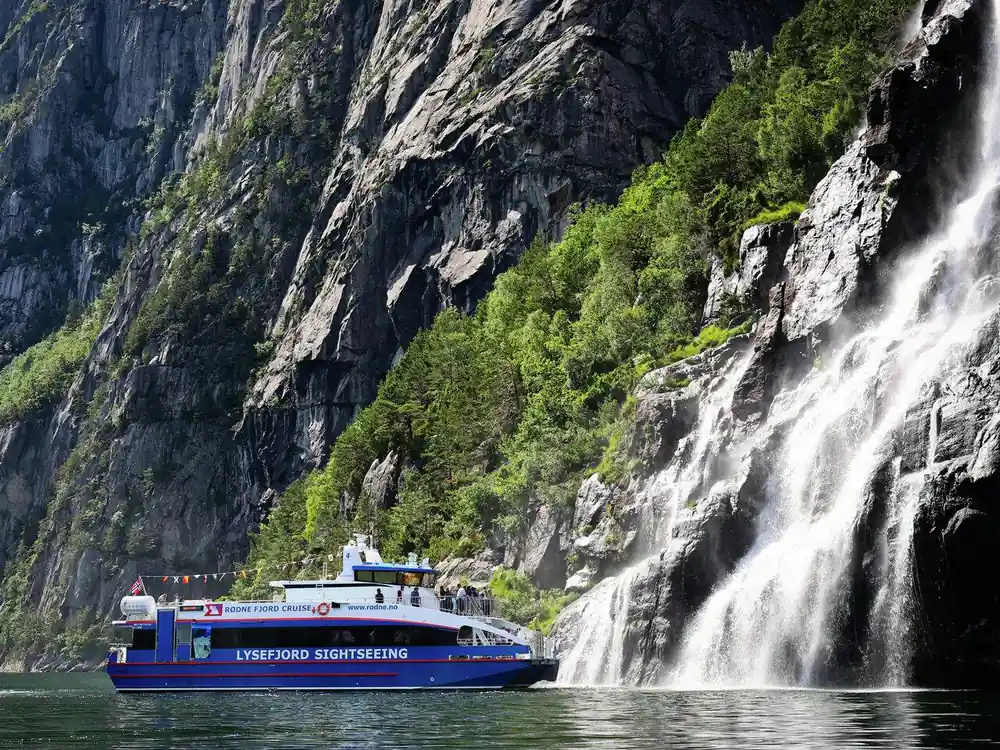
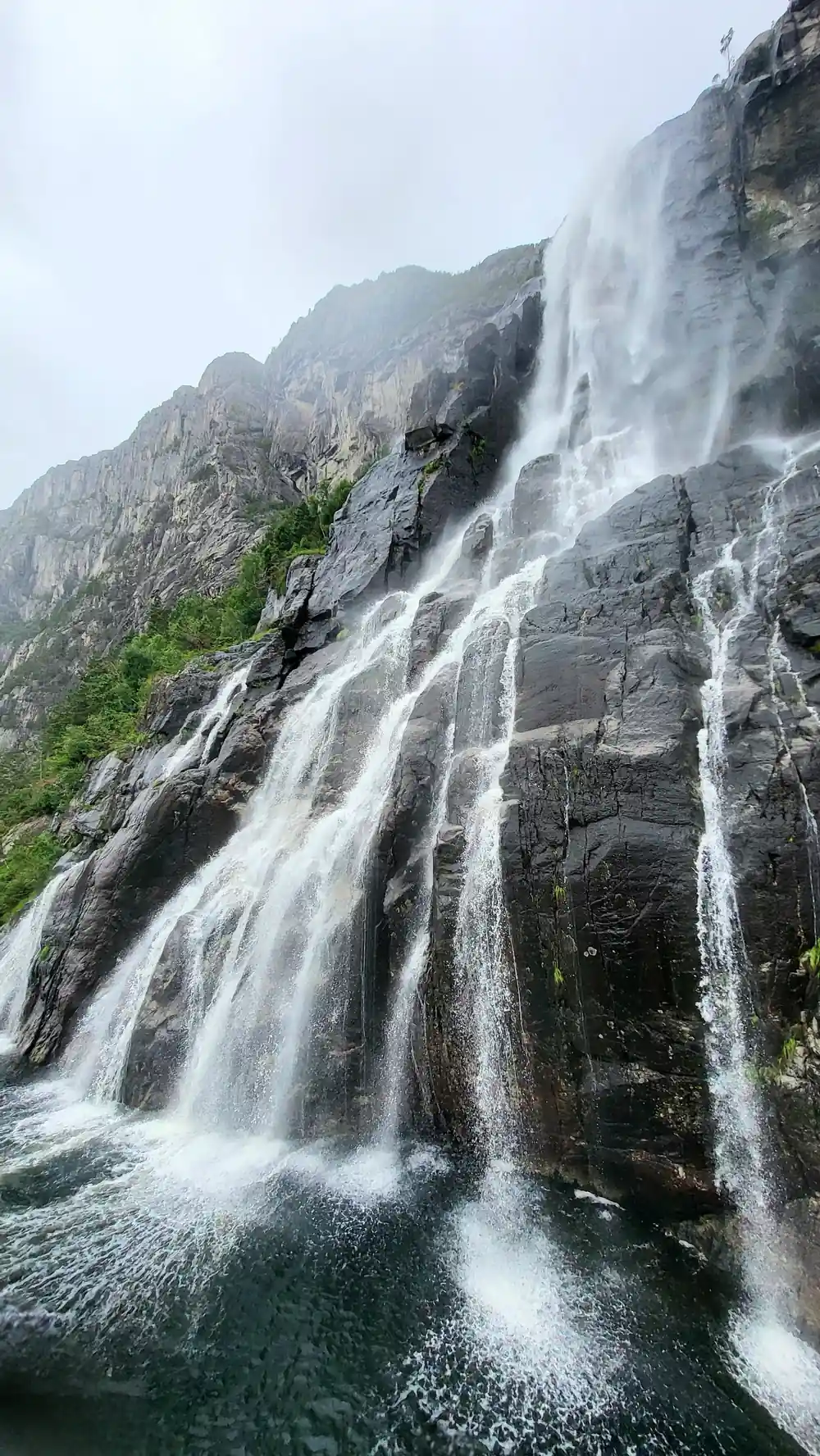
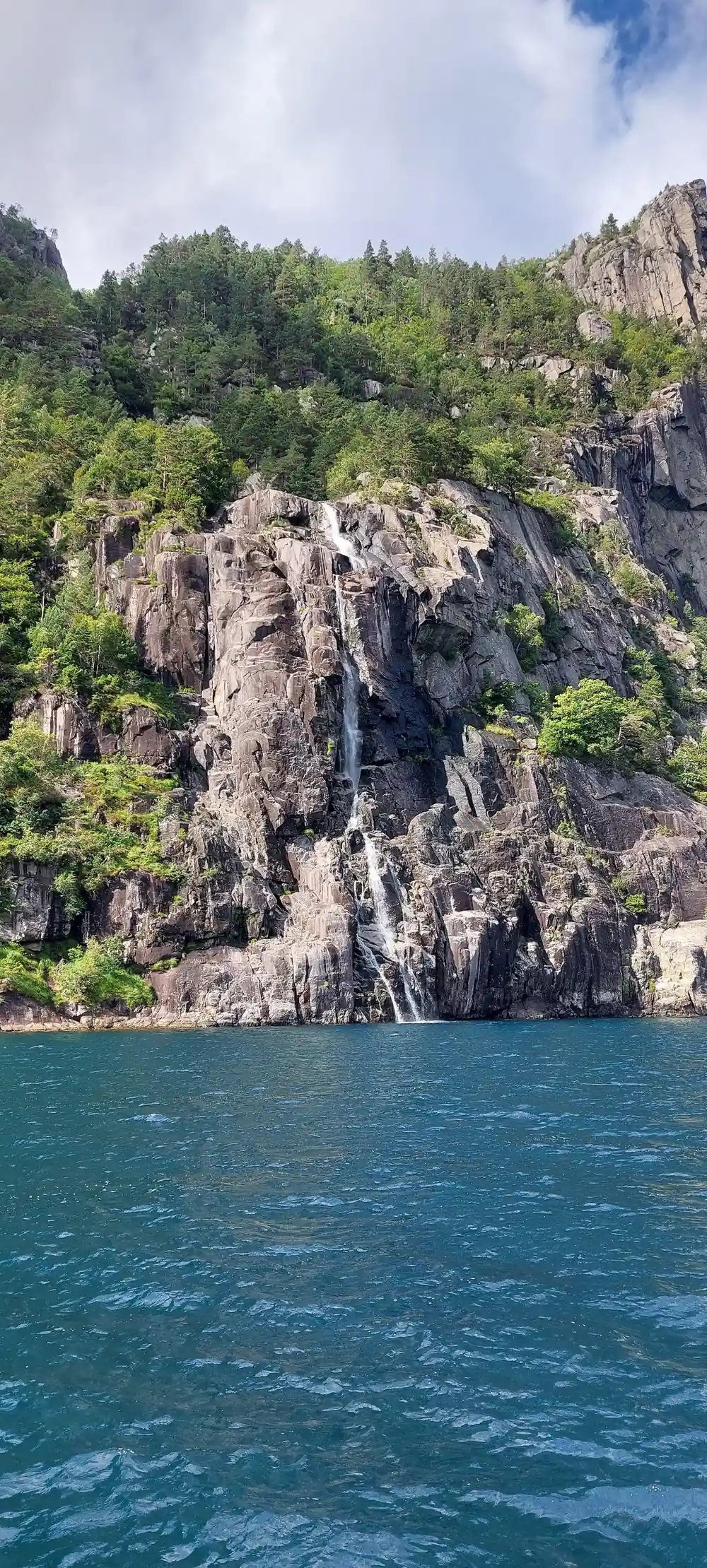
Hengjanefossen, the waterfall the cruise stops at, is reported at around 400 metres high,[10] and in mist it is at its most theatrical: a white streak in grey air, loud long before it is visible. Photography needs patience rather than equipment. Wipe your lens, keep the camera out of the spray, and shoot the wake, the dripping rock and the small boats below instead of a summit you cannot see. Step back inside for the audio guide when the deck turns wet, then out again when the cloud thins.
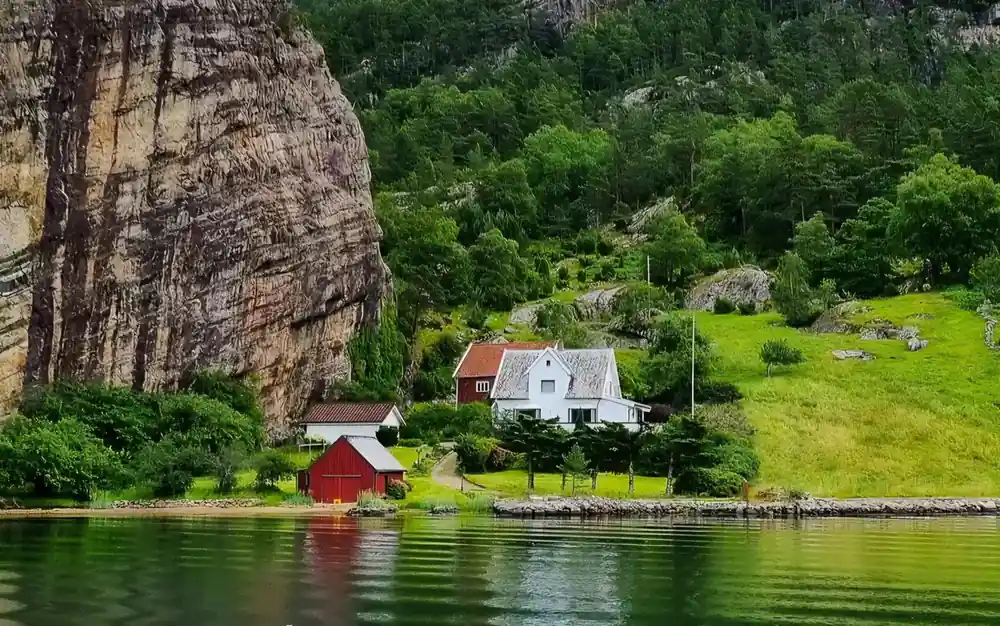
Fog also changes the sound of the trip. The engine note flattens, the crew speak more quietly, and the waterfall arrives as a low roar before anything appears through the grey. Keep an eye on the water for birds and for the small farm buildings along the shore, which often sit in a patch of clear air below the cloud line. If the summit stays hidden all day, the fjord walls, the cliff face and the waterfall are still there to see.
Sun deck safety when the swell picks up
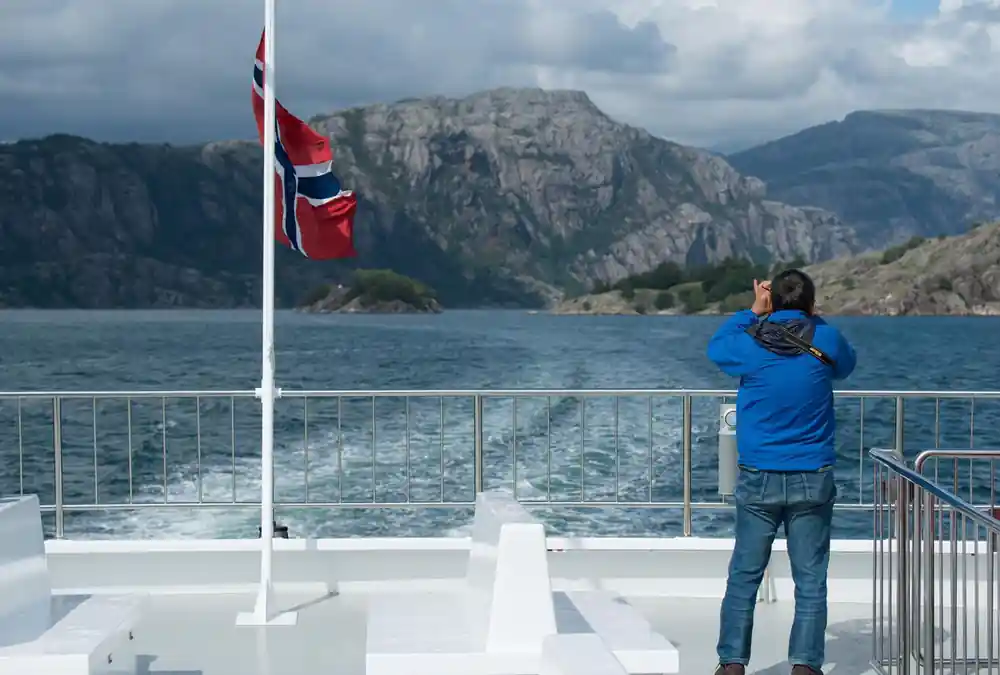
The open deck is the best place to be if you feel sick and the worst place to be careless. Sit rather than stand when the boat rolls, keep at least one hand on a rail as you move, and never climb on benches, railings or the bow for a photograph. Wind on deck is stronger than it looks from behind the cabin glass, so a hat with a strap and a jacket that fastens properly are worth more than an extra jumper in your bag.
Tell the crew if you use a wheelchair or have limited mobility. The Stavanger electric fjord cruise to Lysefjord and Preikestolen is wheelchair accessible,[2] and staff can suggest where to sit so the deck stays manageable and the gangway is easy. If conditions turn rough the crew will ask everyone to come inside, and it is worth going without argument: the cabin has windows, the commentary carries on, and you still watch the walls close in on both sides as the boat runs up the fjord.
What to expect during the approach to Preikestolen
The approach is the part people remember. The fjord narrows, the walls steepen, and the boat slows as it comes close to the cliff, so you can look straight up at the rock and, on a clear day, at the tiny line of people on the plateau above. The 3.5-hour cruise from Stavanger calls at Fantahala, the Pulpit Rock and Hengjanefossen Waterfall,[2] and it asks nothing of you beyond standing up and holding a rail.
Prices start from US$75 for the electric cruise,[2] and the same listing is rated 4.62 from 9,730 reviews,[2] with transport scored 4.7 and value for money 4.3.[2] If you also want the view from the top, the hike to Preikestolen is less than 10km (6.2 miles) long with an elevation gain of just over 600m and takes about 3 to 4 hours to complete.[11] The trail is open year-round,[12] so a morning on the water and an afternoon on the path is possible in most seasons.
Practical planning is simple. Boats leave from Stavanger, and cruise ships berth at Skagenkaien, Strandkaien or Skansekaien in Vagen,[6] so passengers arriving by ship are already in the right part of town. If you are staying longer, the Lysefjord is 41 miles (66 km) from Stavanger by road and the drive takes around an hour and a half,[13] which puts the trailhead and the viewpoints within easy reach of a day trip.
How long Lysefjord boat trips last
From prices in US dollars for Lysefjord boat trips
From prices as listed:[2],[4],[5].
When to book your fjord crossing
Plan the crossing
Check the forecast
Look at wind and wave height for the hour you sail. The inner fjord can be calm while the open coast is rough.
Take tablets early
Seasickness medicine works best taken before departure. If you are unsure, ask a pharmacist in Stavanger the day before.
Dress for spray
Windproof jacket, warm layer, hat with a strap. Deck wind is stronger than anything you feel in the harbour.
Sit low and midship
Choose a seat low down and near the middle of the boat, face forward, and keep your eyes on the horizon.
Keep the camera handy
Fog, spray and cloud lift without warning, and the cliff and waterfall appear fast. A cloth for the lens helps.
See Preikestolen and Hengjanefossen from the water
from US$76Reserve now & pay later