Worth remembering
- The electric cruise from Stavanger takes 3.5 hours and calls at Fantahala, Preikestolen and Hengjanefossen waterfall.[1]
- Less than 10 km with an elevation gain of just over 600 metres, and about 3 to 4 hours from trailhead to clifftop and back.[2]
- The Lysefjord is 41 miles (66 km) from Stavanger, and the drive takes around an hour and a half.[3]
- Cruise tickets start from US$75, with reserve now and pay later and free cancellation up to 24 hours in advance for a full refund.[1]
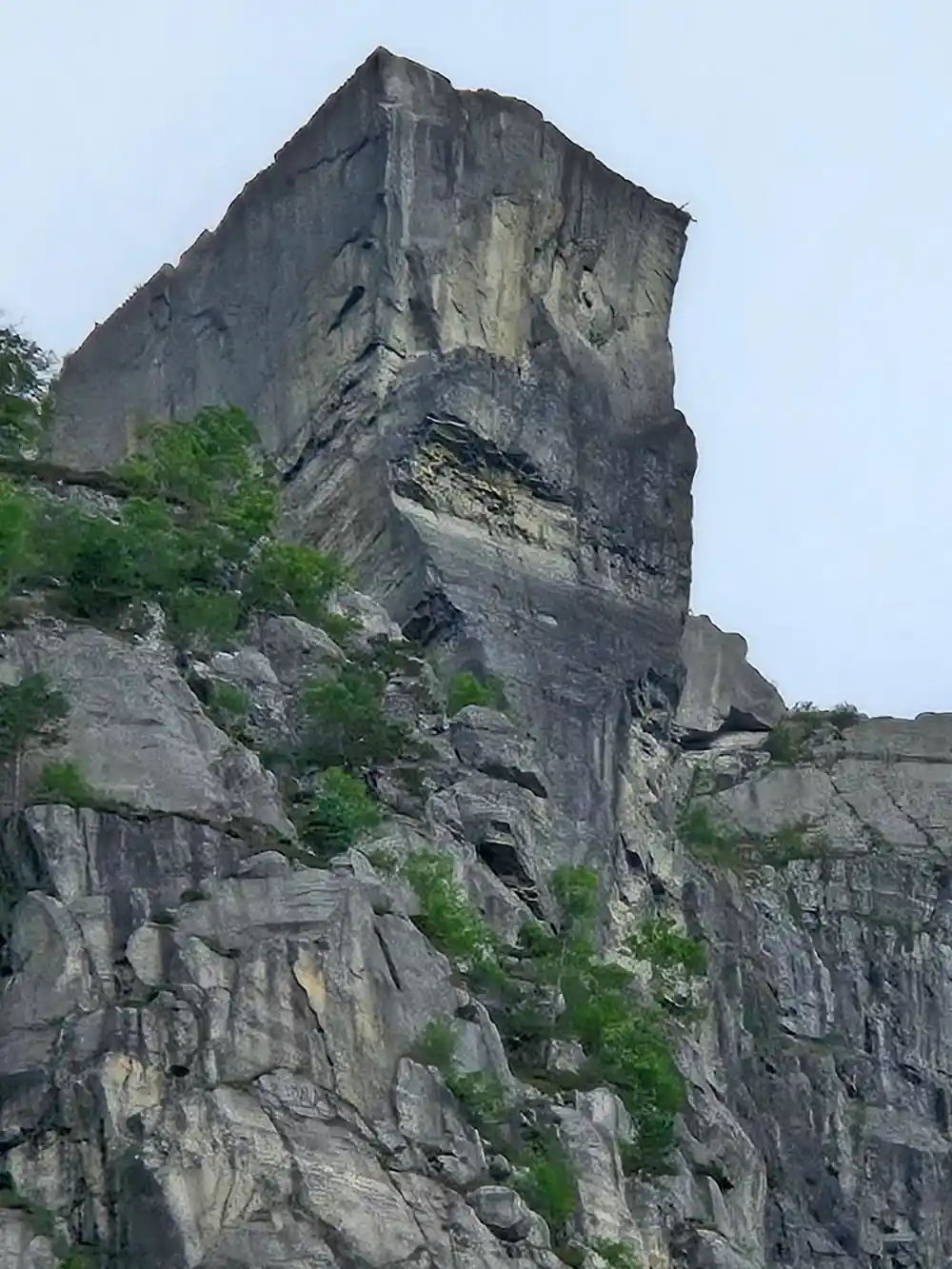
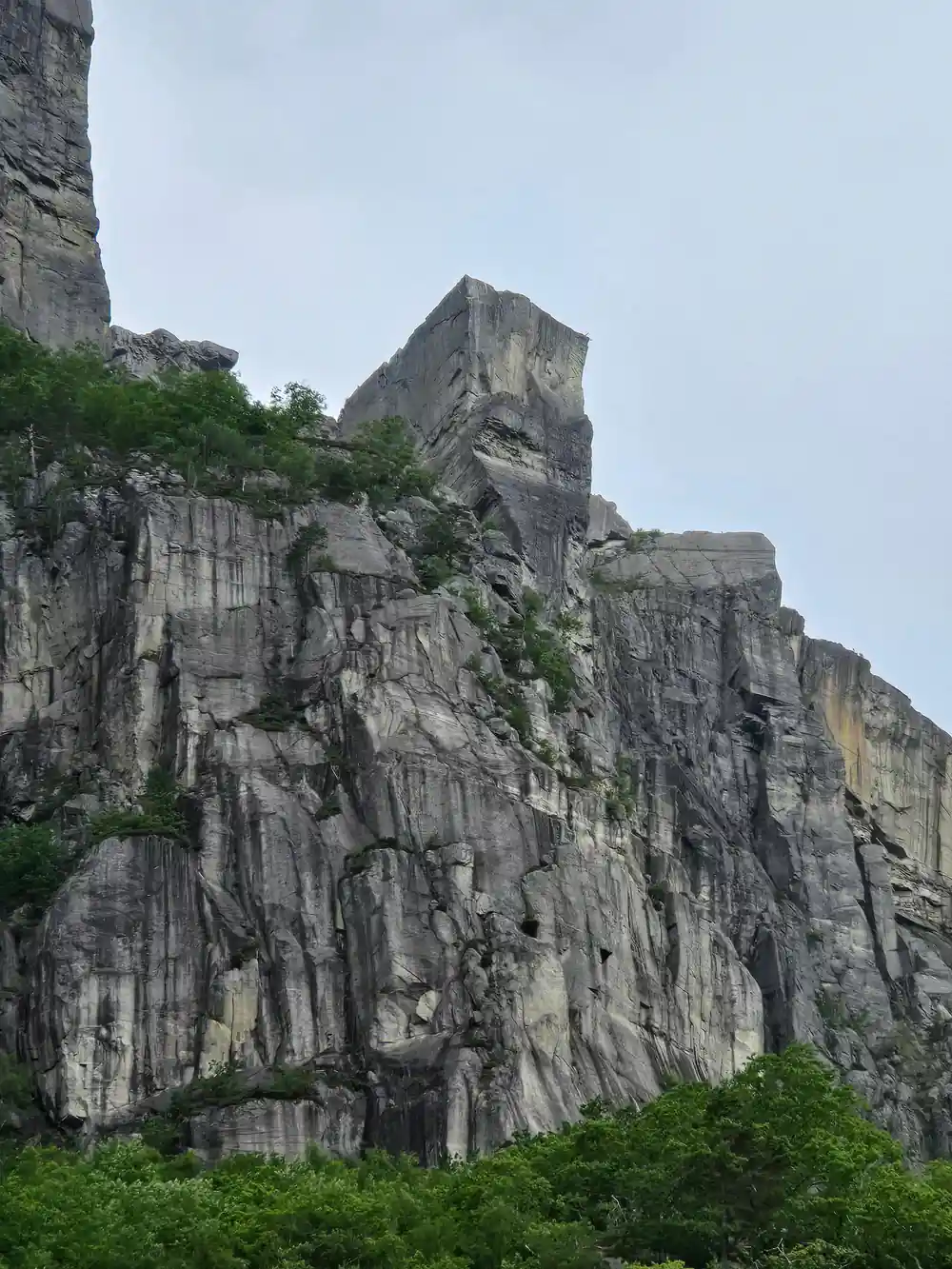
- Preikestolen (the Pulpit Rock) rises 604 metres above the Lysefjord in Ryfylke, which is why the view from the water feels so different.[4]
- Top choice Electric fjord cruise from US$75 Duration3.5 hours[1]Rating4.62 from 9,730 reviews[1]CancellationFree up to 24 hours in advance[1]SuitsSeeing the rock from the water Check availability
- Low-emission cruise from US$76 Duration2.5 hours[5]Rating4.81 from 2,256 reviews[5]CancellationFree up to 24 hours in advance[5]SuitsA quiet, low-emission sail See this tour
- Preikestolen hike from US$168 Duration6 hours[6]Rating4.80 from 439 reviews[6]CancellationFree up to 24 hours in advance[6]SuitsStanding on the clifftop See this tour
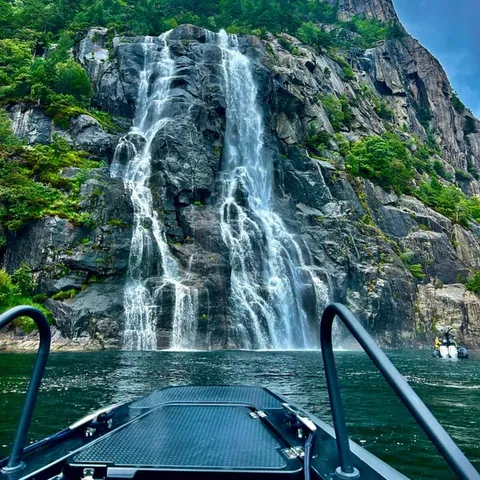
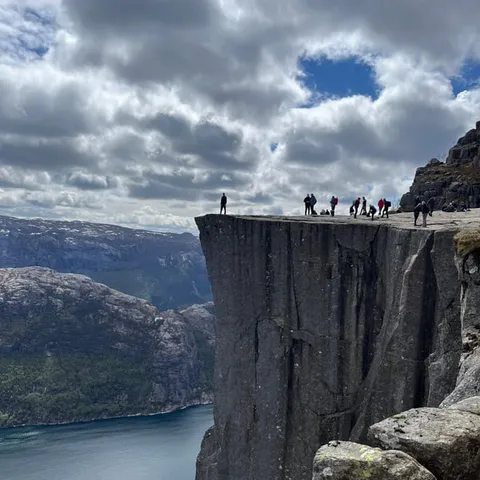
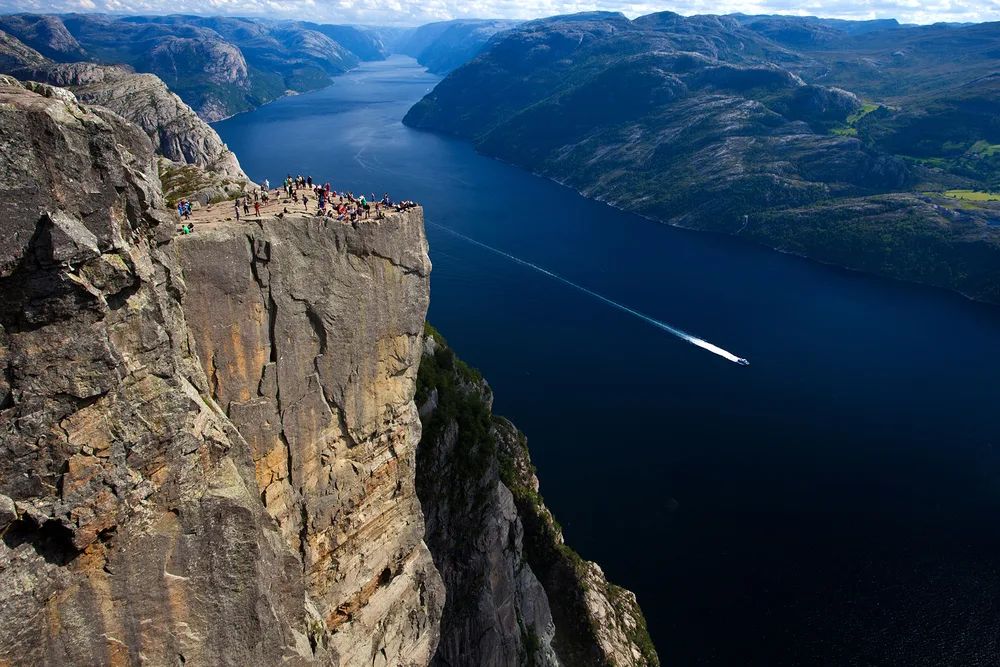
Preikestolen (the Pulpit Rock) rises 604 metres above the Lysefjord in Ryfylke, and is one of Norway's biggest attractions.
Our verdict on a cruise and hike day
Pre-booking checklist
- Choose your date early if you are travelling in the busy summer weeks
- The fjord cruise and the hike are separate bookings, so plan both
- A car or a shuttle bus covers the inland leg to the trailhead
- A cruise-only ticket and a cruise and hike combo price differently
On the day
- Take a warm layer, the air over the fjord is cooler than in town
- Sunglasses and sunscreen for the open deck, even under cloud
- Grippy boots for wet rock, stone steps and wooden boardwalk
- Keep well back from the edge on the unfenced clifftop
Cruise and hike: how one day fits together
Preikestolen looks different from every angle, and on one day you can see it from two of them: from the water, and from the clifftop itself. The electric cruise from Stavanger takes 3.5 hours.[1] The walk from the trailhead to the cliff and back takes about 3 to 4 hours.[2] Add the drive between Stavanger and the Lysefjord area, which is around an hour and a half,[3] and you have a full day that still works if you start early and keep the boat trip and the walk in separate halves.
Order matters. The boat leaves from Stavanger's inner harbour, where cruise ships berth at Skagenkaien, Strandkaien or Skansekaien in Vågen,[7] so you can reach the quay on foot from the city centre. The walk starts inland at the Preikestolen trailhead, well away from the fjord. Cruise in the morning and walk in the afternoon if you want softer light on the cliffs, or walk first and finish with a quiet ride back through the fjord, when the water is often glassy and the boat is calm.
The electric fjord cruise from Stavanger
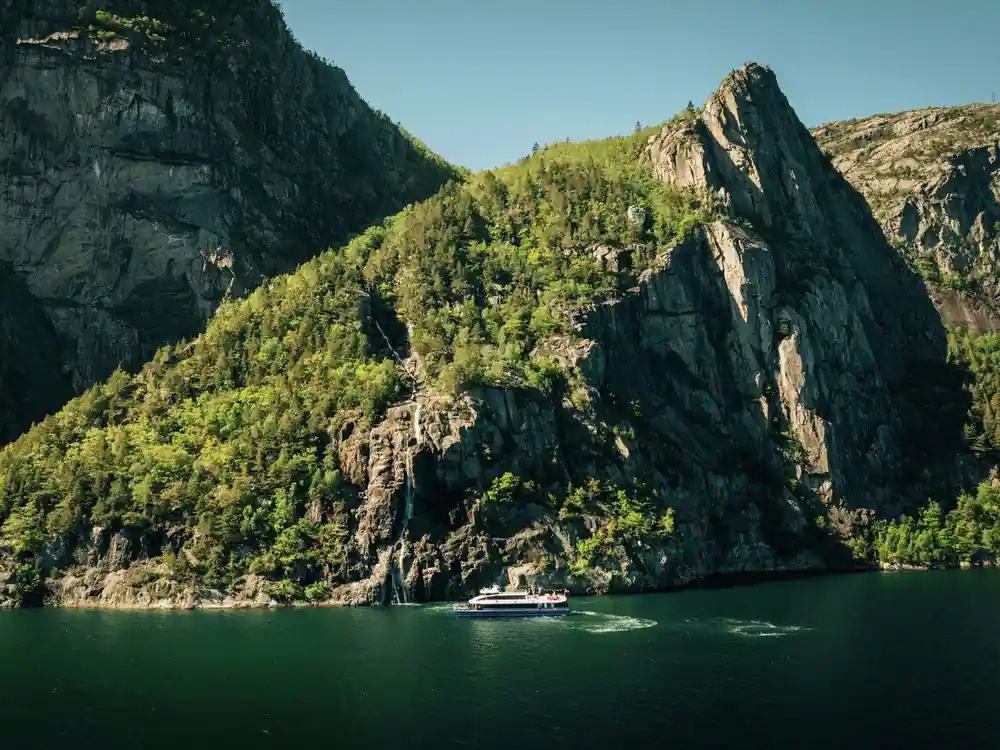
The catamaran runs on battery power, so there is no engine rumble under your feet, just water sliding along the hull and birds calling from the cliffs. The route is a 3.5-hour silent, hybrid-electric fjord cruise from Stavanger,[8] and the listing for this boat gives the same running time.[1] Audio guides come in English and Norwegian,[1] and the crew point out landmarks as the fjord opens up, which helps if the landscape is new to you.
Cruise tickets start from US$75.[1] You can reserve now and pay later, and cancellation is free up to 24 hours in advance for a full refund.[1] The boat is wheelchair accessible.[1] There is indoor seating as well as open decks, so a grey or drizzly day does not spoil the trip. Take a warm layer even in midsummer: the air over the fjord is cooler than in Stavanger, and colder still once the boat picks up speed in open water.

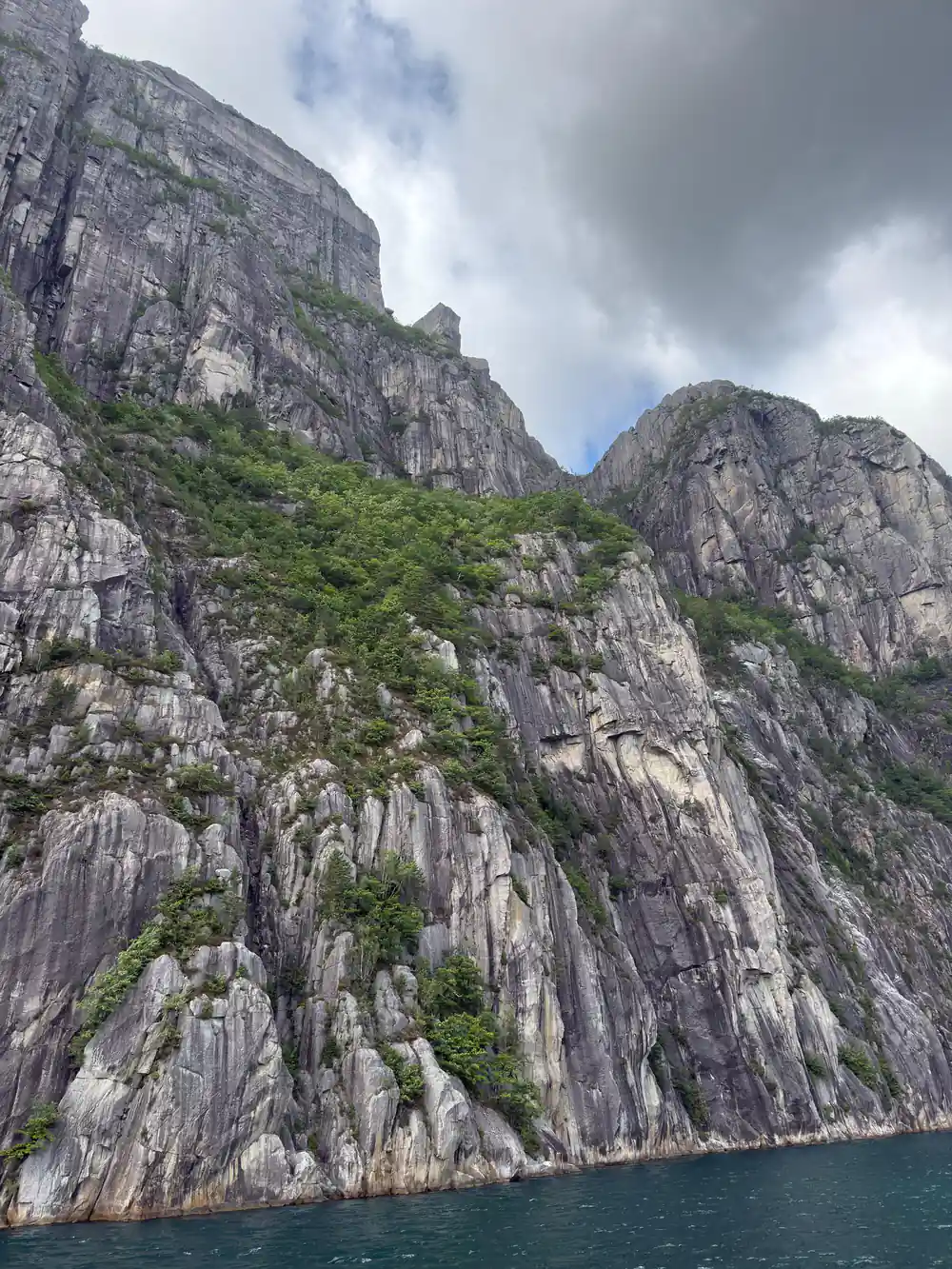
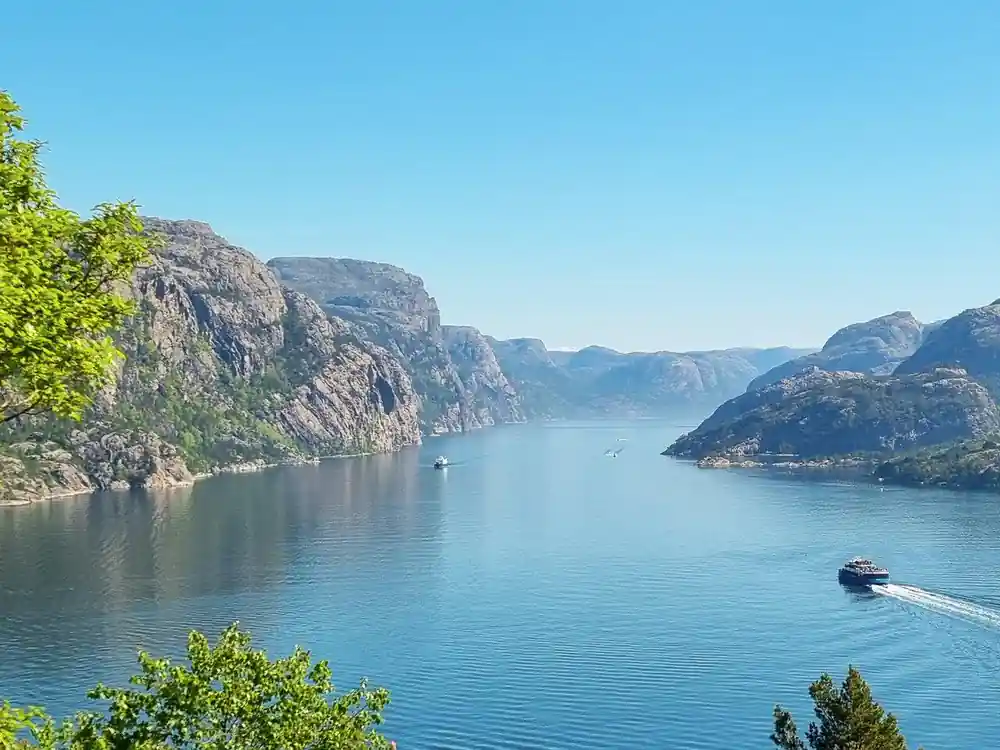
The Lysefjord narrows between steep walls on the way to Preikestolen.
What you see from the water
The Lysefjord is roughly 40 kilometres long and up to 422 metres deep, though it shallows to only 13 metres near Oanes and Forsand.[9] It was formed during the last Ice Age, about 10,000 years ago, when colossal glaciers cut deep valleys into the landscape.[10] At the narrowest points the walls drop straight into the water, and Preikestolen sits 604 metres above the fjord in Ryfylke.[4] From the deck the rock looks small, and up on the shelf the boat below looks smaller still.
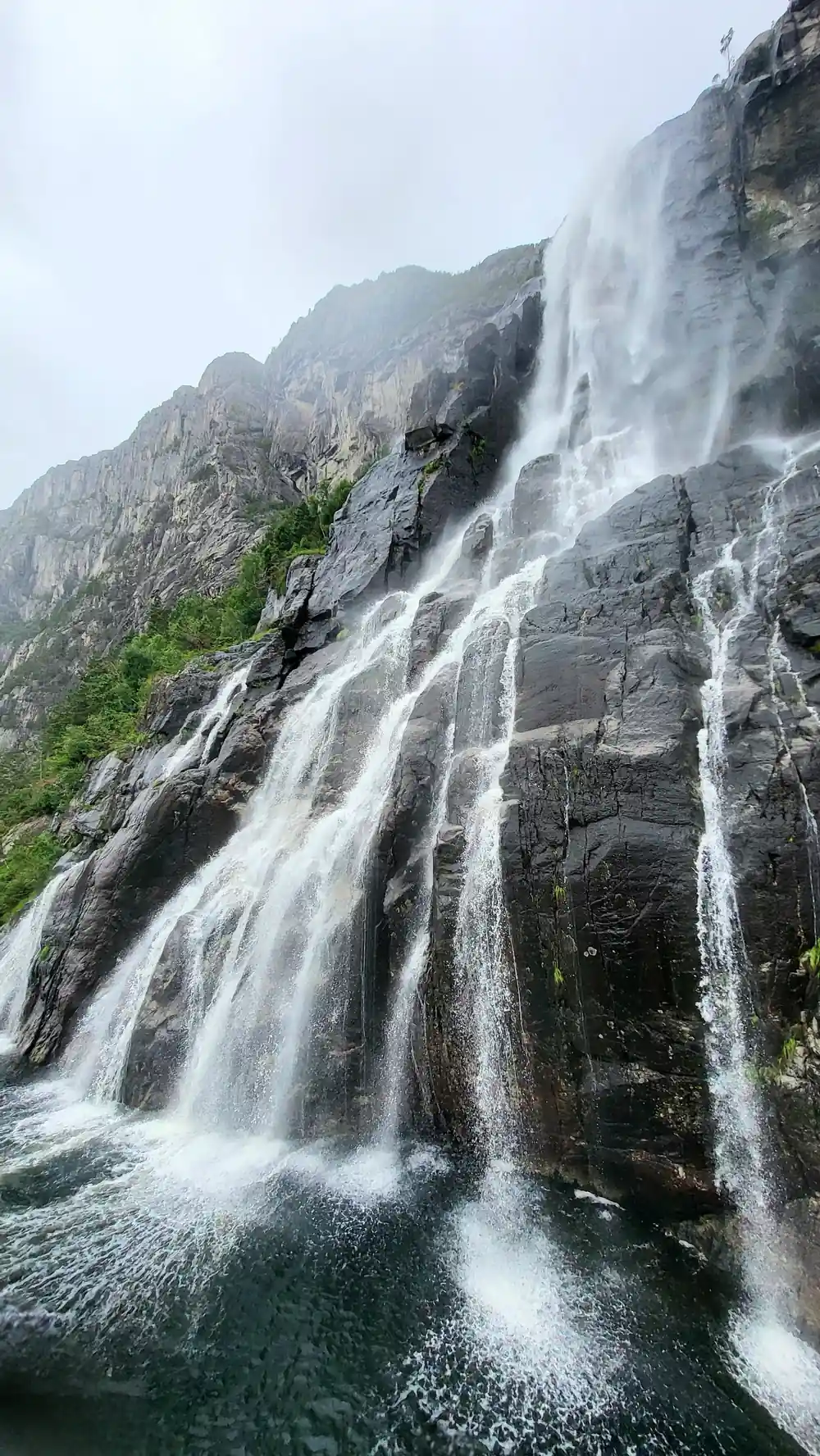
The route on this cruise calls at Fantahala in Rogaland, Preikestolen and Hengjanefossen waterfall.[1] Hengjanefossen is worth being on deck for. A komoot user tip puts its fall at around 400 metres,[11] and from the water you can take in the whole drop in one view. Keep your camera ready on both sides of the boat as you move along the fjord, and step inside now and then to warm your hands.
Reaching the Preikestolen trailhead
Stavanger to the Lysefjord is 41 miles (66 km) by road, and the drive takes around an hour and a half.[3] The trailhead for Preikestolen sits inland from the fjord, up a turning past Jørpeland, and the road climbs as it goes. You can drive yourself, take a shuttle bus in season, or join a hike with a local guide.[6] Whichever you choose, leave more time than you think you need: parking, toilets and the first steep section all eat into the morning.
There is a year-round local ferry on the Lysefjord, run by Kolumbus, with calls at Lysebotn and other small stops along the way.[12] It is a working boat rather than a sightseeing trip, and it is a lovely way to see the fjord slowly if you have a spare day. If you arrive by ship, you will berth at Skagenkaien, Strandkaien or Skansekaien in Vågen,[7] the city-centre inner harbour, which puts you in the middle of Stavanger rather than at an out-of-town terminal.
from US$75
A silent electric catamaran cruises past Fantahala, Preikestolen and Hengjanefossen waterfall.[1]
The hike: distance, climb and time
The Preikestolen hike is less than 10 km (6.2 miles) long, with an elevation gain of just over 600 metres, and it takes about 3 to 4 hours to complete.[2] The path is well worn but never level for long. Rock slabs, stone steps and long stretches of wooden boardwalk carry you up through birch and pine, and the fjord opens out behind you as you gain height. Trainers will do on a dry day, but boots with grip make the long descent kinder on your knees.
At the top the cliff rises 604 metres above the Lysefjord in Ryfylke,[4] and the shelf is wide enough to walk out on and sit for a while. The trail is open year round, including during the winter off-season,[13] though snow, ice and short daylight turn it into a different outing. If you have another day spare, the Kjerag hike is a strenuous 12 km trail ending at Kjeragbolten, a boulder wedged 1,000 metres above the Lysefjord.[14]
Footwear and gear for the hike
Treat the walk as a mountain day rather than a city stroll. Boots with ankle support and a deep tread are worth the weight, especially after rain, when the slabs near the top turn slick and the boardwalk goes greasy. Wool or synthetic socks beat cotton, and a spare pair in your bag is a small luxury at the end. Break your boots in before you travel and keep your pack light: everything you carry goes up and comes back down with you.
Norwegian weather turns quickly, so pack a waterproof shell and a warm midlayer even when the morning looks clear. Carry more water than you expect to need, plus something to eat at the top, and tuck a small head torch into your bag for spring and autumn, when daylight can run short. For the cruise, a soft bag is easier to stow than a hard case, and a hat or thin scarf makes the open deck comfortable once the boat is moving.
The boat and the mountain ask for different kit on the same day. On the water you want windproof layers, gloves and something dry to sit on; on the trail you want grip, free hands and a pack that sits close to your back. If you are doing both, plan to travel light uphill and leave the extras where you are staying.
Safety, crowds and timing your day
Preikestolen has no fence and no barrier at the edge, so the last few metres deserve full attention. Keep children close, stay off wet or icy rock near the lip, and walk away from a photo if the crowd at the edge is pressing in. Wind is the other thing to watch: it can arrive quickly on an exposed shelf, and it makes the boat deck feel colder on the same trip.
For a single day, give the cruise one block of time and the walk another, and leave slack for the transfer between them. The electric cruise takes 3.5 hours.[1] A morning sailing and an afternoon walk is a comfortable shape, with lunch in between. If you would rather have one booking that covers both, the Pulpit Rock RIB safari and hike combo runs for 7 hours.[15] Either way, check the forecast the night before and be ready to swap the order.
If you can stretch the trip, the Lysefjord rewards a second day. The Flørli stairway has 4444 steps up the mountainside,[16] the Lysevegen road from Lysebotn winds through 27 hairpin bends,[17] and Nordic Paddling runs private guided kayak tours for groups of up to 12 people.[18] For a night close to the water, The Bolder offers architecturally unique cabins in Lysefjorden designed to minimise environmental impact.[19]
How long the main Lysefjord options take
What the different ways to see the fjord cost
US dollar from-prices on GetYourGuide listings.[1][5][6][15][20]
When to book a cruise and hike day
Doing both in a single day
Book the boat
Pick a cruise time that leaves you a clear half day for the walk, and note the meeting point in Stavanger.
Plan the transfer
Work out how you will reach the Preikestolen trailhead, by car, by shuttle bus or with a guided group.
Walk to the clifftop
Start with water, a snack and grippy boots, and allow the full walking time plus breaks for photos.
Back to Stavanger
Leave the trailhead with daylight to spare and keep the evening free for the harbour and a hot meal.
Watch the weather
Fjord weather shifts fast. Check the forecast the night before and be ready to swap the order of the day.
Book the electric fjord cruise from Stavanger
from US$76Reserve now & pay later