Worth remembering
- From Stavanger the boat calls at Fantahala in Rogaland, Pulpit Rock and Hengjanefossen Waterfall, all within a 3.5-hour round trip.[1]
- You are on the water for 3.5 hours, and Brim Explorer describes this style of fjord cruise as silent and hybrid-electric.[1][2]
- Wheelchair accessible, with an audio guide in English and Norwegian, and a way to see Preikestolen from below without hiking.[1]
- Fares are from US$75, it is rated 4.62 from 9,730 reviews, you can reserve now and pay later, and cancellation is free up to 24 hours ahead.[1]
- Preikestolen rises 604 metres above the Lysefjord, and from the water you look straight up at it.[3]
- Top choice Electric fjord cruise from US$75 Duration3.5 hours[1]Rating4.62 from 9,730 reviews[1]Audio guideEnglish, Norwegian[1]NotesWheelchair accessible[1] Check availability
- Low-emission fjord cruise from US$76 Duration2.5 hours[4]Rating4.81 from 2,256 reviews[4]Audio guideAudio guide included[4]NotesWheelchair accessible[4] See this tour
- RIB tour to Lysefjord from US$126 Duration2 hours[5]Rating4.92 from 1,526 reviews[5]Audio guideLive guide: Norwegian, English[5]NotesSkip the ticket line[5] See this tour
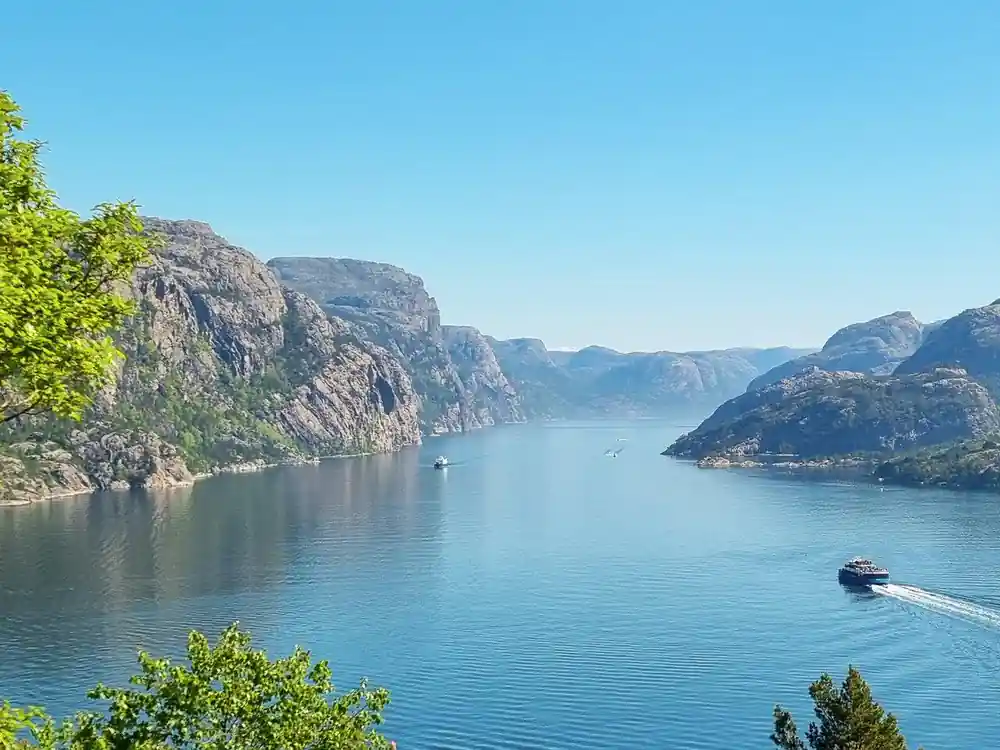
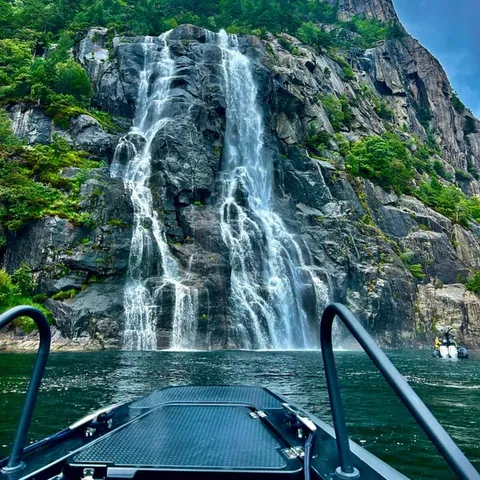
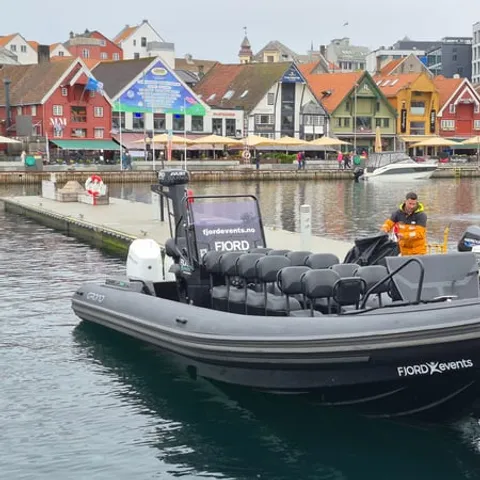
Experience the majestic Preikestolen (Pulpit Rock) from the water. Book a 3.5-hour silent, hybrid-electric fjord cruise from Stavanger.
Verdict: a calm way to see Preikestolen from the water
Before you board
- Have your booking confirmation ready on your phone
- Reach the quay with time to spare before departure
- Wear layers, the fjord is cooler than the city streets
- Wheelchair accessible[1]
What you board on the electric fjord cruise
The trip from Stavanger lasts 3.5 hours and calls at Fantahala in Rogaland, Pulpit Rock and Hengjanefossen Waterfall.[1] Brim Explorer's Stavanger Lysefjord cruise is described as a 3.5-hour silent, hybrid-electric fjord cruise from Stavanger to see Preikestolen (Pulpit Rock) from the water.[2] A quiet boat and a route that puts the big cliff in front of you is the whole idea of the trip.
On board, the point of an electric boat is what you do not hear. There is no engine growl under the floor, and conversation, the audio guide and the sound of water along the hull all carry without effort. Big cabin windows and an open deck let you keep watching the cliffs while you sit down, which helps on a crossing where the view never stops changing. The fjord was formed during the last Ice Age, approximately 10,000 years ago, when colossal glaciers carved deep valleys into the landscape.[6]
Check availability to see starting times when you book.[1] Board early and choose where you want to be: a window seat for the first stretch out of the harbour, then a spot at the railing once the walls close in. Have your camera ready, since the light on the rock keeps shifting, and keep one hand free for the rail. A zip pocket or dry bag for your phone saves a lot of worry on the deck.
Cabin and deck on the Lysefjord cruise
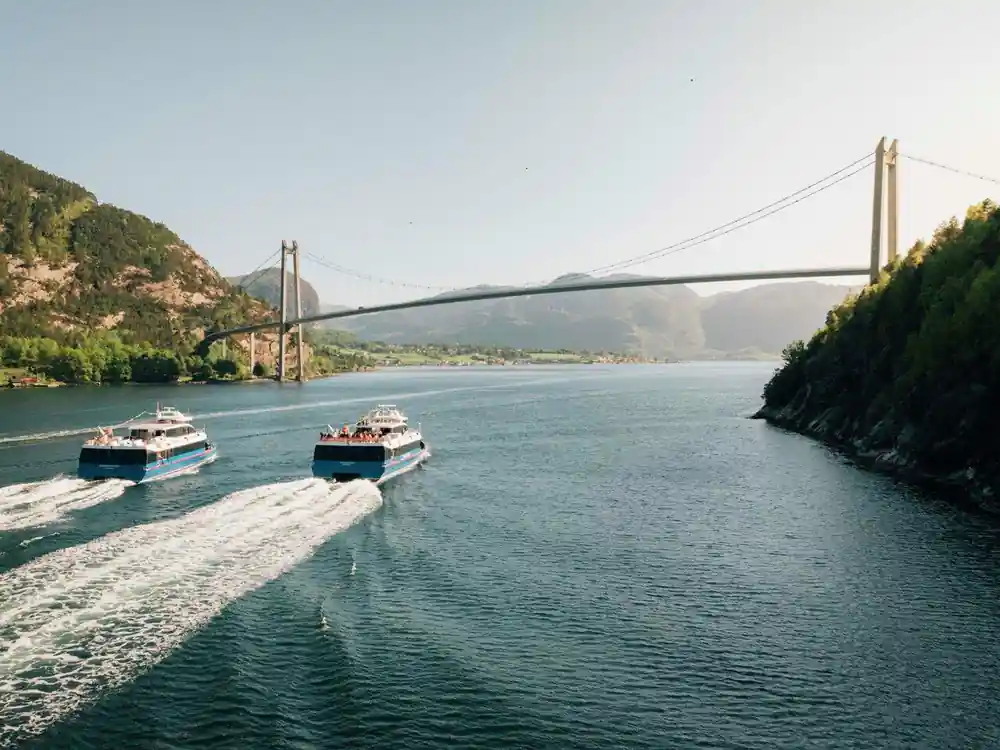
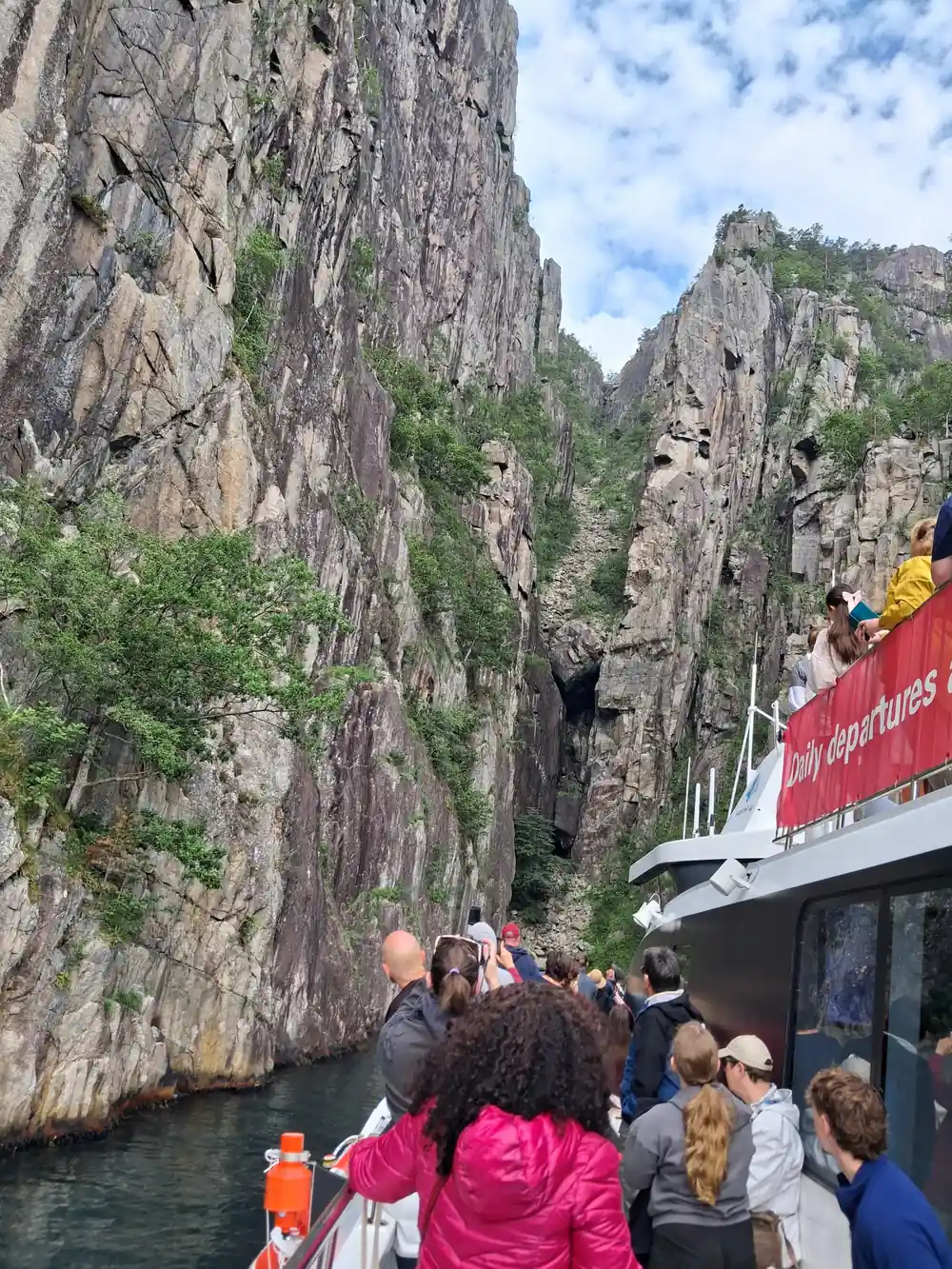
A Lysefjord cruise onboard a catamaran gives you two places to be. The cabin is enclosed, with rows of seating, tables and wide windows, and it stays comfortable when wind or rain sweeps across the fjord. The open deck is where people gather, with a railing to lean on and nothing between you and the cliffs. Both are part of the same trip, and you can move between them whenever you like.
Think of the cabin as a base and the deck as the main event. Passenger boats of this size often have a small counter for hot drinks and snacks; if coffee or a warm seat indoors matters to you, ask about cafe service when you book, or when you step on board. You do not need to carry everything with you all day, but a refillable bottle and a snack in your bag are worth having. Leave heavier bags at your seat.
Seating is not reserved, and there is no wrong place to sit. If you want to move around during the crossing, leave your bag where you can see it and keep the walkways clear for other passengers. The cruise runs 3.5 hours, which is plenty of time to sit inside, warm up and go back out for the next landmark.[1] There is no rush, and the boat does the driving.
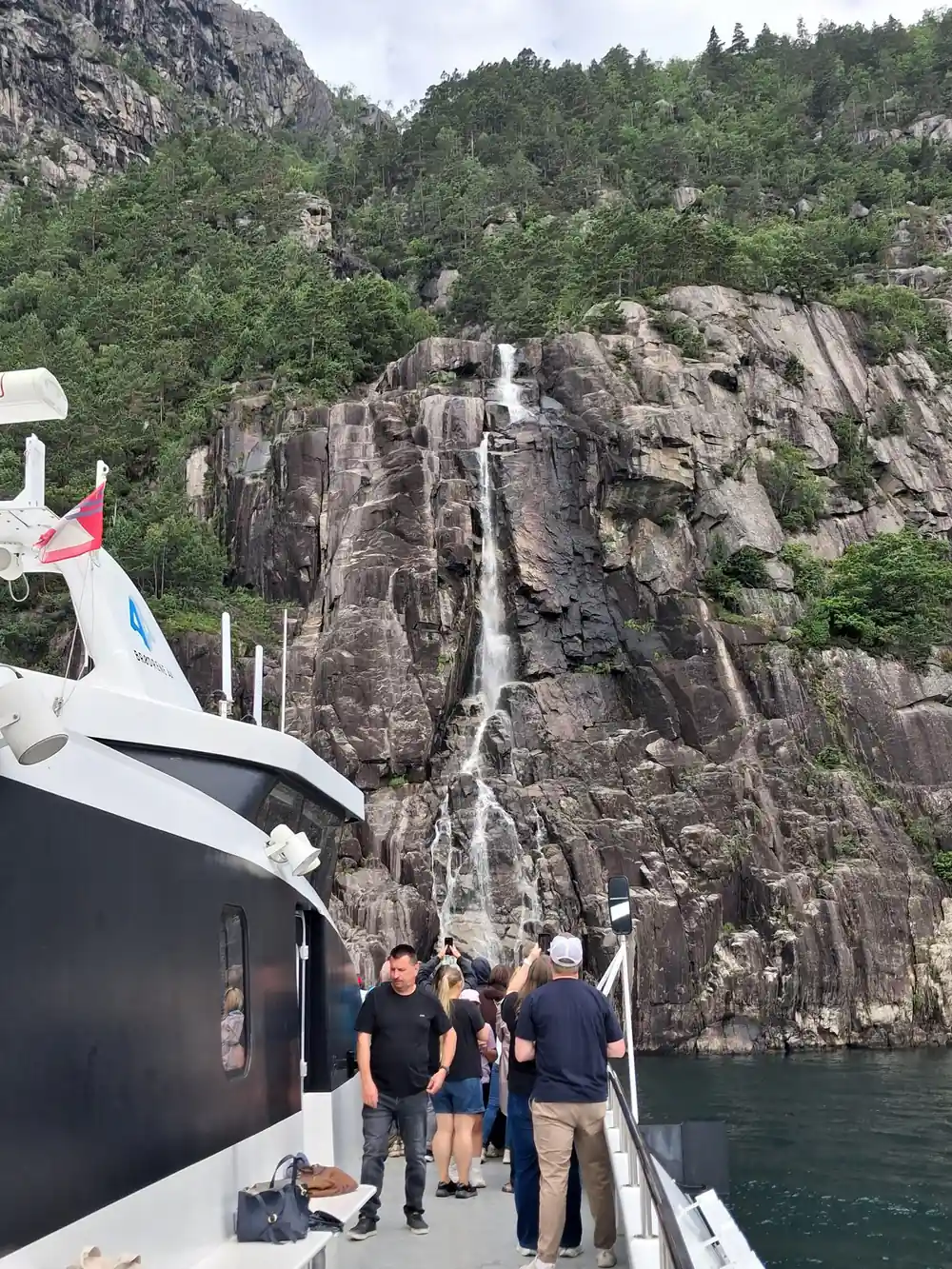
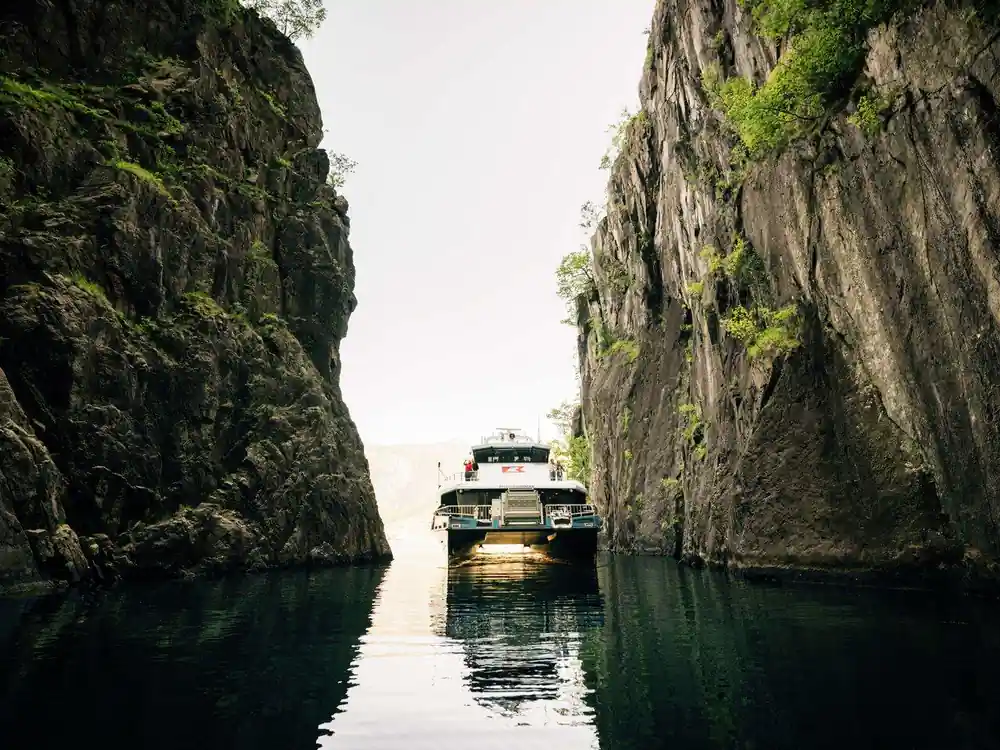
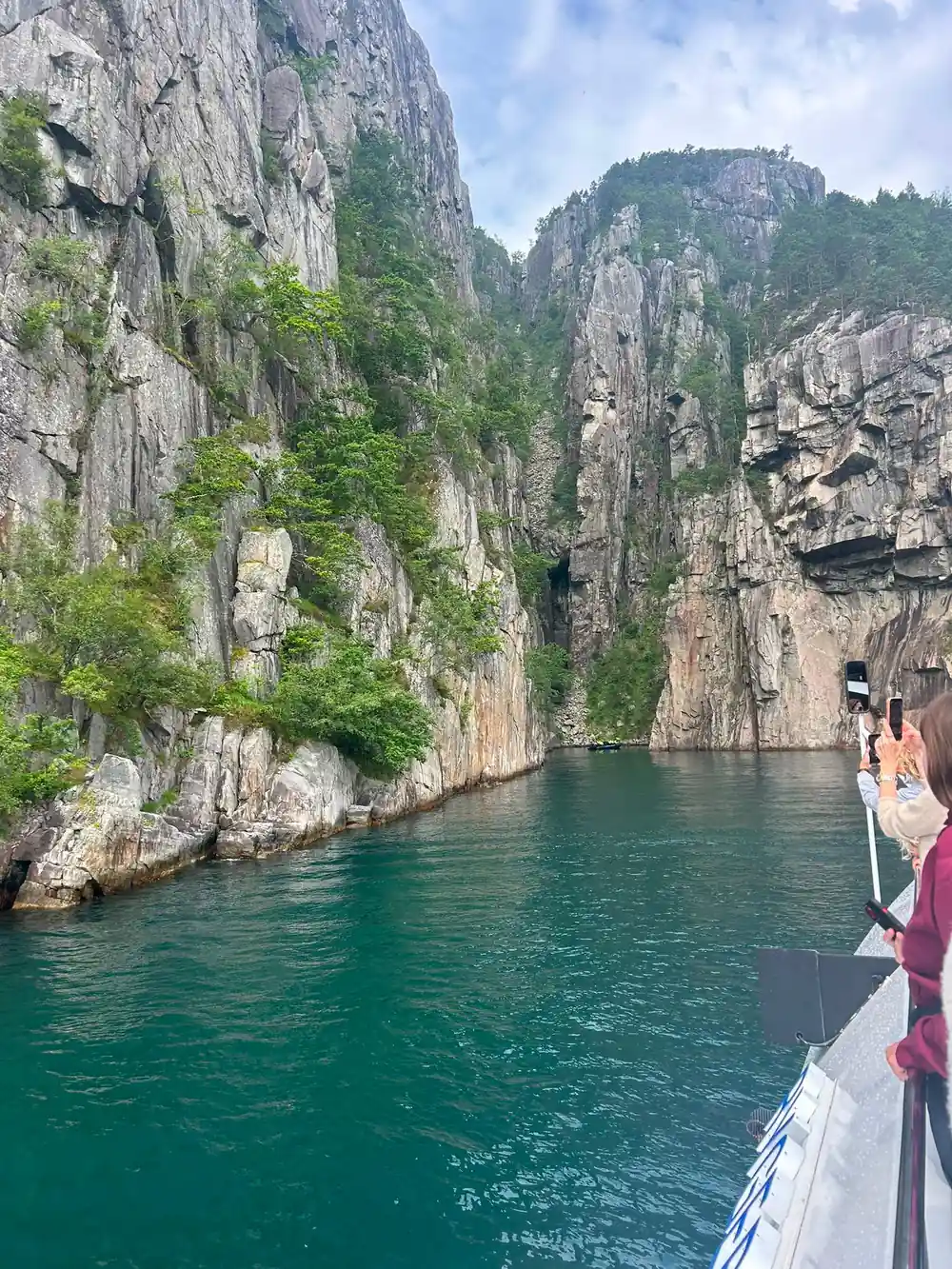
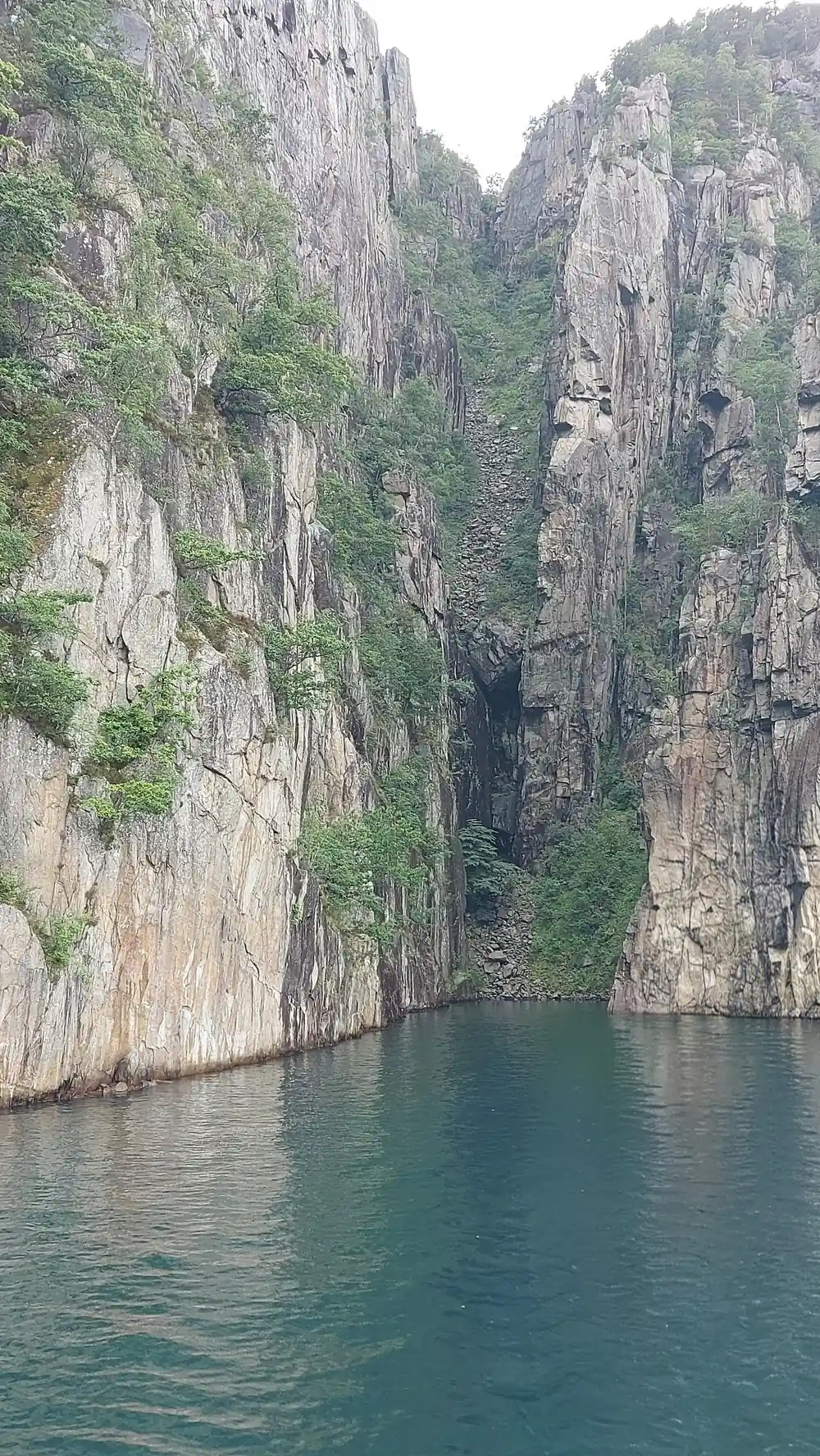
Steep walls and quiet water: the Lysefjord seen from the deck of a silent electric boat
Lysefjord cruise onboard facilities
Onboard facilities on the electric fjord cruise come down to a few essentials: an enclosed cabin with seating and windows, an open deck with a railing, and commentary you can listen to as you go. Use the harbour facilities before you board, and ask about toilets on the boat when you book or when you reach the quay. It is the kind of detail worth checking rather than assuming, especially if you are travelling with children, older relatives, or anyone who likes to know in advance. A question at the desk takes a moment and saves a lot of fretting later in the trip.
Cruise ships dock at Skagenkaien, Strandkaien or Skansekaien in Vågen, the city-centre inner harbour.[7] If that is how you arrive, build a buffer between your ship's arrival and your departure on the fjord cruise, and use the toilets and shops ashore in between. Asking at your ship's reception desk about the berth and walking times is a sensible habit on any port day.
The crossing itself runs 3.5 hours from start to finish.[1] Plan for that window with a drink before you leave and a snack in your bag. Carrying a small bottle covers the whole crossing, and there is no need to overpack. If you are driving instead, Stavanger to Lysefjord is 41 miles (66 km) and the drive takes around an hour and a half.[8]
Heated cabin or open sun deck?
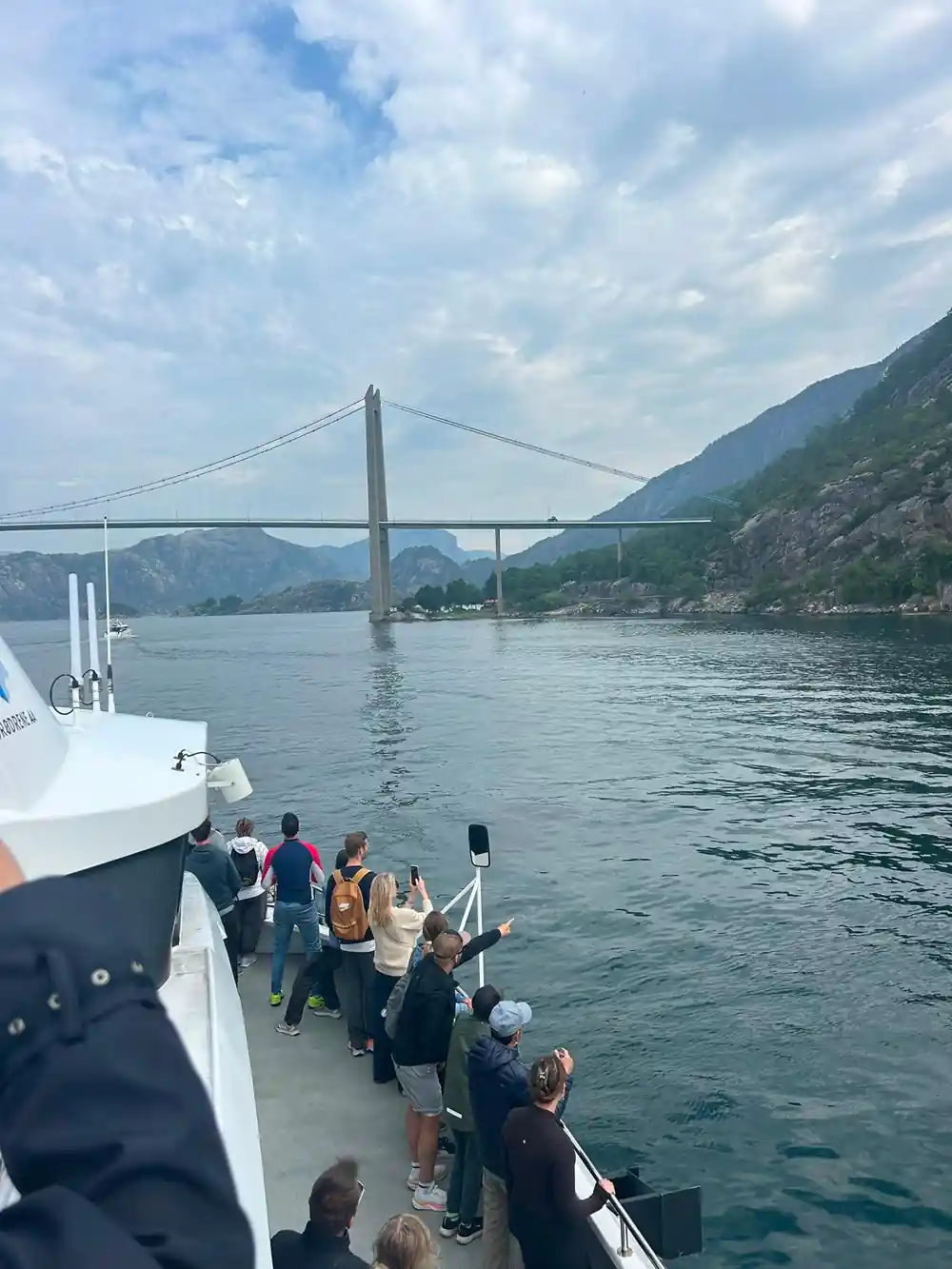
The two halves of the boat suit different people. The cabin is the warm, dry option: it keeps you out of wind and spray, and the windows give you the same walls of rock without gloves on. Outside, the air is cooler and the railing is where the cliffs feel closest. Photographers tend to drift out, while anyone with a book, a sleeping child or cold hands tends to drift back in.
Dress for the deck and retreat to the cabin when you need to. A windproof outer layer, a warm mid layer and something for your head make the outside comfortable even on a grey day. Fjord air is noticeably cooler than the streets of Stavanger, and gloves help if you plan to hold a camera up for a while. Flat shoes with grip are a good idea on a wet deck.
Sun in Norway is generous when it appears, and the light on the water changes fast through the crossing. If the cabin feels stuffy, step out; if the deck turns wet, step in. Moving between the two is exactly how these boats are meant to be used, and there is no rule about staying put for the whole trip.
from US$75
The electric fjord cruise to Lysefjord and Preikestolen runs 3.5 hours from Stavanger and calls at Pulpit Rock.[1]
Audio guide commentary in English and Norwegian
An audio guide is included in English and Norwegian on the electric fjord cruise to Lysefjord and Preikestolen.[1] Plug in, sit back and let the commentary tell you what you are looking at as the boat works along the fjord. It is a good way to keep your bearings, and it means you know when to look up from your camera.
The landmarks to listen for are the same ones you will want to photograph: Fantahala, Pulpit Rock and Hengjanefossen Waterfall.[1] The Lysefjord is approximately 40 kilometres long and up to 422 metres deep, and it shallows to only 13 metres near Oanes and Forsand.[9] Preikestolen itself rises 604 metres above the water.[3] Numbers like that are easier to grasp when the wall of rock is filling the window in front of you.
Hengjanefossen is the stop that surprises people. A user tip on Komoot puts the waterfall at around 400 metres high, falling in a long, pale streak down the cliff face.[10] Signal can be patchy on the water; download maps, tickets and anything else you need before you leave the harbour, and keep your phone somewhere warm where your fingers can reach it.
Seasickness and motion on an electric catamaran
Fjord water is protected water, tucked inside a long, narrow arm of the sea rather than out on the open coast. A twin-hulled boat sits steady instead of rolling from side to side, and electric propulsion takes away the low engine vibration that bothers some stomachs before the boat has even left the quay. On a calm day the crossing is gentle enough to forget you are moving.
If you are sensitive, a few habits help. Sit in the cabin where you can see out of a window, look at the far shore rather than down at a phone, and step onto the deck for fresh air if you feel warm. The full cruise is 3.5 hours, which leaves time to settle and find a comfortable spot.[1] A ginger sweet or a plain biscuit in your pocket costs nothing and sometimes helps.
Choose your position with motion in mind. The middle of the boat moves least, the bow rises and falls most, and the back deck is a good middle ground between a view and stability. If you know you get seasick easily, take the same precautions you would on any small boat, keep your bag close and sit facing forward.
Which side of the boat for photographs, and what to prepare
There is no single right side. The boat calls at Pulpit Rock, Hengjanefossen Waterfall and Fantahala, and the view shifts from one rail to the other along the way.[1] Stay mobile: take a few shots on one side, then walk around the cabin to the other while the boat is still moving. Nobody minds a bit of shuffling on a cruise like this.
On deck, keep one hand for the railing before you raise a camera. A phone with a wide lens handles the scale of the fjord well, and a small cloth for spray is useful in a jacket pocket. Photograph people as well as cliffs, and turn around now and then: the view behind the boat is often just as good as the one ahead.
The cruise is wheelchair accessible, and the audio guide is in English and Norwegian.[1] Booking is flexible: reserve now and pay later, and free cancellation up to 24 hours in advance for a full refund.[1] Fares are from US$75, and the cruise is rated 4.62 from 9,730 reviews.[1] Bring a layer, a bottle and a charged phone, and you will be comfortable for the whole crossing.
How long the Lysefjord cruises run
Durations stated in the listings: 3.5 hours[1], 2.5 hours[4], 3.5 hours[11], 2 hours[5], 2 hours[12].
From-prices for fjord cruises from Stavanger
US dollar from-prices of these tour listings:[1][4][5][11].
When to book and when plans can change
Aboard the silent catamaran
Find your place
Walk the cabin first and pick a window seat for the harbour exit. You can move out to the deck once the boat is under way.
Layer up for the deck
The open deck is the coldest seat on the boat and the one with the clearest view. Windproof jacket, warm mid layer, hat.
Tune into the audio guide
The audio guide comes in English and Norwegian.[1] Start it early so you know which cliff is coming next.
Watch for the waterfall
Hengjanefossen shows as a thin white streak down the cliff; a Komoot user tip puts it at around 400 metres high.[10]
Look up at the rock
Preikestolen rises 604 metres above the fjord.[3] Find a railing spot before the boat slows and take in the scale of it.
See Preikestolen from the water on a silent electric cruise
from US$76Reserve now & pay later