Worth remembering
- The electric cruise from Stavanger lists Fantahala, Pulpit Rock and Hengjanefossen Waterfall among its stops, so both waterfalls sit on a single sailing.[1]
- A Komoot user tip puts Hengjanefossen at an impressive height of around 400 meters. It is the fall that boats slow right down for.[2]
- The electric fjord cruise runs 3.5 hours from Stavanger, and Brim Explorer describes the same silent, hybrid-electric trip as a 3.5-hour cruise.[1][3]
- The electric fjord cruise to Lysefjord and Preikestolen starts from US$75, with free cancellation up to 24 hours in advance for a full refund.[1]
- Spring meltwater off the plateau feeds the falls, and the Preikestolen trail above them stays open year-round, including during the winter off-season.[4]
- Top choice Electric fjord cruise from US$75 Duration3.5 hours[1]Rating4.62 from 9,730 reviews[1]StopsFantahala, Pulpit Rock, Hengjanefossen[1]Free cancellationCancel up to 24 hours in advance[1] Check availability
- Low-emission cruise from US$76 Duration2.5 hours[5]Rating4.81 from 2,256 reviews[5]StopsPulpit Rock, Fantahala, Hengjanefossen[5]Free cancellationCancel up to 24 hours in advance[5] See this tour
- RIB safari to Lysefjord from US$126 Duration2 hours[6]Rating4.92 from 1,526 reviews[6]StopsLysefjord, Fantahala, Hengjanefossen[6]Free cancellationCancel up to 24 hours in advance[6] See this tour
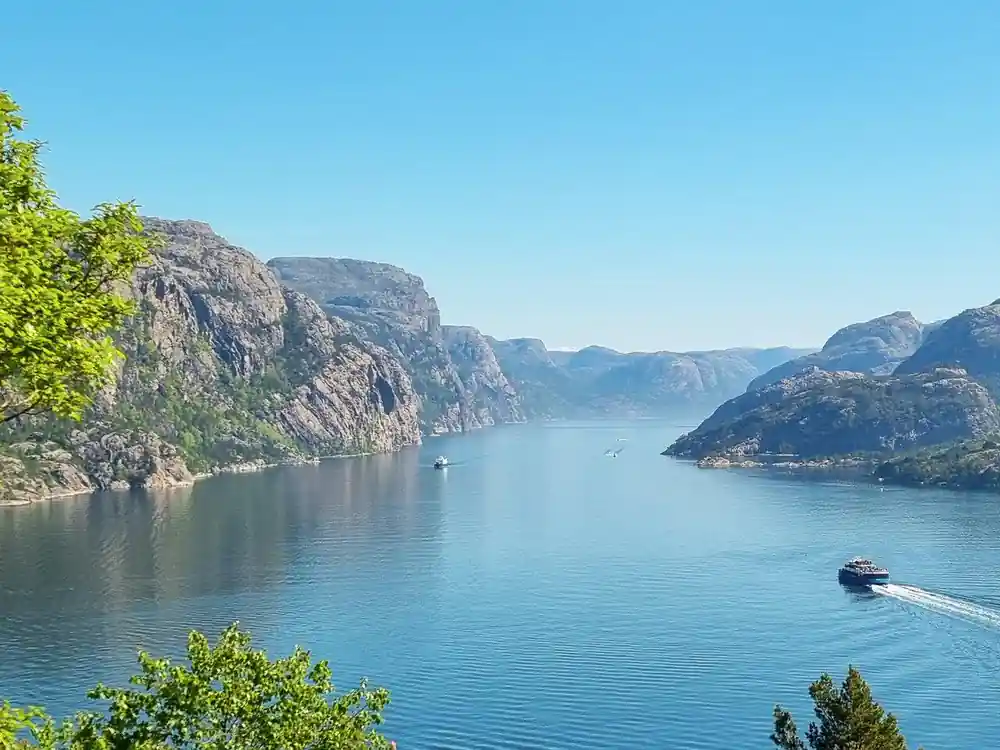
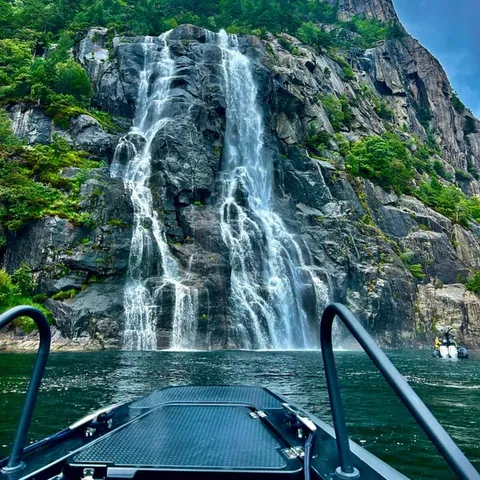
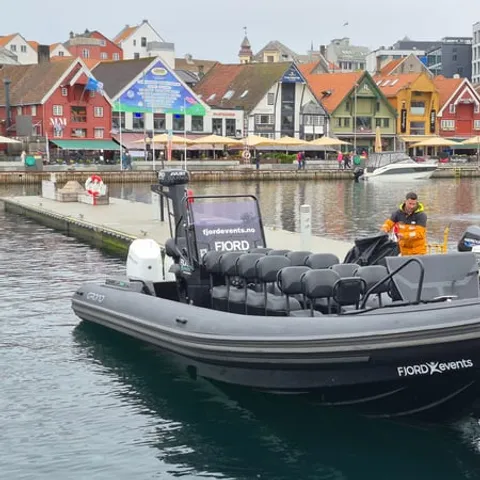
Lysefjorden, as we call it in Norwegian, was formed during the last Ice Age, approximately 10,000 years ago, when colossal glaciers carved deep valleys into the landscape.
Is the fjord cruise worth it for the waterfalls?
On board
Getting there and what to pack
- Cruise ships berth at Skagenkaien, Strandkaien or Skansekaien in Vågen.[7]
- A light waterproof shell is the best layer for spray and drizzle.
- Sunglasses help: the fjord throws back a lot of light on clear days.
- Pack a warm mid-layer; the deck cools down in the shade of the walls.
Hengjanefossen: The Waterfall You Sail Beneath
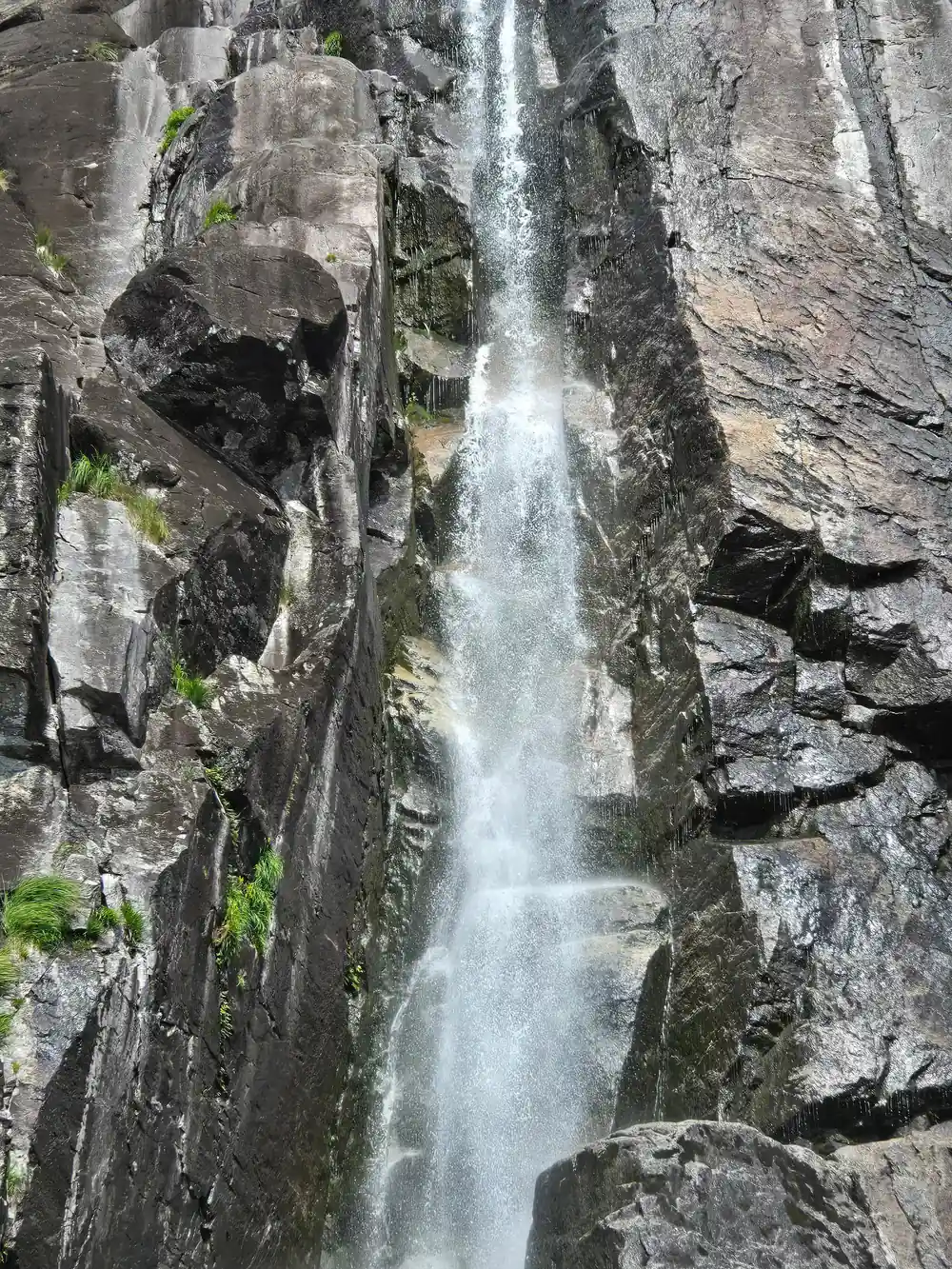
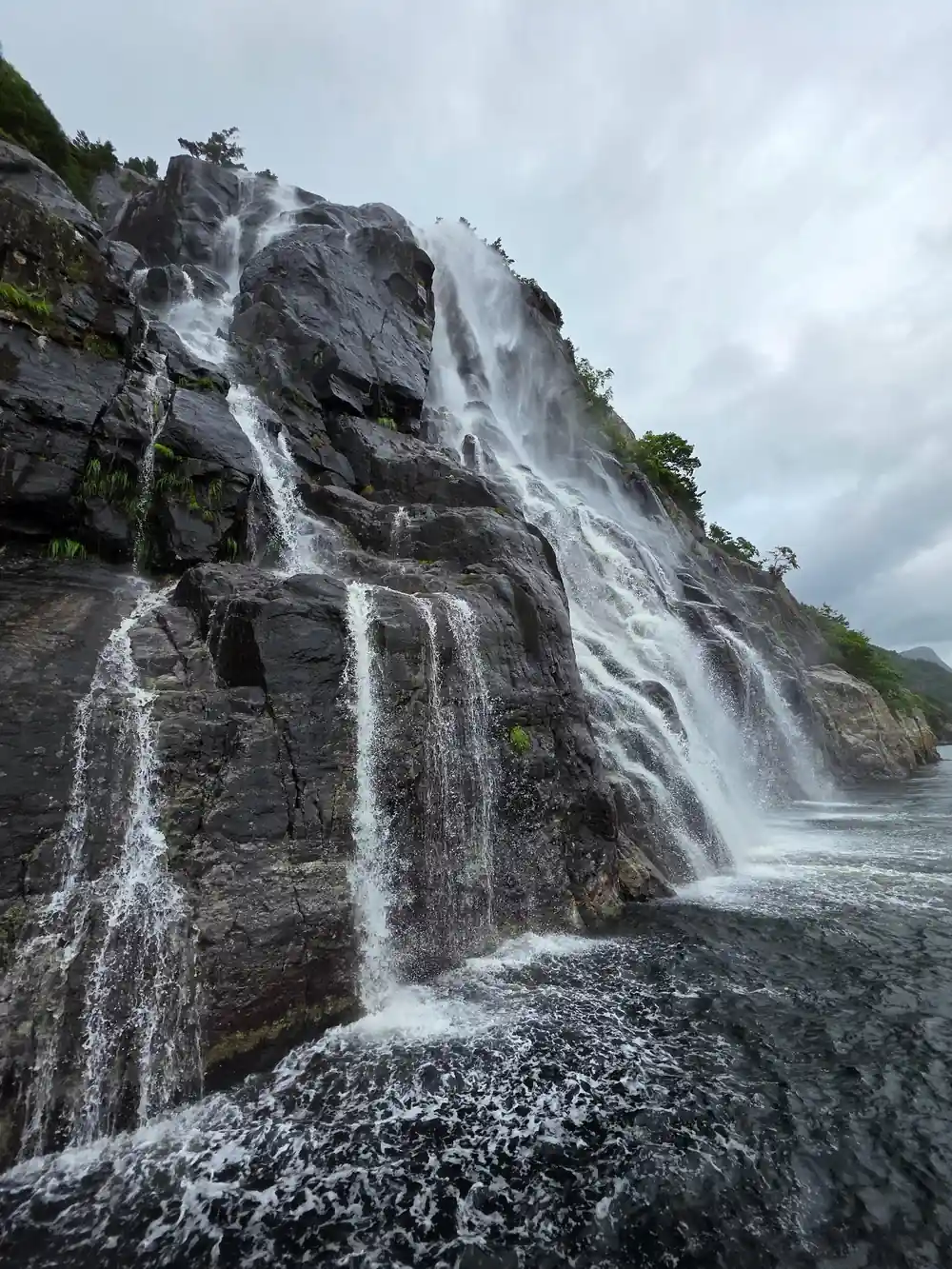
Hengjanefossen is the waterfall that most Lysefjord cruises slow down for, and it is the one that ends up on everyone's camera roll. It pours off the high ground on the far side of the fjord in a long, loose veil of white against grey rock. A user tip on Komoot puts Hengjanefossen waterfall in Lysefjord at an impressive height of around 400 meters, with the water falling in a powerful column.[2] On the water the number is easy to believe: the top of the fall sits far above the mast, and the sound reaches you before you have worked out where to look.
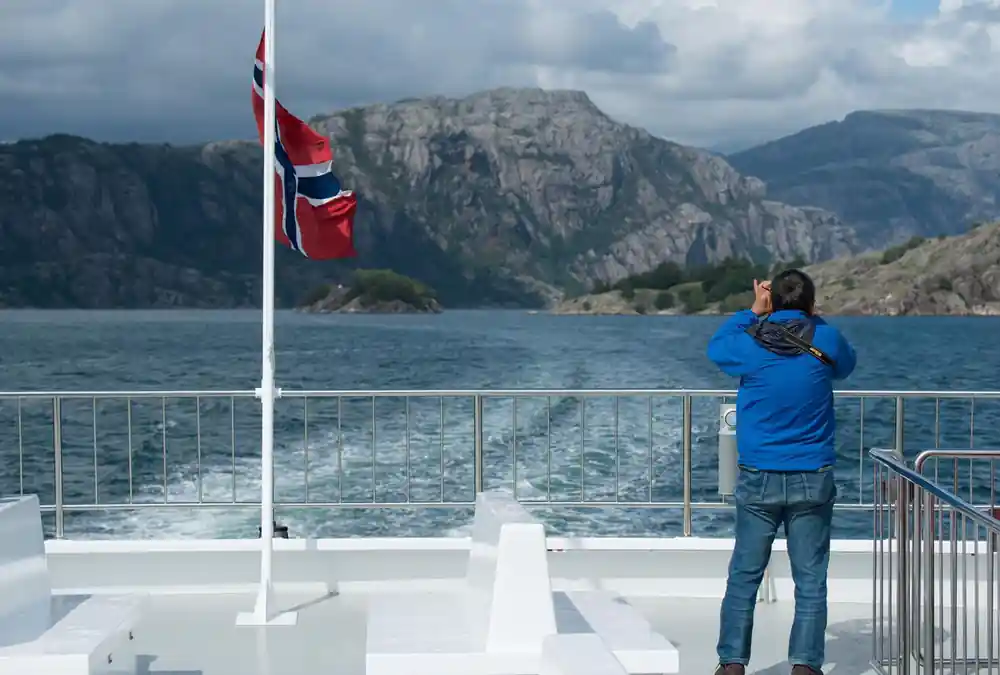
The electric cruise from Stavanger lists Hengjanefossen Waterfall as a stop, after Fantahala and Pulpit Rock on the route.[1] The whole sailing takes 3.5 hours from the city and runs on a silent, hybrid-electric boat.[1][3] With no engine noise under your feet, the fall is heard long before it is seen. Watch the shore once the fjord narrows. The boat turns and drifts so that both sides of the deck get a clear view of the cliff and the water coming off it.
Fantahala: The Second Waterfall Along Your Route
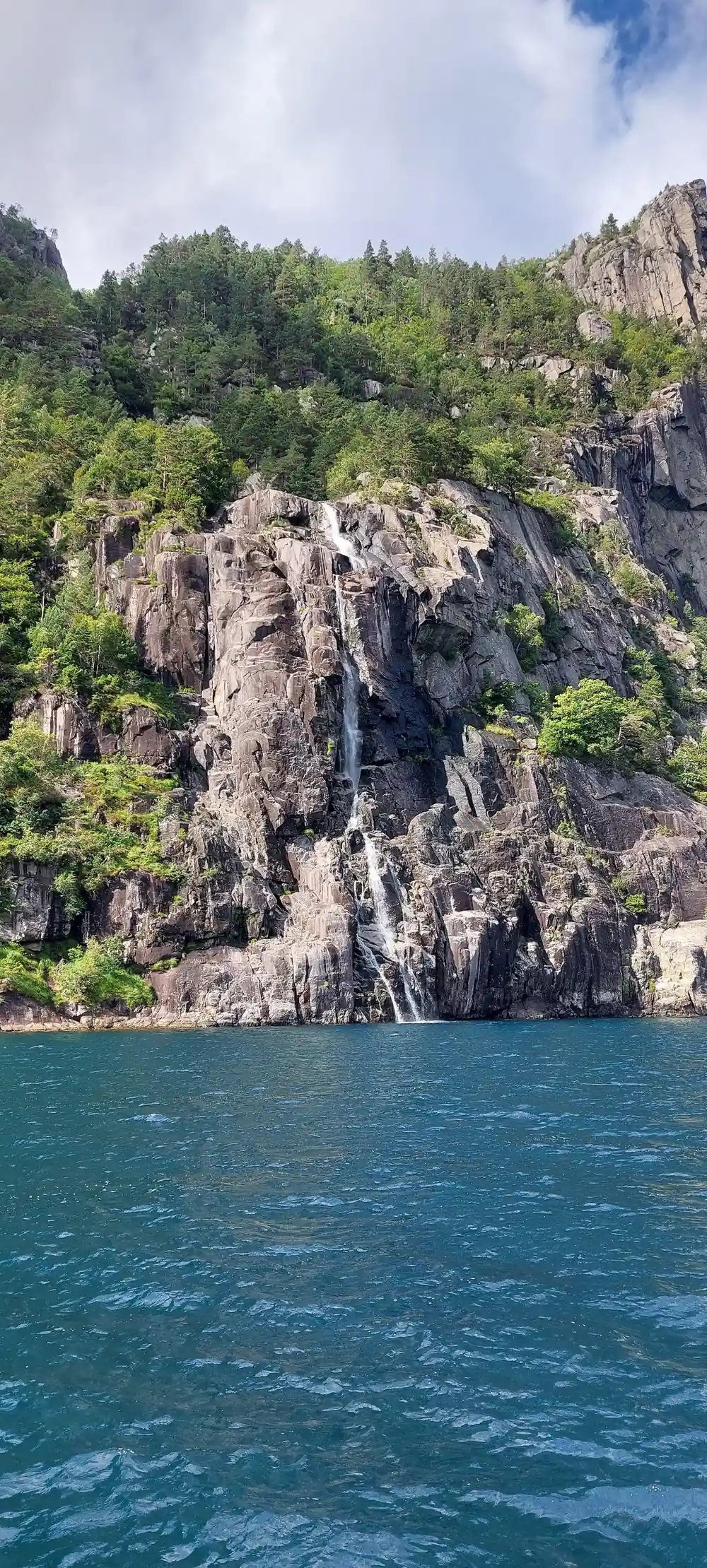
Fantahala sits low on the rock wall, and boats can drift in close enough that spray lands on the deck. On the electric cruise it is listed ahead of Pulpit Rock and Hengjanefossen on the route.[1] Where Hengjanefossen is a long drop seen from a distance, Fantahala is a bright splash at eye level, with rock leaning over it and a fringe of moss and grass along the ledges above. On a calm morning the water comes down in a single strand; when the wind is up, it swings sideways across the stone.
Fantahala sits near the waterline and it shows the weather. After heavy rain it spreads across the rock, and after a dry spell it narrows to a thread. A two-hour RIB safari on the Lysefjord also stops at the Whisky Waterfall and goes into Vagabond's Cave, both on the same stretch of water.[8] Names like these are local shorthand, and the crews who work the fjord every day enjoy telling the stories behind them.
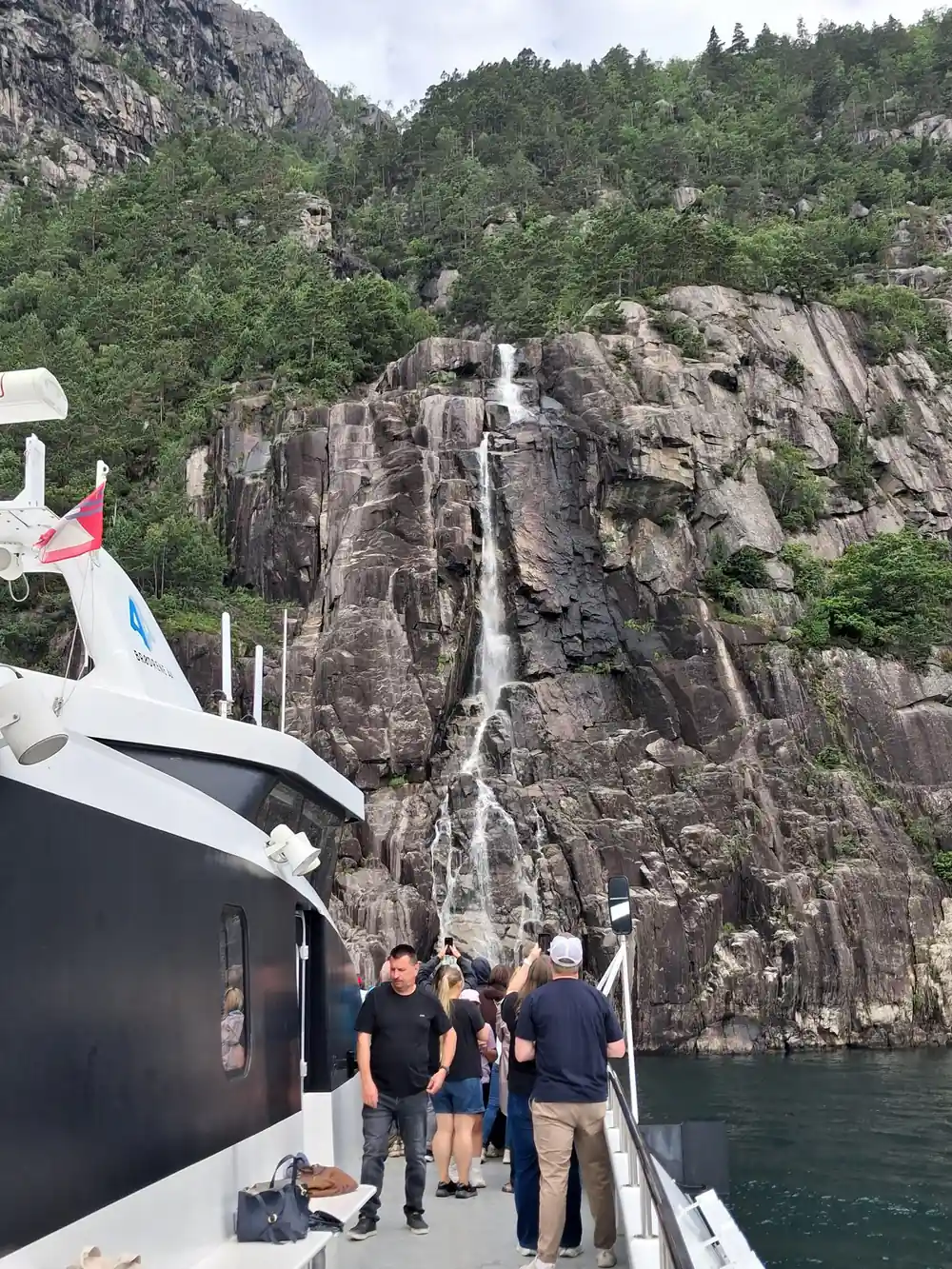
Hengjanefossen drops straight from the plateau into the fjord, and boats slow right down for it.
Why the Cliff Walls Constantly Weep Water
Lysefjord is a young landscape in geological terms. The fjord was formed during the last Ice Age, approximately 10,000 years ago, when colossal glaciers carved deep valleys into the landscape.[9] The ice left behind a trough of hard rock with steep sides and loose debris on the shoulders above. Rain and snowmelt up there do not soak away neatly. They find cracks, follow joints in the rock, and reappear lower down as springs, seeps and thin silver cascades that never appear on any map.
The shape of the fjord helps keep those seeps running. It is approximately 40 kilometres long and up to 422 metres deep, shallowing to only 13 metres near Oanes and Forsand.[10] A deep trench with high walls holds water and shade, and the lower walls stay cold for much of the day, releasing meltwater slowly rather than in one rush. Preikestolen rises 604 metres above the Lysefjord, and the ground behind it stores the snow that keeps the falls alive into summer.[11]
Seasonal Strength and the Spring Snowmelt Peak
Spring is when the fjord walls are at their wettest. Snow on the high ground melts, and water that has been locked up all winter starts moving downhill. Small trickles appear beside the big names, and the rock face darkens in long streaks. By midsummer most of the snow has gone and the falls settle into a steadier, thinner flow. Heavy rain in late summer or autumn can bring them up again within hours, and no two sailings look quite the same.
The hiking trail to Preikestolen is open year-round, including during the winter off-season.[4] From up there you get the whole picture: the line of the fjord, pale scars where water runs, and the plateau that feeds it. From the water you get the other half. Standing under the falls and looking up at the rock is a different kind of awe from standing on top and looking down.
from US$75
The electric fjord cruise from Stavanger spends 3.5 hours on the water and calls at Fantahala, Pulpit Rock and Hengjanefossen.[1]
Winter Freezing and Year-Round Water Flow
The waterfalls do not switch off in winter. Water keeps moving even when the spray freezes on contact with rock and the edges of a fall stiffen into ice. On cold mornings you can see long pale curtains of frozen spray clinging to the cliff, and the sound of the falls changes as the air gets colder and drier. Fewer boats run in the cold months, and the ones that do keep a sensible distance from the shore.
The fjord itself stays reachable all year. A year-round local ferry service sails through the Lysefjord, calling at Lauvvik, Forsand, Revså, Bratteli, Bakken, Songesand, Kallali, Flørli, Håheller and Lysebotn.[12] Flørli is worth knowing for another reason: the stairway above the village has 4444 steps, which is a serious day out in its own right.[13] If you visit between late autumn and early spring, plan for cold, wet air and short daylight rather than for a summer fjord.
Fresh Water at Close Range: What Passengers Experience
The point of seeing these falls from a boat is proximity. Brim Explorer's electric Lysefjord cruise is a 3.5-hour silent, hybrid-electric fjord cruise from Stavanger to see Preikestolen from the water.[3] The tour from Stavanger runs the same 3.5 hours and carries an audio guide in English and Norwegian, so you can follow the commentary as the cliffs slide past.[1] Out on deck the air smells of cold fresh water and wet stone, and the temperature drops whenever the boat enters the shadow of the wall.
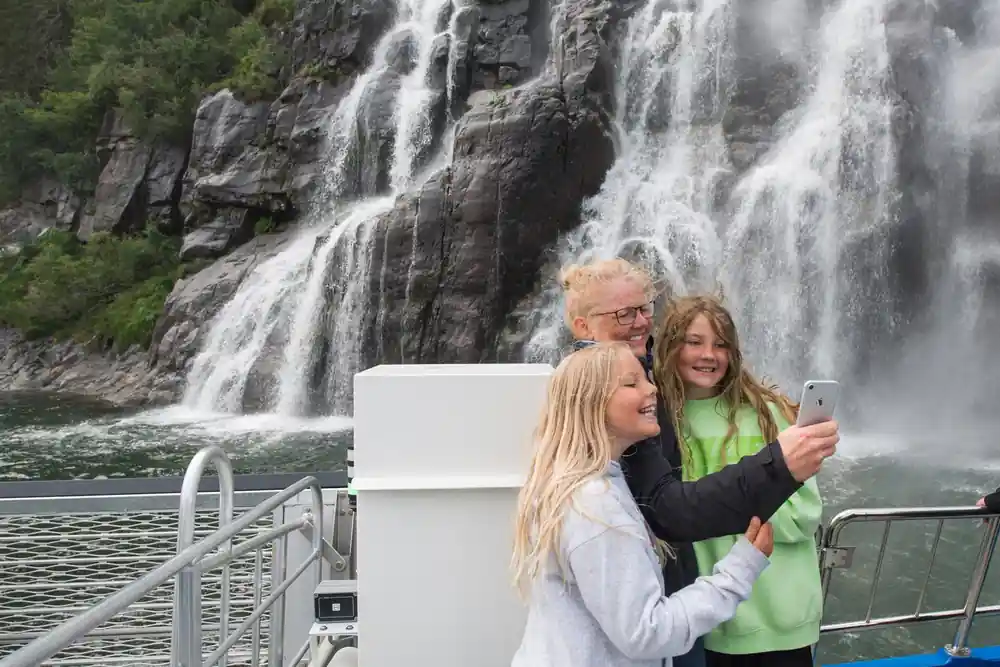
Expect spray near Fantahala, and expect to want a hood. The deck is the place to be for Hengjanefossen, where you need to look up, and the cabin is the place to be if rain sets in. The boat is wheelchair accessible, so nobody in the group has to sit out the best part.[1] Cameras cope fine, though a cloth for the lens is the one thing people forget. Keep your phone in a pocket rather than a hand when the boat noses in close.
Planning Your Visit: What to Expect and When
The electric fjord cruise to Lysefjord and Preikestolen starts from US$75 and is rated 4.62 from 9,730 reviews.[1] It runs for 3.5 hours, which is long enough to reach both waterfalls and the Pulpit Rock viewpoint and short enough to leave the rest of the day free.[1] You can reserve now and pay later, and cancellation is free up to 24 hours in advance for a full refund.[1] Book the water first and build the rest of your day around it.
Getting to the fjord by road is straightforward. Lysefjord is 41 miles (66 km) from Stavanger, and the drive takes around an hour and a half.[14] If you arrive by ship, the cruise berths are at Skagenkaien, Strandkaien or Skansekaien in Vågen, the city-centre inner harbour.[7] Either way, the waterfalls at Hengjanefossen and Fantahala are the fixed points of the day. Tide, cloud and light do the rest, and the fjord rarely looks the same twice.
How long Lysefjord boat trips last
Each duration is stated by its own tour listing or operator page:[1],[5],[15],[8].
From-prices for Lysefjord boat trips
From-prices in US dollars taken from GetYourGuide listings:[1],[5],[6],[16].
When to go and what to know
How to see the waterfalls
Book a fjord cruise
The electric cruise from Stavanger lists Fantahala, Pulpit Rock and Hengjanefossen Waterfall as stops.[1]
Pick the right season
Spring and early summer bring meltwater off the plateau, and the falls tend to run well.
Claim a spot on deck
Stay on the open deck for the approach and move into the cabin if spray gets uncomfortable.
Look up, then look down
As the boat slows beneath Hengjanefossen, look up at the fall and down at the water it lands in.
Plan the rest of the day
Lysefjord is 41 miles (66 km) from Stavanger, so a car or a transfer pairs well with a sailing.[14]
See Hengjanefossen and Fantahala from the water
from US$76Reserve now & pay later