Worth remembering
- The electric fjord cruise runs 3.5 hours from Stavanger and stops at Fantahala, Pulpit Rock and Hengjanefossen Waterfall, from US$75.[1]
- Preikestolen rises 604 metres above the fjord, and from the deck you get the whole profile of the cliff in a single frame.[2]
- You cannot control the light from the water, but you can control spray, exposure and where you stand on the deck.
- The Lysefjord is approximately 40 kilometres long and up to 422 metres deep, with plenty of scenery between the stops.[3]
- Free cancellation up to 24 hours in advance, reserve now and pay later, and the boat is wheelchair accessible.[1]
- Top choice Electric fjord cruise from US$75 Duration3.5 hours[1]Rated4.62 from 9,730 reviews[1]Audio guideEnglish and Norwegian[1]CancellationUp to 24 hours before[1] Check availability
- Low-emission cruise from US$76 Duration2.5 hours[4]Rated4.81 from 2,256 reviews[4]Audio guideEnglish, French, German, Italian[4]CancellationUp to 24 hours before[4] See this tour
- RIB Lysefjord tour from US$126 Duration2 hours[5]Rated4.92 from 1,526 reviews[5]Audio guideGerman, Italian, French, Spanish[5]CancellationUp to 24 hours before[5] See this tour
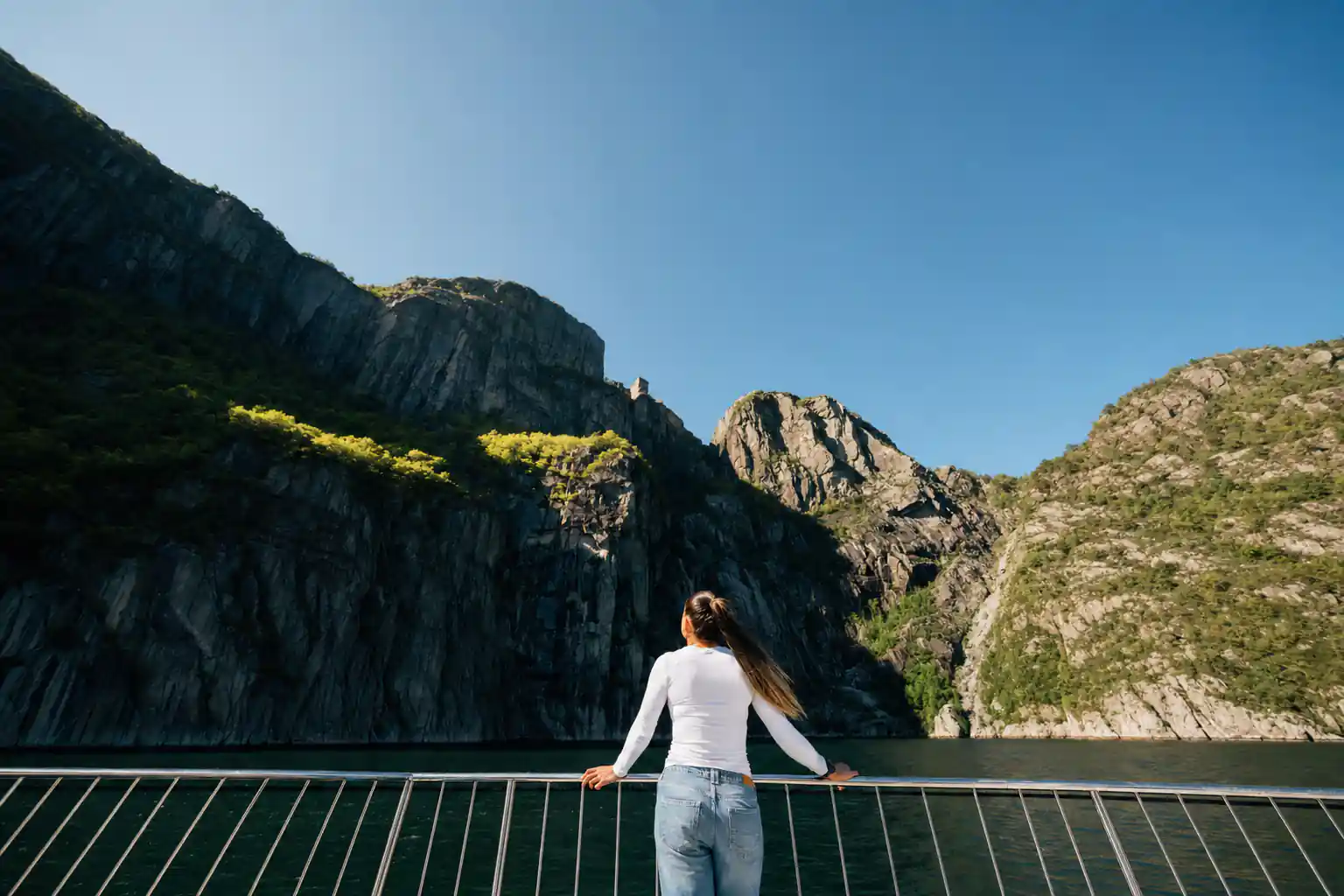
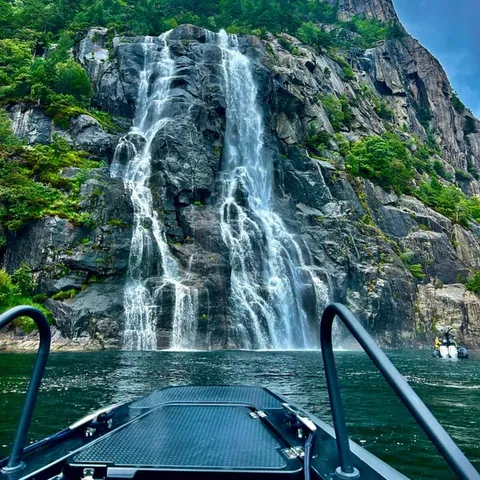
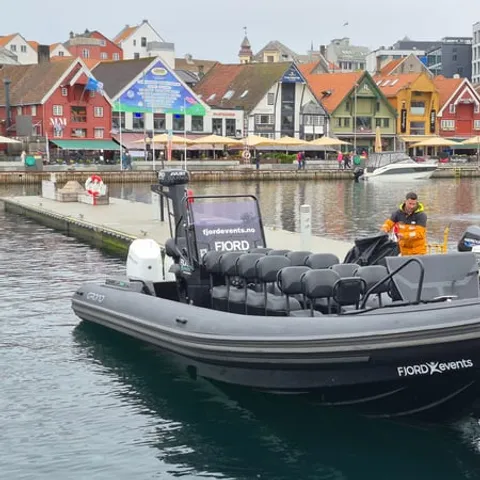
Experience the majestic Preikestolen (Pulpit Rock) from the water. Book a 3.5-hour silent, hybrid-electric fjord cruise from Stavanger.
Is the electric fjord cruise right for photographers?
Before you sail
Best deck positions for Preikestolen images
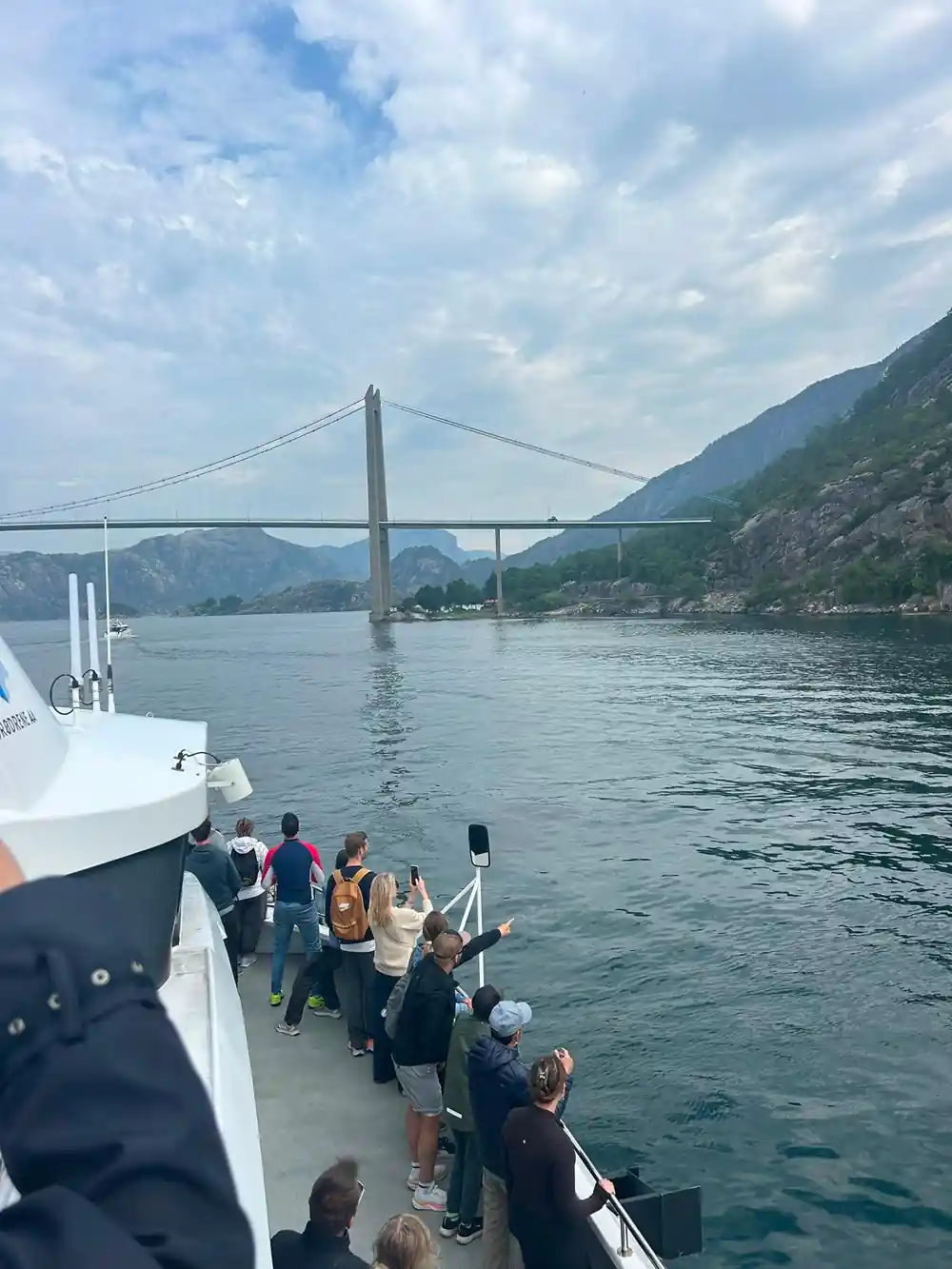
The cliff does not creep over the horizon and grow slowly. It arrives on one side of the boat, holds for a while, and then it is gone, and where you stand when it appears decides what you get. An open deck gives the cleanest sightline, and on a 3.5-hour silent, hybrid-electric fjord cruise from Stavanger there is time to move around between the stops.[6] Most Stavanger images of the fjord are made from the water like this, and the difference between a sharp frame and a soft one is usually the two steps someone took before pressing the shutter.
Deck furniture decides a lot. Where a rail runs at chest height, kneel or sit to shoot over it instead of pushing your lens through the bars, and let the rail take your weight when the boat rolls. Pick the side the cliff is on and stay with it through the turn. Boats often drift while the commentary runs, so the good frame is usually a matter of waiting rather than chasing the view around the vessel. Wear something that lets you kneel without thinking about it, because wet decks are cold decks.
Exposure for dark cliffs and a bright sky
Preikestolen rises 604 metres above the Lysefjord in Ryfylke, and that height is the whole photographic problem.[2] The rock sits in shadow while the sky behind it is much brighter, and a camera left to its own judgement will either blow out the clouds or turn the cliff into a dark smear. Meter for the brightest part of the sky you want to keep, then bring the shadows back later. If your camera has a highlight warning, switch it on and trust it more than the rear screen.
Shooting raw gives you the headroom to lift the rock without turning the water grey. A polarising filter earns its place on the deck, cutting the sheen on wet stone and deepening the fjord, though it costs you light and you will want to rotate it as the boat turns. Take extra frames at each viewpoint when the light is mixed, and check the histogram rather than the screen shown to you in sunshine, which always looks far brighter than the file actually is.
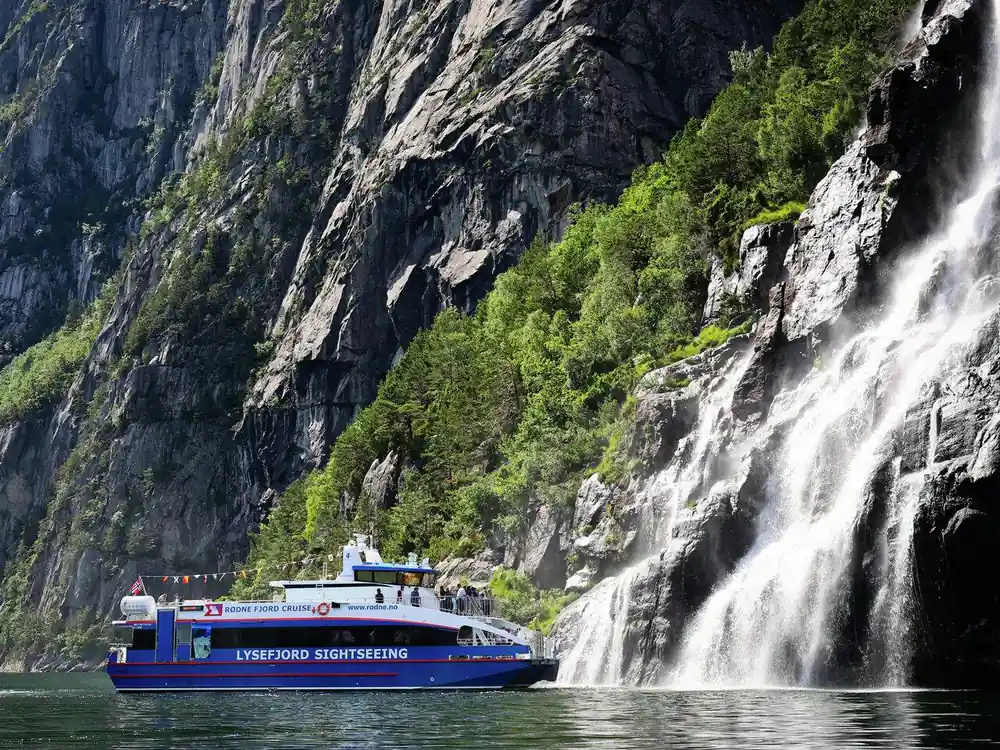
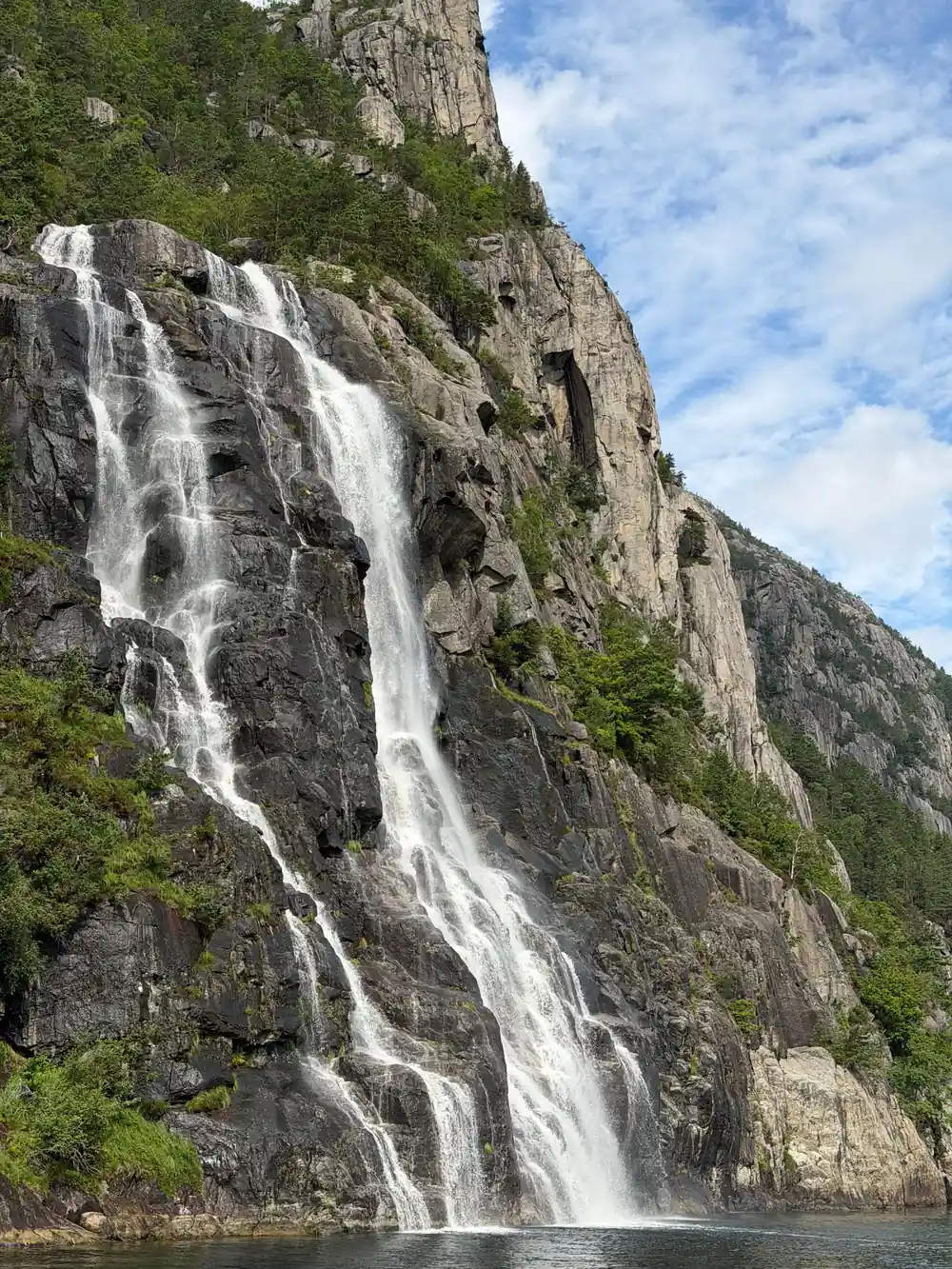
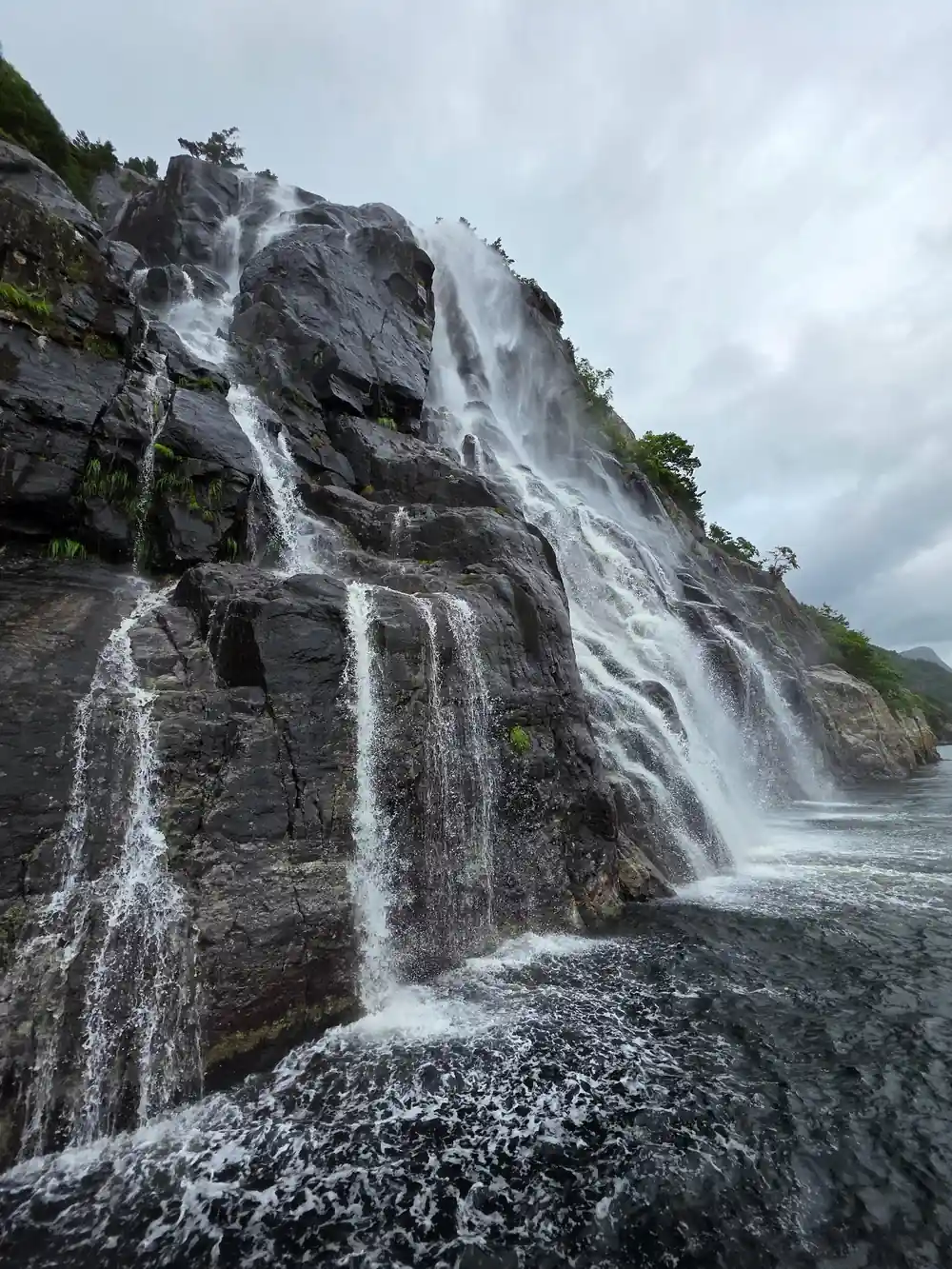
Hengjanefossen falls into the fjord as the boat passes beneath the cliffs.
Protecting your lens from waterfall spray
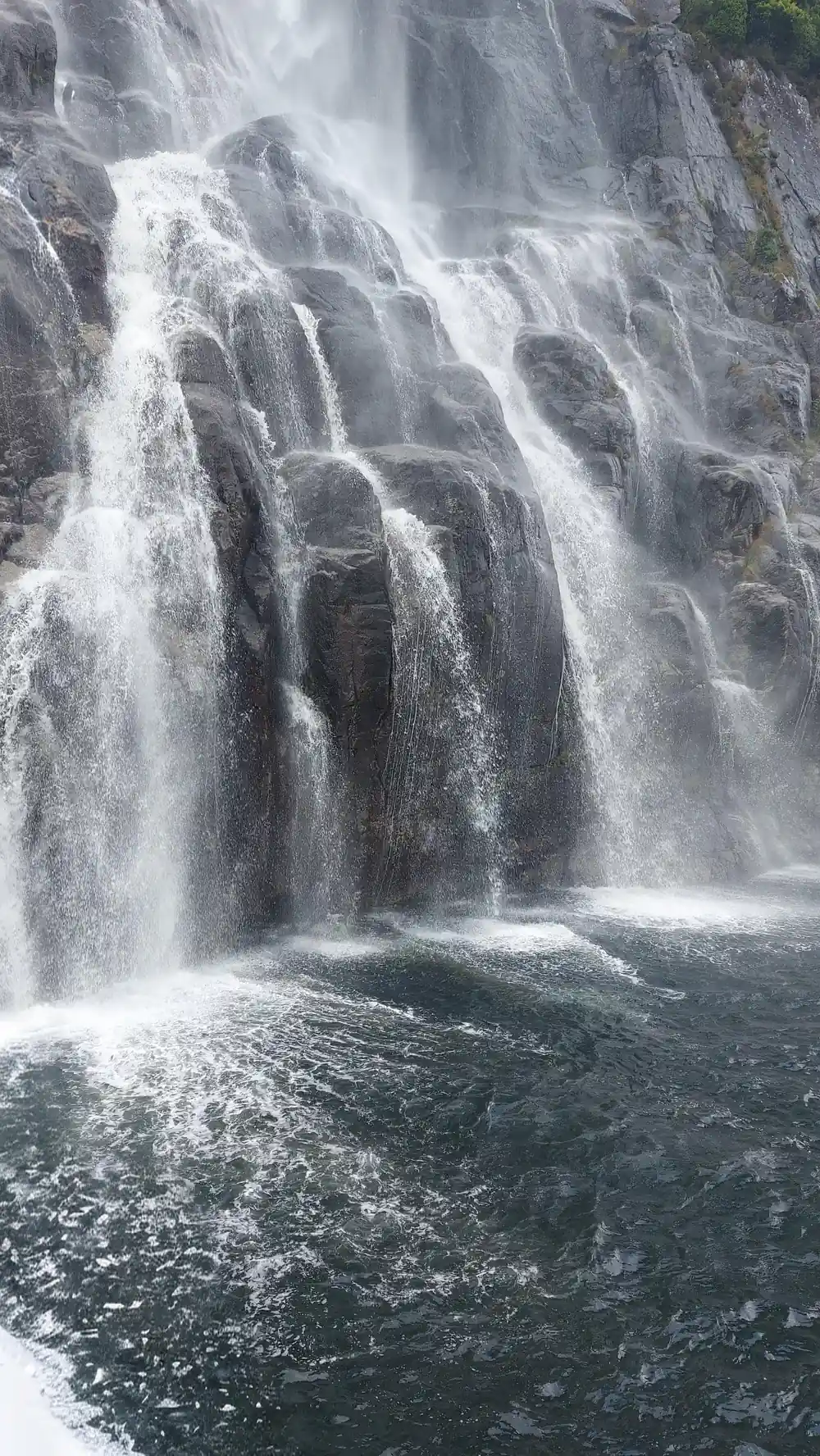
Waterfalls are the part of the trip that ruins photographs quietly. One Komoot user tip puts Hengjanefossen at around 400 metres, and a fall of that scale throws a fine mist a long way across the water.[7] The drops are small enough to dry into faint spots you only notice at home, on a large screen, days later. Keep a microfibre cloth in a pocket rather than at the bottom of the bag, use a lens hood even in flat light, and wipe the front element in one slow pass rather than scrubbing at it.
If your camera stays dry, your pictures stay clean. Shooting from the water is mostly a discipline of wiping, sealing and waiting. A rain cover helps, and so does a dry layer draped over the body between stops. Better still, read the wind and pick the side of the deck away from the drift, even if that costs you a frame, then clean the front element before you change any setting. Check the lens every time the boat slows, because spray arrives with no announcement at all.
Drone rules on the boat and at the clifftop
Ask before you pack it. Permission to fly from a tour boat belongs to the operator, so raise the question when you book rather than on the quayside. Around Preikestolen, the clifftop and the plateau above it sit inside protected Norwegian landscape, and the rules that apply there are set by the authorities who manage the area, not by the boat company. Check the current position for the ground you plan to fly over, and treat any answer you get as specific to that site and that date.
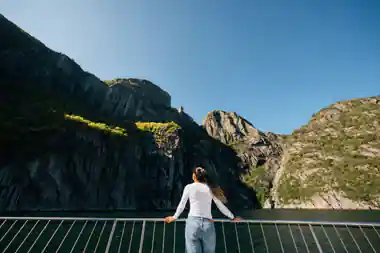
If the answer is no, the fjord still gives you the wide view you came for. A cliff that stands 604 metres above the water does not need a drone to look enormous.[2] The rail, a passenger and the boat itself all give the frame a sense of scale. Flying over crowds, launching from a moving deck and landing on the plateau are all things to confirm rather than assume, and a shrug from a stranger at the railing is not permission. Leave the drone at home if the light is your only reason for bringing it.
from US$75
The Stavanger: Electric Fjord Cruise to Lysefjord & Preikestolen runs 3.5 hours and is rated 4.62 from 9,730 reviews.[1]
Phone cameras and the distance problem
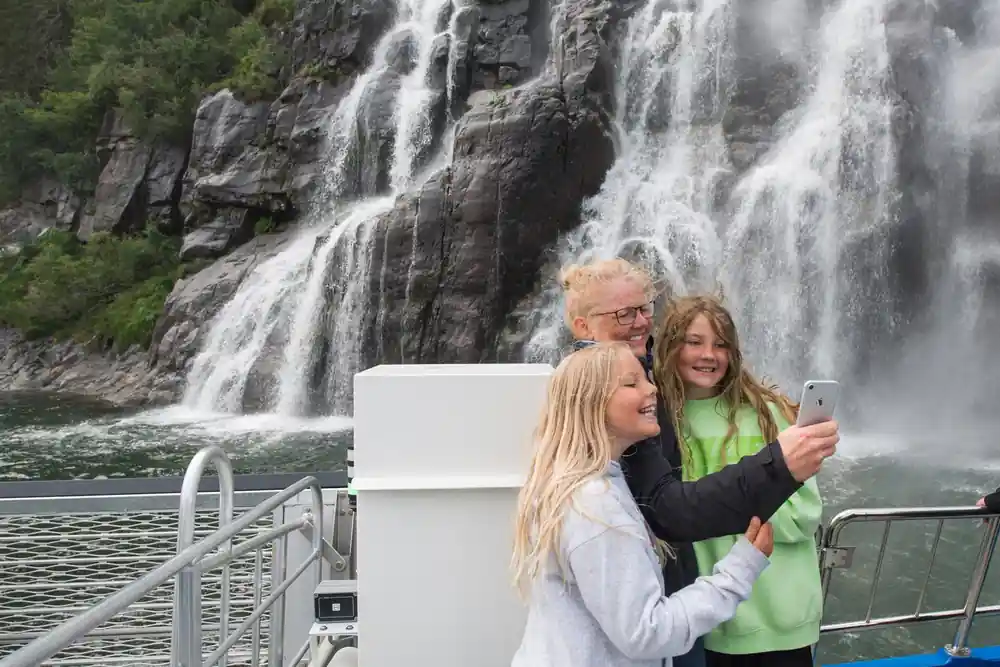
From Stavanger the fjord is 41 miles (66 km) away by road, and the drive takes around an hour and a half.[8] Seen from the water, a cliff 604 metres tall is still far enough away that a phone zoom looks soft and watercoloury.[2] Shoot with the main lens and crop later, or carry a small camera with a longer reach. Tap to focus on the rock rather than on the sky, lock exposure before the boat swings, and resist the digital zoom that turns every texture into mush.
The cruise stops at Fantahala, Pulpit Rock and Hengjanefossen Waterfall, and each one wants a different angle of view.[1] Wide for the whole cliff with a slice of boat in the foreground, medium for the falls, and as much reach as you have if something moves on the rocks. Many of the Pulpit Rock Norway images you have seen are wide shots taken from exactly this position, which is worth knowing before you spend the crossing zoomed in on the shadows.
Best light through the day and the seasons
The trail to Preikestolen is open year-round, including during the winter off-season, and the Kolumbus local ferry through the fjord to Lysebotn runs year-round as well.[9][10] Light, not the calendar, is the variable worth watching. Early and late, the low sun rakes across the cliff face and picks out the cracks and the horizontal banding that give the rock its texture. In the middle of the day the face flattens into a silhouette and the water turns to glare, which is when the boat deck starts to look like the best seat for a nap.
Winter brings short days and clean, cold air, with snow lying on the plateau above the rock. Summer brings long evenings and, at the top of the season, light that never quite goes away. Both reward a warm layer and a spare battery, since cold and long days drain power faster than most people expect. If you are shooting Preikestolen video as well as stills, the softer hours will flatter the footage, and the middle of the day will not.
Shutter speed and focus for moving subjects
Water and boats both move, so decide what should be sharp. For a frozen waterfall, choose the shortest exposure the light allows and accept a wider aperture; for the classic silky veil, slow the shutter right down and brace the camera on the rail or a beanbag. A small tripod or clamp helps on a drifting deck, though engine vibration will find its way through any support, so watch the first frame of a long run before you commit to the rest.
Focus is easier than it looks. Switch to continuous autofocus, put the focus point on the cliff edge rather than the sky, and take short bursts as the boat moves and settles. For Lysefjord cruise and Pulpit Rock photos that hold up at full size, stabilisation earns its place, because the deck never stops moving. Pan slowly enough that the cliff stays in the same part of the frame, and let the boat supply the movement instead of your hands.
Cruise duration by tour
Durations in hours as listed on each of these tour pages.[1][4][5][11]
What a Lysefjord cruise costs from
From-prices in US dollars for the tour listings cited here.[1][4][5][11]
When to go and how to plan your shots
From deck to final frame
Board early and pick a side
The best deck space goes first. Choose the rail on the side the fjord opens up and stay there.
Meter for the sky
Point the camera at the brightest clouds you want to keep, lock exposure, then let the cliff sit dark.
Brace against the rail
Rest the camera on the rail without gripping the metal, and shoot as the boat settles after a roll.
Wipe between stops
Check the front element before every stop. Spray dries into spots that show up across a whole gallery.
Fire short bursts
Take a short burst as the cliff passes, then pick the sharpest frame. Continuous focus keeps the edge crisp.
Put yourself on the water under Preikestolen
from US$76Reserve now & pay later