Worth remembering
- The electric fjord cruise from Stavanger runs 3.5 hours and calls at Fantahala, Pulpit Rock and Hengjanefossen waterfall.[1]
- A cleft in the cliff where vagabonds are said to have hidden, and the first named stop on the cruise route.[1]
- The Lysefjord goats graze the ledges above the waterline and often drift down to the shore as the boat passes.
- White-tailed sea eagles ride the updraughts above the cliffs, while porpoises show up as a quick roll at water level.
- Preikestolen rises 604 metres above the Lysefjord, and the cruise route passes beneath it.[2]
- Top choice Electric fjord cruise from US$75 Duration3.5 hours[1]Rating4.62 from 9,730 reviews[1]AccessWheelchair accessible[1]StopsFantahala, Pulpit Rock, Hengjanefossen[1] Check availability
- RIB safari to Lysefjord from US$126 Duration2 hours[3]Rating4.92 from 1,526 reviews[3]AccessCheck the listing for access detailsStopsFantahala, Pulpit Rock, Hengjanefossen[3] See this tour
- Low-emission cruise from US$76 Duration2.5 hours[4]Rating4.81 from 2,256 reviews[4]AccessWheelchair accessible[4]StopsPulpit Rock, Fantahala, Hengjanefossen[4] See this tour
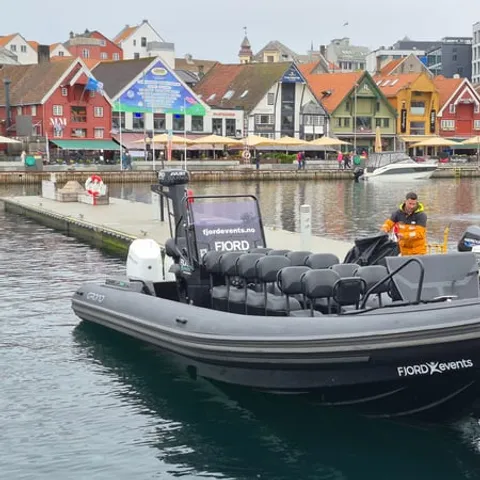
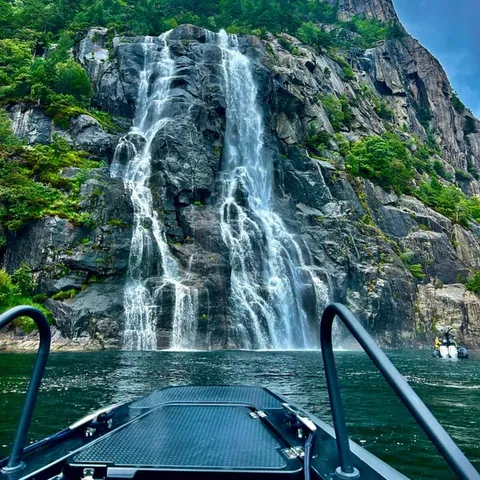
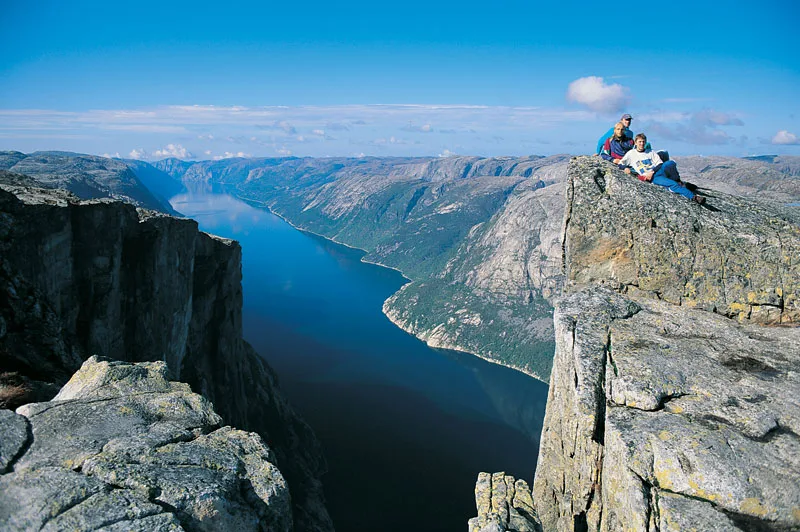
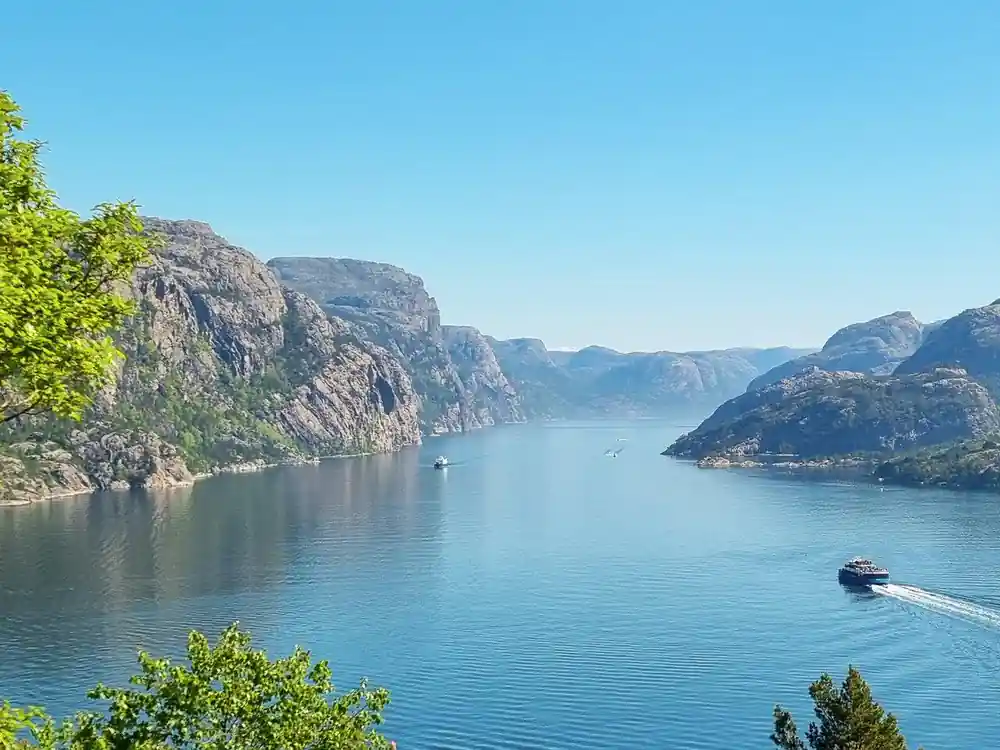
Lysefjorden, as we call it in Norwegian, was formed during the last Ice Age, approximately 10,000 years ago, when colossal glaciers carved deep valleys into the landscape.
Should you book the electric fjord cruise?
On the boat
Wildlife watching
- Binoculars for eagles; a zoom lens or phone zoom for goats.
- Calm mornings give the glassiest water for porpoises.
- Keep your snacks to yourself; the goats graze the cliffs for a living.
- Dress warmer than the forecast suggests; the fjord air bites once the boat moves.
Fantahala: Where Vagabonds Made Their Home
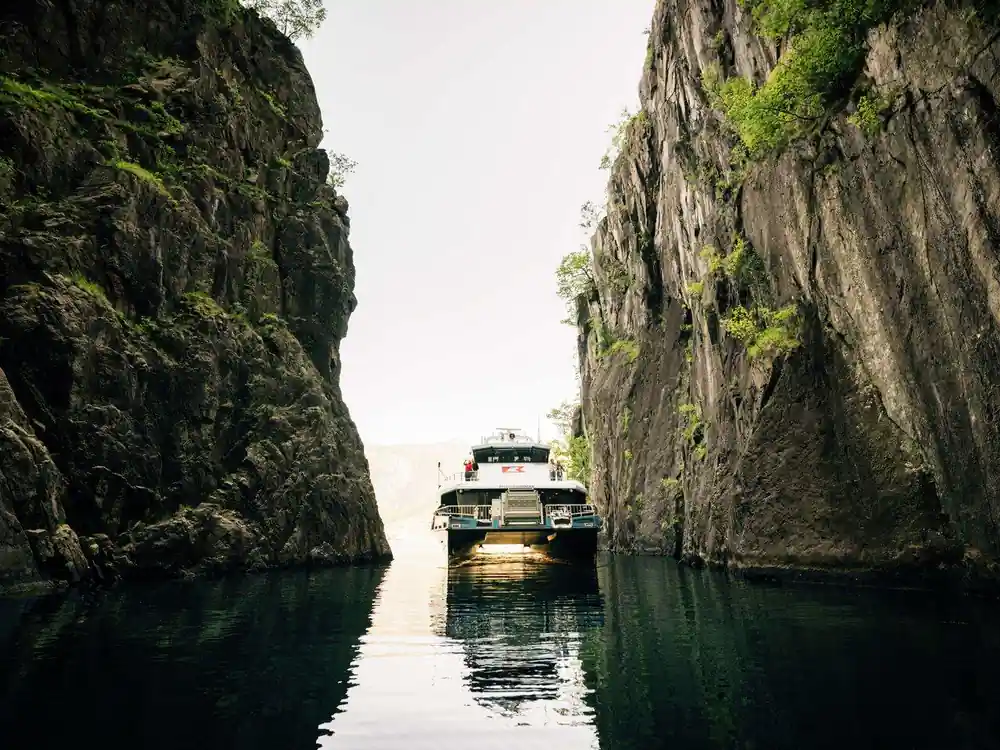
Fantahala is a tight cleft in the rock on the north shore of the Lysefjord, and it is the first named stop on the electric fjord cruise from Stavanger.[1] The name comes from fant, an old Norwegian word for a vagabond or a wanderer, and the stories attached to the place are about people who had run out of other options: debtors, poachers, men who had crossed the wrong official. The cliff gave them a roof, the fjord gave them fish, and the narrow opening kept them out of sight of anyone sailing past.
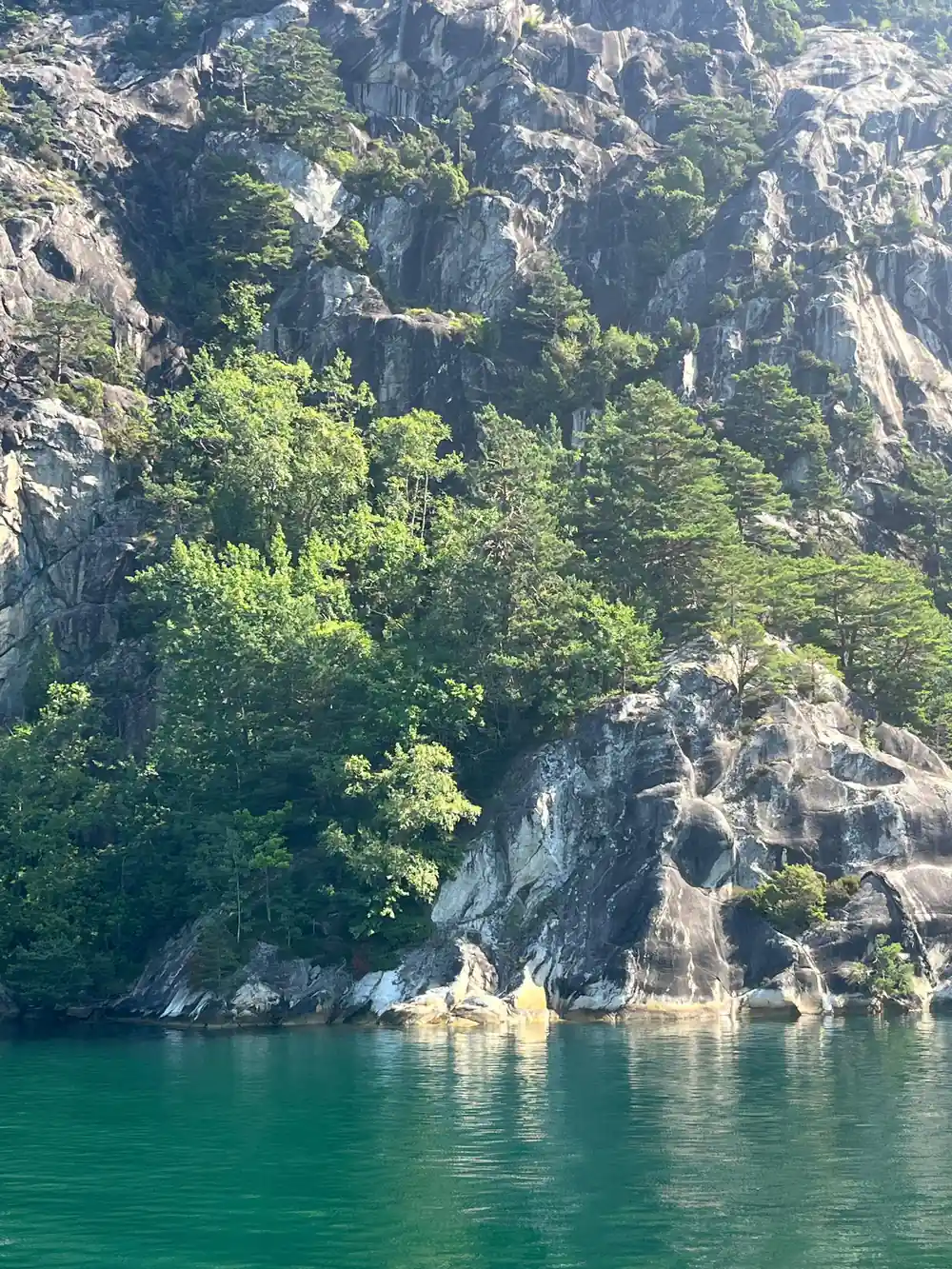
The drama is all in the shape of the rock. A dark slot opens where the cliffs lean toward each other, a strip of pale beach shows at the bottom, and the water goes suddenly quiet and deep. Guides tend to hold the story back until the boat slows, and the echo off the cliff face carries a voice further than you would expect. Look up while you listen: the rock above Fantahala is heavily folded, striped with layers that were squeezed and tilted long before anyone needed a hiding place.
Mountain Goats at the Water's Edge
The Lysefjord goats are the stars of the shoreline, and they are not shy. Herds graze the green ledges that cling to the fjord walls, working down slopes that look impossible from the deck of a boat. In summer you will often see them close to the waterline, picking at grass and seaweed and licking salt off the rocks. They are hardy, sure-footed animals that treat a near-vertical slope like a pavement, and they go where they like.
Keep an eye on the rocky beaches and the lower shelves, especially where a stream comes down and the grass grows lush. The goats move quickly when they choose to, and a herd that was invisible a minute ago can be lined up along a ledge by the time the boat comes back the other way. On a good day they come close enough to the railing that you can see the wear on their horns and the way a hoof finds a hold no wider than a coin. Tempting as it is, keep your snacks to yourself.
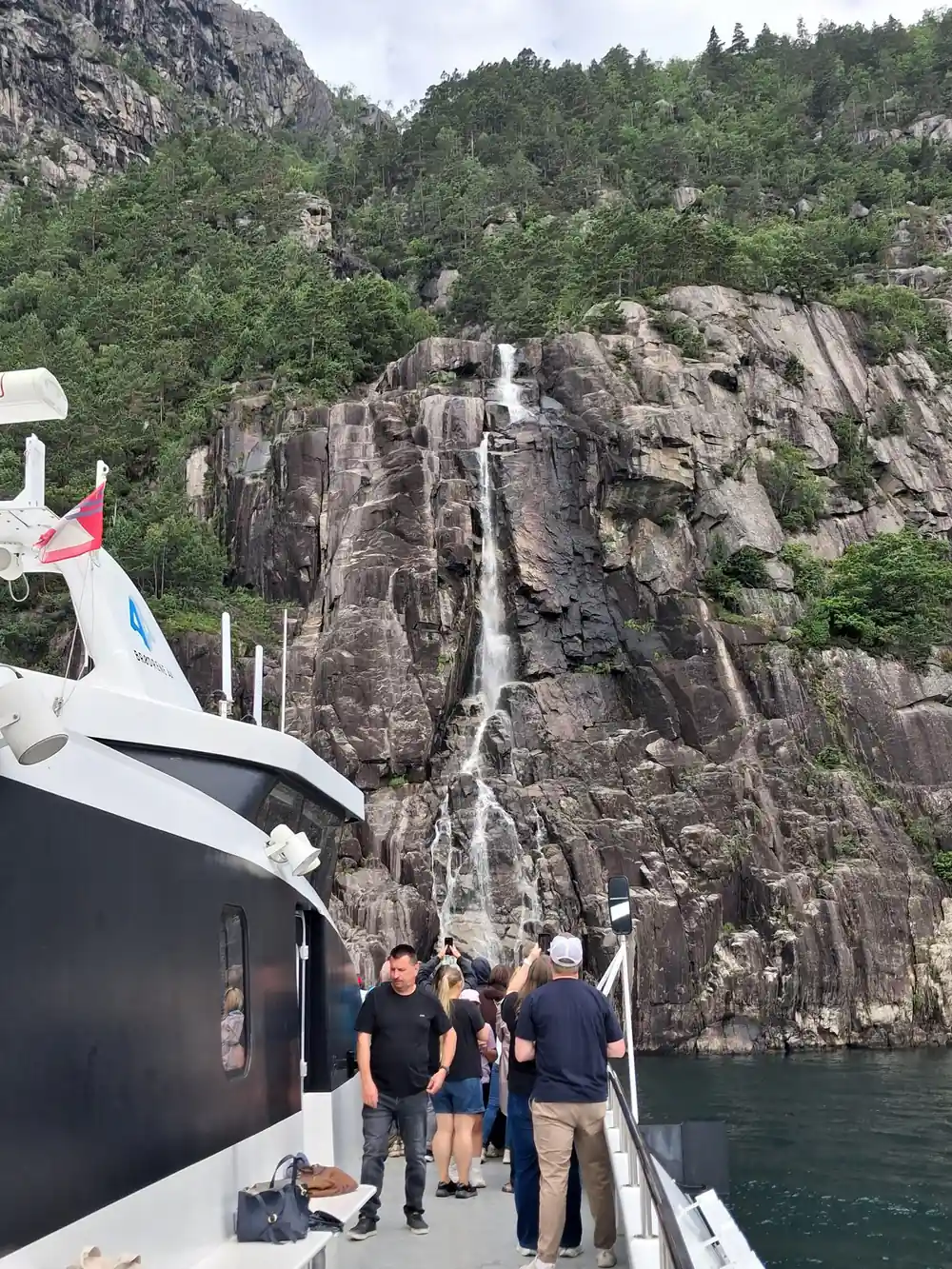
Hengjanefossen drops into the fjord beside the cruise route.
Sea Eagles and Porpoises in the Fjord
Above the boat, white-tailed sea eagles ride the updraughts along the cliff line. They are big birds with a slow, deliberate wingbeat, and the giveaway is usually a flash of pale head and tail against dark rock. They nest on ledges high above the water and hunt along the fjord, so a route that hugs the shore gives you the best chance of seeing one. Binoculars help, but so does patience: a shape on a rock can sit there for a long time before it decides to fly.
At water level, harbour porpoises show up as a quick roll and a puff of breath, usually in ones and twos and rarely for long. The fjord is a serious piece of water: approximately 40 kilometres long and up to 422 metres deep, though it shallows to only 13 metres near Oanes and Forsand.[5] Deep basins, steep walls and a shallow sill make it a varied stretch to watch, and the best sightings often come on calm mornings when the surface is glassy.
A Lysefjord orca would be a piece of luck rather than a scheduled stop, since orca belong to the open sea and the far north. Seals are the more realistic sight, and they hold still for a photograph far longer than a porpoise ever will.
Farms on the Steep Mountainsides
For centuries people farmed these slopes, and the evidence is still there if you know where to look: stone walls, tiny fields terraced into the hillside, the remains of summer pastures high above the fjord. Some farms could only be reached by boat, and a few by ladder, rope or a very long walk. Flørli, deep in the fjord, is the best known of them, and it is famous for a stairway of 4444 steps running straight up the mountain.[6]
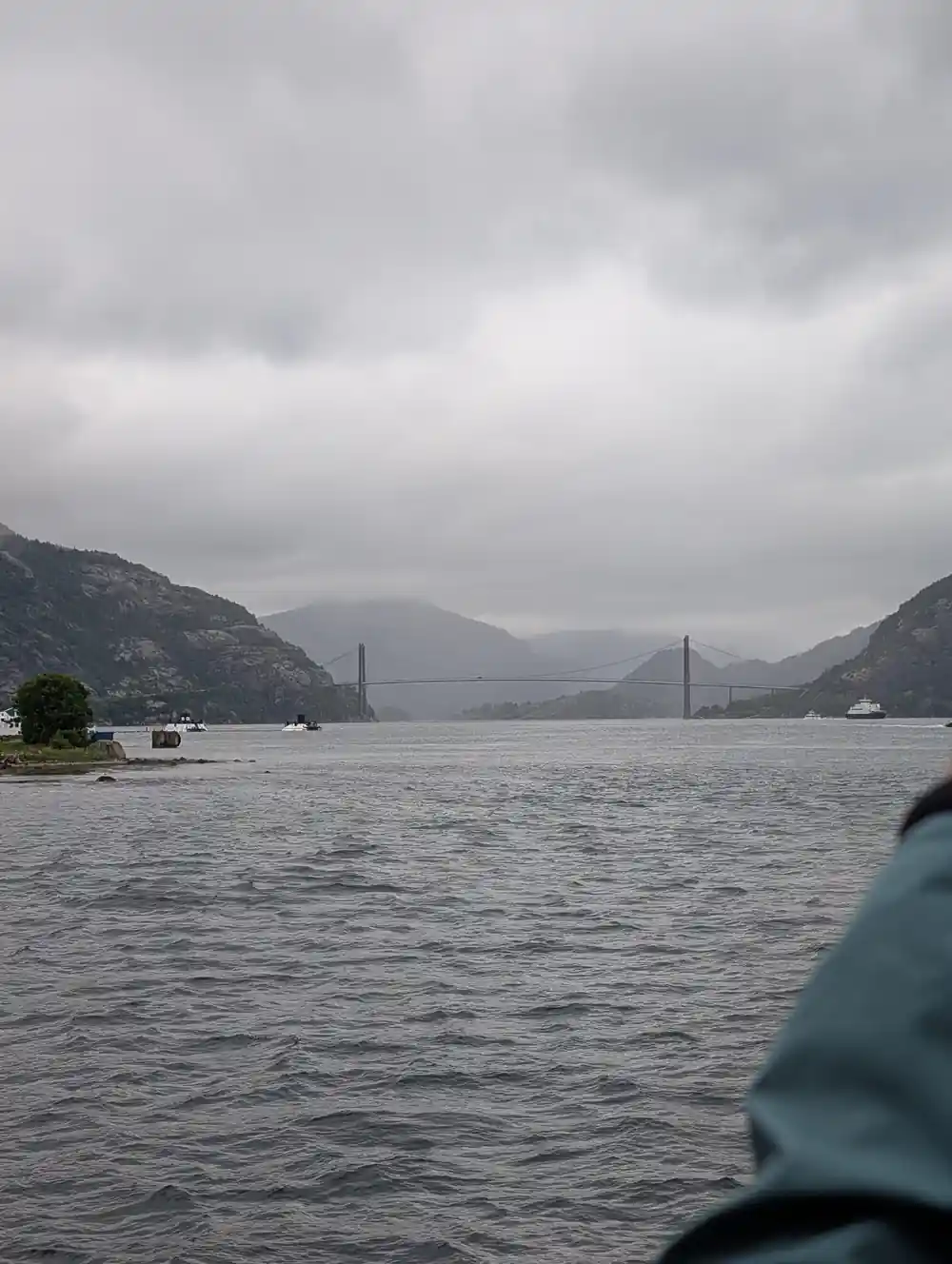
The road that reaches Lysebotn, at the head of the fjord, is an engineering story in its own right. Lysevegen winds up the mountainside with 27 hairpin bends, and from the water you can sometimes pick out the line of it, a thin scratch across the rock.[7] A year-round local ferry service sails through the Lysefjord and calls at Lysebotn.[8] The villages at the far end are not as cut off as they look.
If you would rather wake up in the middle of all this, The Bolder offers architecturally unique cabins in Lysefjorden, designed to minimize environmental impact.[9] They sit above the water, with the same view you had from the deck.
from US$75
The electric fjord cruise costs from US$75 and takes 3.5 hours to reach Fantahala, Preikestolen and Hengjanefossen.[1]
Boat Travel Before the Roads
Before the roads, the fjord was the road. Boats carried people, livestock, timber and post, and a farm's front door was very often the shoreline. Old landing places still have their stone quays, and the villages sit where the water is deep enough to come alongside. The Lysefjord runs approximately 40 kilometres from end to end.[5]
Today you have choices. The electric fjord cruise from Stavanger takes 3.5 hours and runs silently on hybrid-electric power.[10] A RIB safari covers the same water in two hours and puts you much closer to the cliffs.[11] The Rødne cruise from Stavanger lasts 3-3.5 hours.[12] Kayakers can join a private guided tour on the Lysefjord, organised for groups of up to 12 people.[13] If you are arriving from Oslo, the Sørlandsbanen train takes around seven to eight hours.[14]
Coming by road means a drive of 41 miles (66 km) from Stavanger, around an hour and a half.[15] Many visitors arrive by ship instead: cruise ships dock at Skagenkaien, Strandkaien or Skansekaien in Vågen, Stavanger's city-centre inner harbour.[16] The boat trips leave from the same harbour area, which makes for an easy port day.
Preikestolen: From Stunt Location to World Icon
Preikestolen, the Pulpit Rock, is the flat-topped cliff everyone comes to see from below. It rises 604 metres above the Lysefjord in Ryfylke, and from the water it reads as a neat square shelf cut into a wall of grey rock.[2] The cruise route swings past it, and there is usually a hush on deck when the shape resolves out of the mist or the sunlight.
The hike up is a serious half day rather than a stroll. The trail is less than 10km (6.2 miles) long with an elevation gain of just over 600m and takes about 3 to 4 hours to complete.[17] It is open year-round, including during the winter off-season, though winter on the plateau is a different proposition from a summer walk.[18] From the boat you get the same cliff from the best angle without the climb.
The cliff's fame now reaches well beyond Norway, and film crews have used the plateau as a stand-in for other landscapes entirely. From the deck below, most people find the real thing more interesting than the version on a screen: the sheer drop, the birds turning on the updraught, the dark water under the rock, and the knowledge that the shape above you was cut by ice long before anyone thought to film it.
Norwegian Folklore and the Fjord's Mystique
Norwegian folklore fills the fjord with hidden people. The hulder, a beautiful woman with a cow's tail who guards the mountain pastures, is the classic figure of the high farms. The nøkken lurks in fresh water and plays music that pulls people in. Trolls turn to stone if daylight catches them, a tidy explanation for every strange rock formation in the country. None of it is meant to be believed literally, and all of it is a way of talking about a landscape that can be beautiful and dangerous in the same afternoon.
The geology is dramatic enough on its own. Lysefjorden was formed during the last Ice Age, approximately 10,000 years ago, when colossal glaciers carved deep valleys into the landscape.[19] The ice is gone and the shape remains: a long, narrow trench with walls that go up faster than they go back.
A hiker's note puts Hengjanefossen, the waterfall the cruise passes, at around 400 metres, and it is easy to see why someone would want to write the number down.[20] Locals call it the Whisky Waterfall, and the RIB tours slip into Vagabond's Cave nearby.[11] Whether you believe the whisky or the vagabonds, the effect is the same: a white thread down a grey wall, a boat idling below, and everyone on deck suddenly quiet.
Heights and drops in the Lysefjord
Preikestolen rises 604 metres above the Lysefjord[2]; Kjeragbolten is a boulder wedged 1,000 metres above the fjord[21]; a hiker's note puts Hengjanefossen at around 400 metres[20].
What a fjord trip costs
From-prices in US dollars for the boat tours:[1][3][4]
When to book and when to go
Planning your Lysefjord day
Book the boat
The electric fjord cruise takes 3.5 hours from Stavanger.[1] Reserve now, pay later, and keep the morning free.
Dress for the deck
Windproof layers, a hat and gloves. The cabin is comfortable, but the best views are outside.
Watch the shoreline
Goats graze the lower ledges. Scan the green patches where streams come down to the fjord.
Look up for eagles
White-tailed sea eagles hunt along the cliffs. Binoculars turn a speck into a bird.
Add the hike if you like
The Preikestolen trail is less than 10km (6.2 miles) with an elevation gain of just over 600m and takes about 3 to 4 hours.[17]
See the goats, the waterfalls and the Vagabond's Cave from the water
from US$76Reserve now & pay later