Worth remembering
- Most travellers sleep in Stavanger and take a boat out to the fjord; the villages suit slower, quieter stays.
- Stavanger hotels put you near the harbour berths in Vågen, where cruise ships dock.[1]
- Inner-fjord cabins at Lysebotn and Flørli are far from the city, and the local ferry runs year-round.[2]
- The Bolder offers architecturally unique cabins in Lysefjorden, designed to minimize environmental impact.[3]
- The electric fjord cruise lasts 3.5 hours and stops at Fantahala, Pulpit Rock and Hengjanefossen Waterfall.[4]
| Stavanger city | Forsand and Oanes | Lysebotn and Flørli | |
|---|---|---|---|
| Suits | First nights, city comfort, harbour walks | Quiet fjord-edge stays near the ferry | Remote valley bases for long days out |
| On the way there | Cruise berths in Vågen, city centre[1] | Year-round local ferry calls[2] | Ferry calls at Flørli and Lysebotn[2] |
| Drive time | Start of the 41 mile drive to the fjord[5] | Around an hour and a half by car[5] | Lysevegen has 27 hairpin bends[6] |
| Nearby highlight | Preikestolen rises 604 metres above it[7] | Hengjanefossen falls around 400 metres[8] | Flørli stairway has 4444 steps[9] |
| Sleep style | Hotels, guesthouses and apartments | Camping, cabins and simple lodgings | Cabins, lodges and mountain quiet |
Experience our architecturally unique cabins in Lysefjorden, Norway, designed to minimize environmental impact.
How to choose where to stay
Pre-booking checklist
What to pack and know
- Layers, a waterproof shell and shoes with grip for wet rock
- A warm hat and gloves, even on summer evenings on the water
- The electric fjord cruise is wheelchair accessible.[4]
- Boats and ferries keep their own timetables, so check the day before
Where the Lysefjord is, and how it shapes your stay
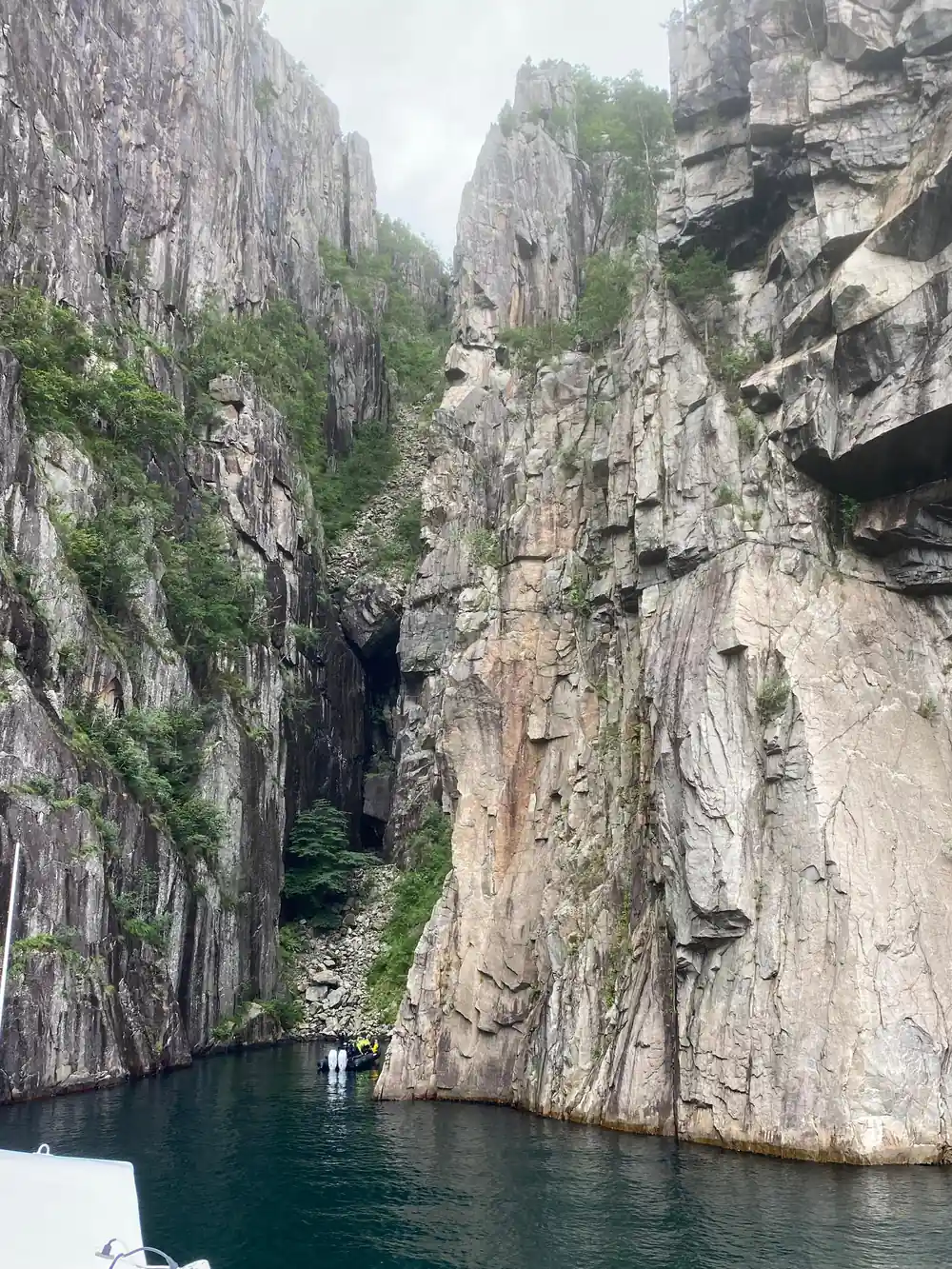
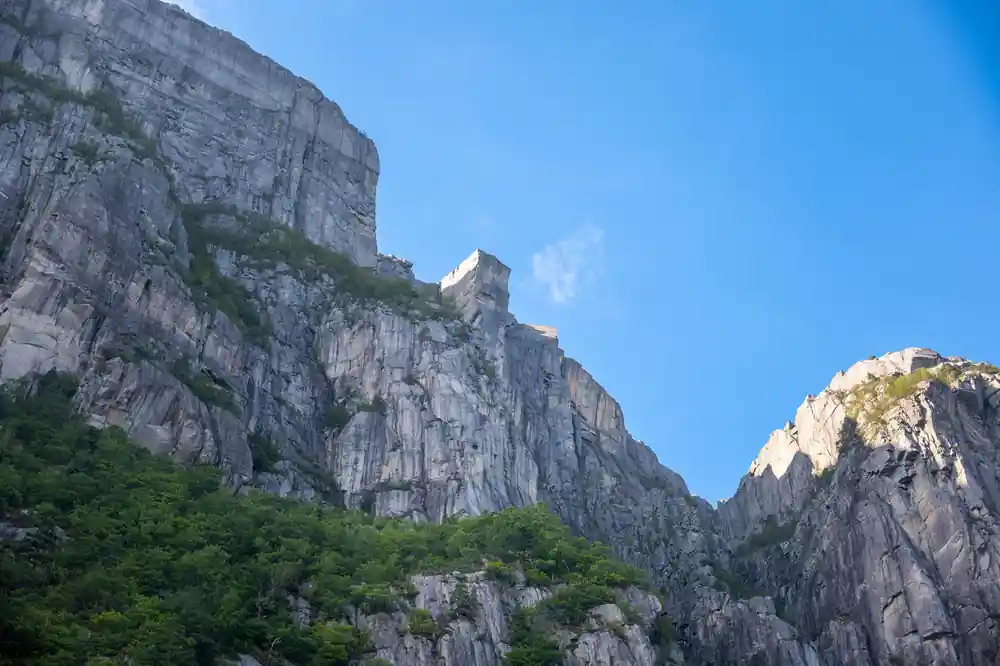
The Lysefjord is approximately 40 kilometres long and up to 422 metres deep, though it shallows to only 13 metres near Oanes and Forsand.[10] On a map it reads as a thin crack in the rock, and from the water it feels much the same: steep grey walls, very dark water, and long stretches where the only sign of people is one small farm. Preikestolen (the Pulpit Rock) rises 604 metres above the fjord in Ryfylke.[7]
The fjord was formed during the last Ice Age, about 10,000 years ago, when colossal glaciers carved deep valleys into the landscape.[11] What is left now is a long, narrow waterway with villages strung along it. Where you sleep decides how much of the fjord you can reach in a morning. From Stavanger the Lysefjord is 41 miles (66 km) away, and the drive takes around an hour and a half.[5]
Most stays fall into two groups. City hotels in Stavanger put boats, buses, restaurants and shops within a short walk of each other. Village stays out at Forsand, Oanes, Lysebotn, Flørli or Jørpeland give you quiet water and early starts on the trail. Neither is better, and the question of where to stay at the Lysefjord usually comes down to how you want to spend your mornings.
Stavanger: the base with the most beds
Stavanger is where most visitors begin. Cruise ships dock at Skagenkaien, Strandkaien or Skansekaien in Vågen, the city-centre inner harbour.[1] Hotels cluster around the harbour and the railway station, with guesthouses among the white wooden houses of Old Stavanger and larger chain hotels a few streets inland. From most of them, dinner, the cathedral and the waterfront are all a short walk away.
Arriving by train is straightforward: the Vy-operated Sørlandsbanen from Oslo takes around seven to eight hours.[12] Stavanger works well as a first and last stop, a place to sleep off a travel day, leave a bag and pick up anything you forgot. Buses toward the trailheads and the fjord villages also leave from the city, which keeps your plans flexible if the weather turns.
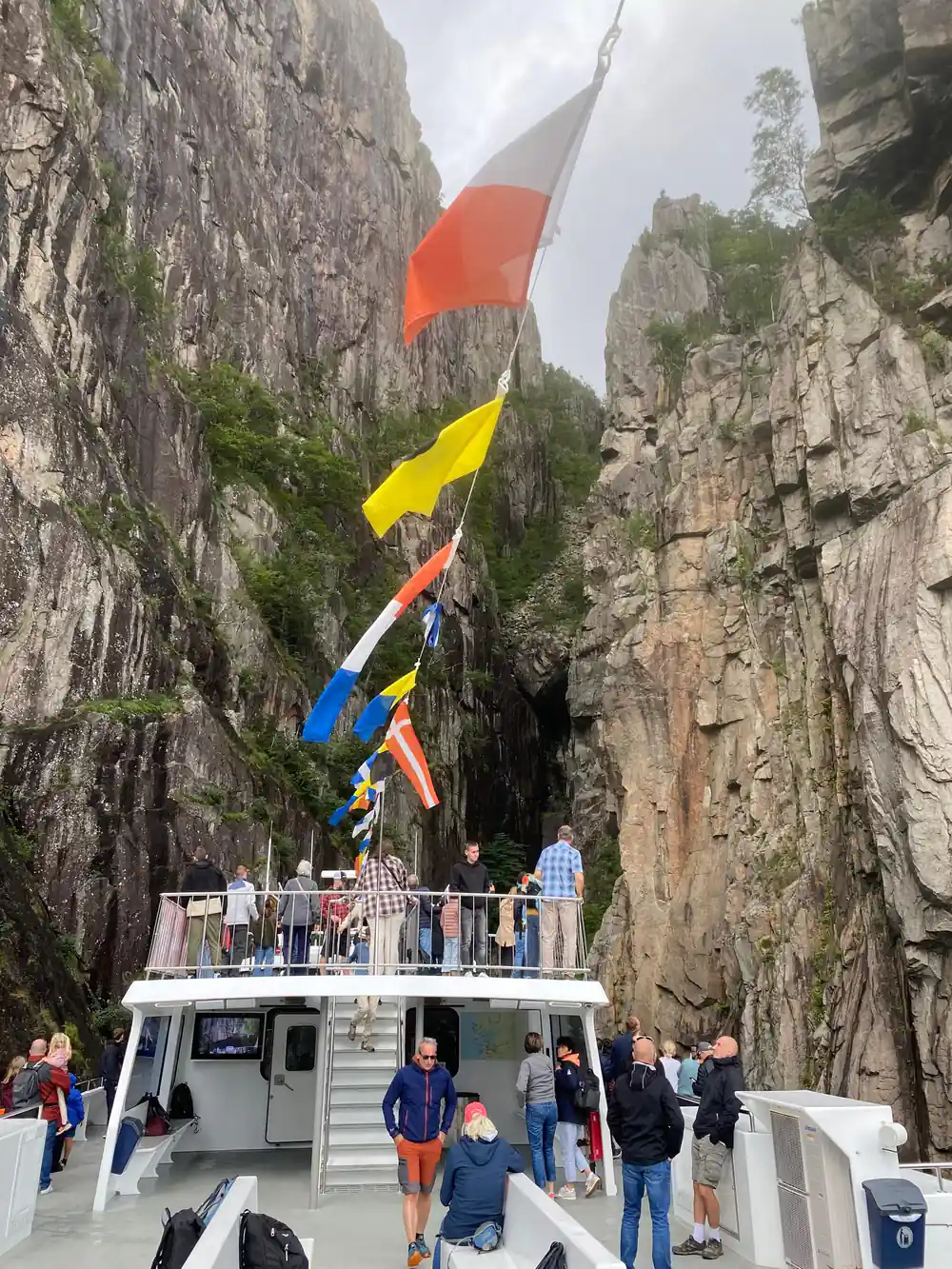
Several boat trips leave from the city, including the electric fjord cruise, which runs for 3.5 hours and stops at Fantahala, Pulpit Rock and Hengjanefossen Waterfall.[4] Sleeping close to the departure point means an easy morning and no taxi at dawn. If your trip is short, this is usually the simplest arrangement: sleep in town, spend the day on the fjord, sleep in town again.
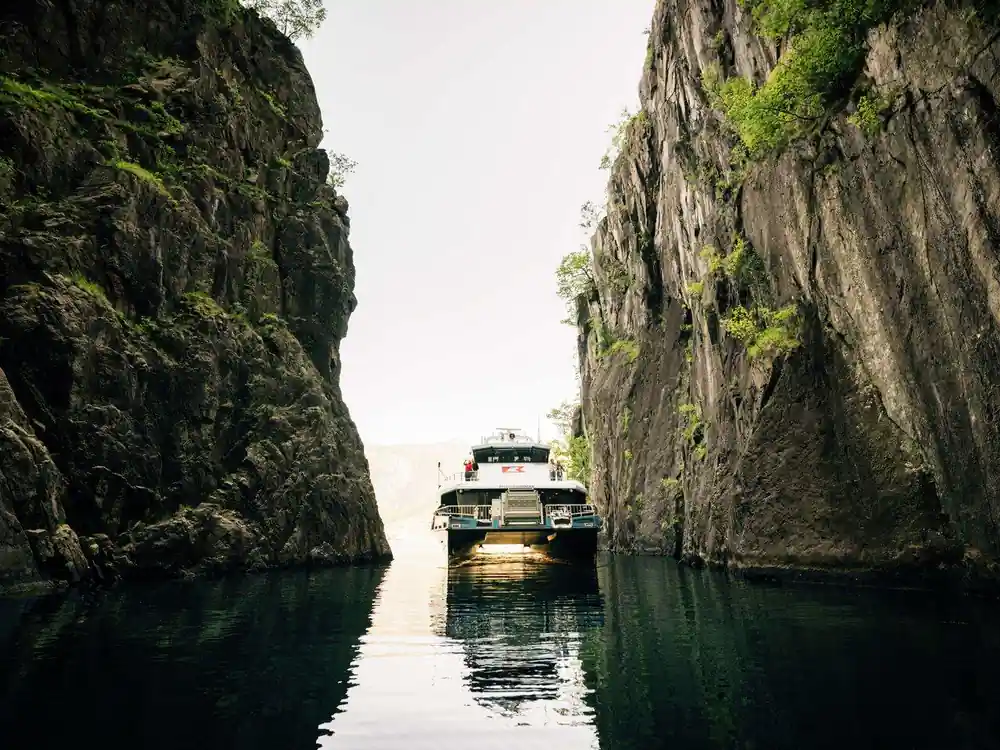
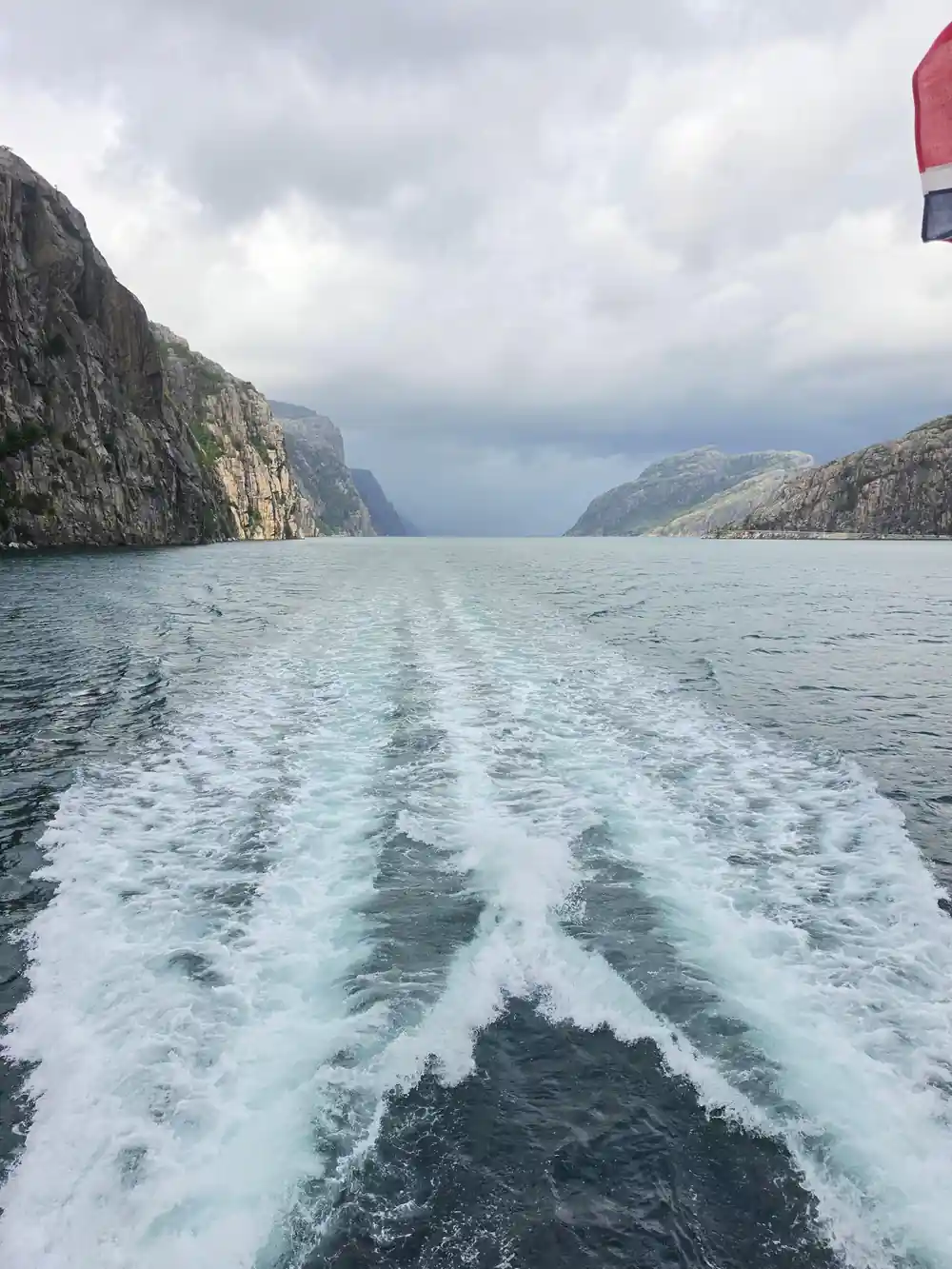
Dark water and steep walls: the Lysefjord seen from the deck of an electric boat
Forsand and Oanes: quiet nights at the fjord mouth
Where the fjord opens toward the wider water near Oanes and Forsand, it shallows to only 13 metres.[10] This end of the Lysefjord is gentler, with low green hills, farmland and small settlements instead of the sheer inner gorge. It suits travellers with a car who want short drives, quiet evenings and a view of the water from the window.
The local ferry service on the Lysefjord sails year-round and calls at Lysebotn.[2] That gives you a way to reach the fjord villages without driving, and a pleasant alternative to the road on days when you would rather sit on deck. Ferries and buses in this area keep their own rhythm, so check times before you commit to a base far from the main road.
Forsand and Oanes are small, and that is the appeal. Food shopping, fuel and restaurants are easier to find in Stavanger or Sandnes, so many people stock up before driving out and cook at their cabin or campsite. Mornings here are misty and slow, and the light on the water at both ends of the day is the reason many travellers choose this side of the fjord.
Lysebotn and Flørli: sleeping deep in the fjord
Deep in the fjord the villages shrink and the roads become an experience in themselves. Lysevegen, the road that winds from Lysebotn, has 27 hairpin bends.[6] Above Flørli, the stairway up the mountainside consists of 4444 steps.[9] This is walking country, and the accommodation matches it: cabins, lodges and a few simple rooms rather than rows of hotels.
Kjeragbolten is in this part of the fjord, a boulder wedged 1,000 meters above Lysefjord and reached by a strenuous 12 km trail.[13] Walkers often base themselves at Lysebotn to be close to the start, then spend a second night closer to the water. The scale takes some getting used to, since from the plateau you look down on boats that seem no bigger than a matchbox.
Practically, plan your arrival. You can drive in on the hairpin road or come by the local ferry that calls at Lysebotn year-round.[2] Weather changes quickly between the water and the high ground. Build in a spare half day if you can, and carry food and water rather than assuming something will be open when you get there.
from US$75
The Stavanger electric fjord cruise to Lysefjord and Preikestolen takes 3.5 hours, with an audio guide in English and Norwegian.[4]
Cabins and lodges: The Bolder and the hytte habit
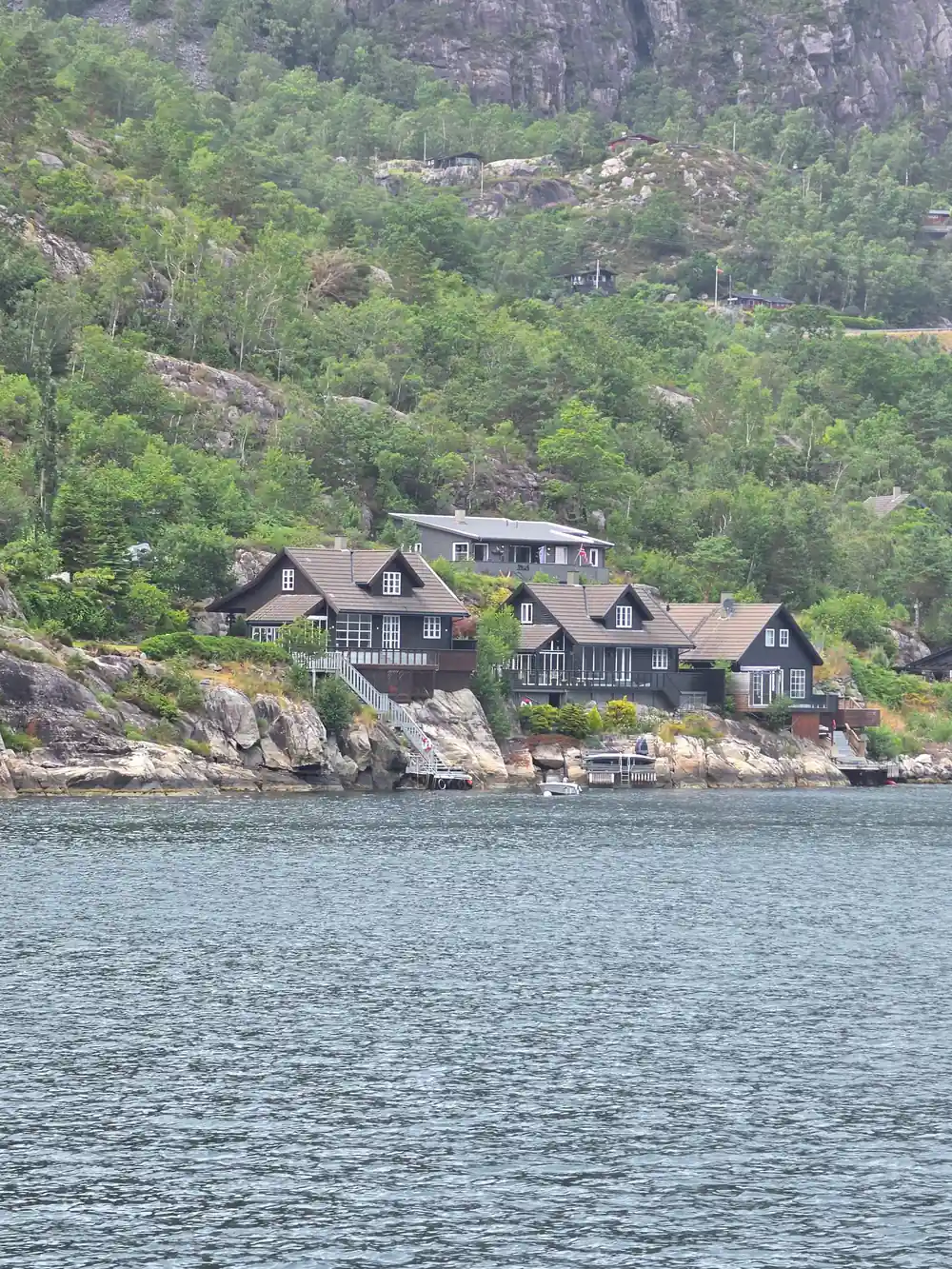
The Bolder offers architecturally unique cabins in Lysefjorden, Norway, designed to minimize environmental impact.[3] Expect clean-lined wooden cabins with wide windows and a strong sense of the landscape doing the decorating. This kind of stay works best when you let the day follow the light and the weather instead of a fixed schedule.
Beyond the design lodges, the hytte is the classic Norwegian answer to a night near the fjord: a simple wooden cabin, often self-catering, sometimes at the end of a long track. Families rent them for weeks at a time, hikers take them for a single night. The appeal is the same either way, a warm room, a small kitchen and a view you did not have to queue for.
Before you book a cabin, check a few practical things. How far is the nearest shop, is there a kitchen, does the cabin have running water, and can you reach it without a car? Bring layers, food for the first evening and a head torch. A dry bag for clothes earns its space on the west coast.
Camping around the Lysefjord
Camping gives you the cheapest bed and the closest pitch to the trailheads, whether you carry a tent or travel in a campervan. Around the fjord you will find campsites and simple pitches near the main hiking start points and the villages, but they are small, and the busy weeks fill up quickly. Decide where you want to wake up before you decide what to pack.
West coast weather does what it likes. Rain arrives fast, cloud can sit on the plateau for a day, and still summer evenings bring midges. A tent that sheds water, a sleeping mat with some thickness to it and a dry bag for clothes will do more for your trip than any gadget. If the forecast is poor, a cabin or a hotel in Stavanger is a fair swap.
Check the current local rules on camping before you travel, use established pitches where you can, and leave no trace. Norwegians take the outdoors seriously and quietly, so keep noise down, keep fires safe, and take everything out with you. If you are unsure about a spot, ask at a campsite or a tourist office, where people are usually happy to point you somewhere better.
Matching your base to the boat and the hike
Most Lysefjord stays are built around one boat trip and one walk. The electric fjord cruise from Stavanger lasts 3.5 hours and is wheelchair accessible, with an audio guide in English and Norwegian.[4] A RIB safari covers similar water in a two-hour dash.[14] Kayaking can be booked as a private guided tour for groups of up to 12 people.[15]
On foot, the hike to Preikestolen is less than 10km (6.2 miles) long, with an elevation gain of just over 600m, and takes about 3 or 4 hours.[16] The trail is open year-round, including during the winter off-season.[17] Your bed choice follows from that: a city hotel if you want buses and an early start, or a cabin near the trailhead if you would rather walk from the door.
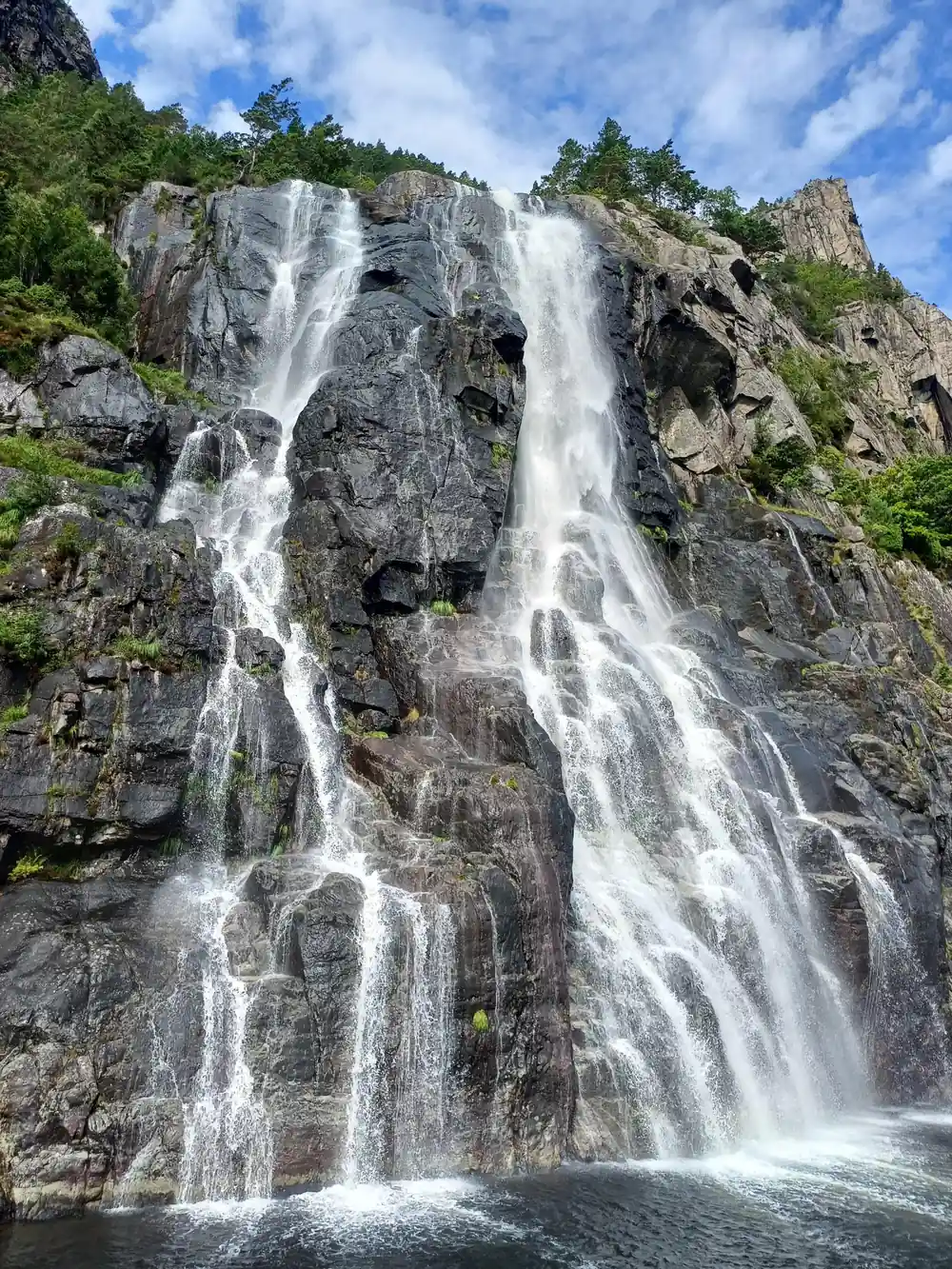
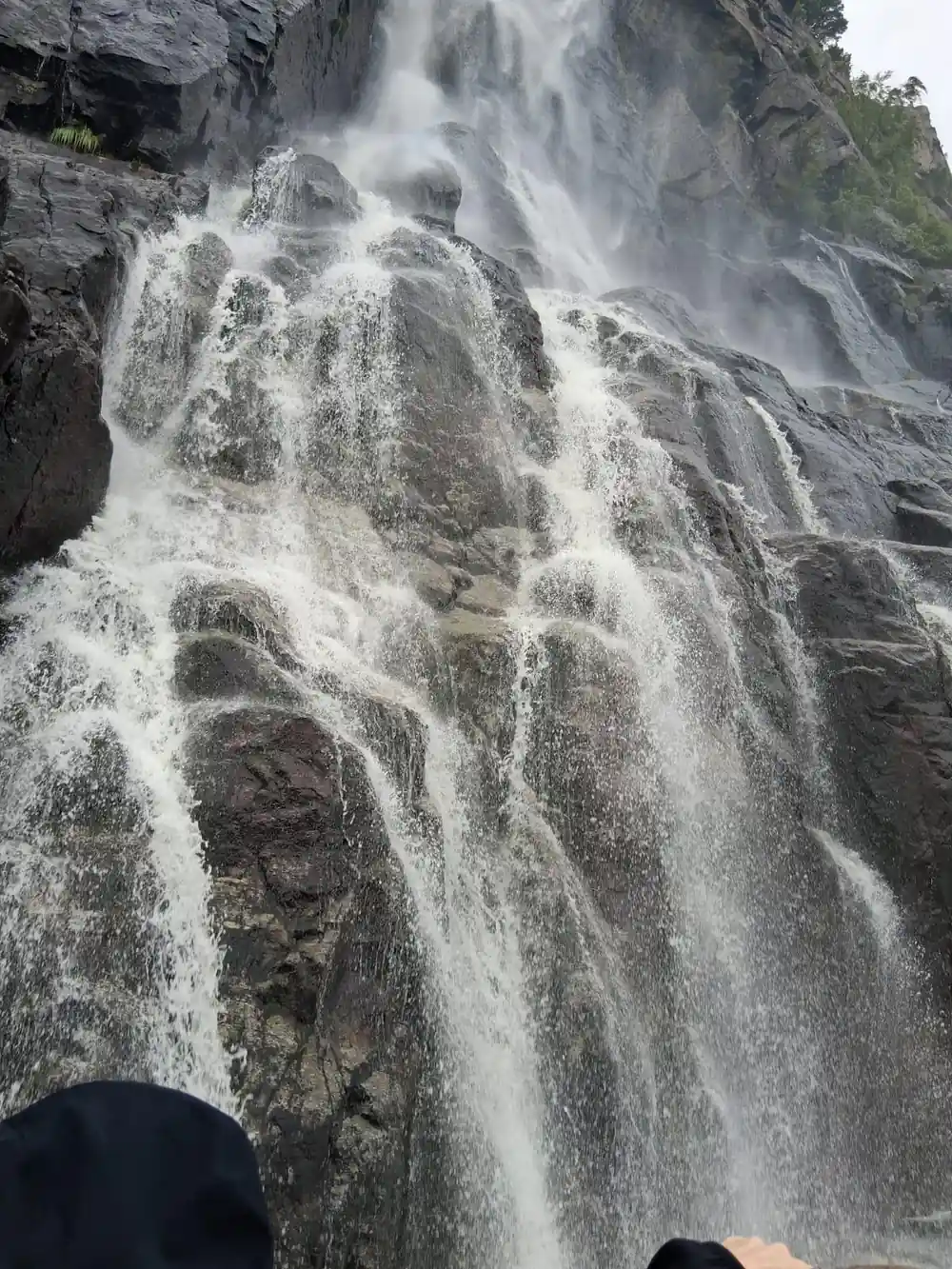
Waterfalls are part of the show from the deck. Hengjanefossen in the Lysefjord has an impressive height of around 400 meters.[8] The Rødne Lysefjord cruise from Stavanger lasts 3-3.5 hours.[18] Pick your boat first, then choose a room within easy reach of the pier, and your days will run on water time rather than transfer time.
Lysefjord distances in kilometres
Distances in kilometres, each taken from the listed facts: the drive from Stavanger[5], the length of the fjord[10], the Kjerag trail[13] and the Preikestolen hike[16].
Boat trips from Stavanger
US dollar from-prices for four Lysefjord boat listings:[4][19][20][21].
When to book your Lysefjord stay
Planning where to stay
Pick your base
Choose city beds in Stavanger or a cabin out by the fjord. The drive to the Lysefjord is 66 km, around an hour and a half.[5]
Book the boat
The electric fjord cruise from Stavanger takes 3.5 hours and can be cancelled free up to 24 hours in advance.[4]
Match stay to hike
The Preikestolen hike is less than 10km (6.2 miles) with just over 600m of ascent and takes about 3 or 4 hours.[16]
Check the winter
The trail to Preikestolen is open year-round, including the winter off-season. Pack for cold, wet rock.[17]
Keep a spare day
Weather on the west coast shifts quickly. A spare day lets you move your boat trip or your hike to the better window.
Sleep well, then see the fjord from the water
from US$76Reserve now & pay later