Worth remembering
- A cliff rising 604 metres above the Lysefjord, with a hike of less than 10km and just over 600m of ascent that takes about 3 to 4 hours.[1][2]
- A strenuous 12 km trail leads to Kjeragbolten, a boulder wedged 1,000 meters above Lysefjord.[3]
- The Flørli stairway has 4444 steps, and Lysevegen, the road from Lysebotn, winds through 27 hairpin bends.[4][5]
- The Lysefjord is 41 miles (66 km) from Stavanger and the drive takes around an hour and a half. The Preikestolen trail is open year-round.[6][7]
- Stavanger: Preikestolen (Pulpit Rock) Hike with Local Guide takes 6 hours and costs from US$168, with a live guide.[8]
- Top choice Preikestolen Guided Hike from US$168 Duration6 hours[8]Rated4.80 from 439 reviews[8]Live guideEnglish, Norwegian, Danish, Swedish[8]Good to knowFree cancellation up to 24 hours before[8]StopsTransfer, viewpoint, Pulpit Rock[8] Check availability
- RIB Tour to Lysefjord from US$126 Duration2 hours[9]Rated4.92 from 1,526 reviews[9]Live guideNorwegian, English[9]Good to knowSkip the ticket line[9]StopsLysefjord, Fantahala, Pulpit Rock[9] See this tour
- Electric Fjord Cruise from US$75 Duration3.5 hours[10]Rated4.62 from 9,730 reviews[10]Live guideAudio guide in English and Norwegian[10]Good to knowWheelchair accessible[10]StopsFantahala, Pulpit Rock[10] See this tour
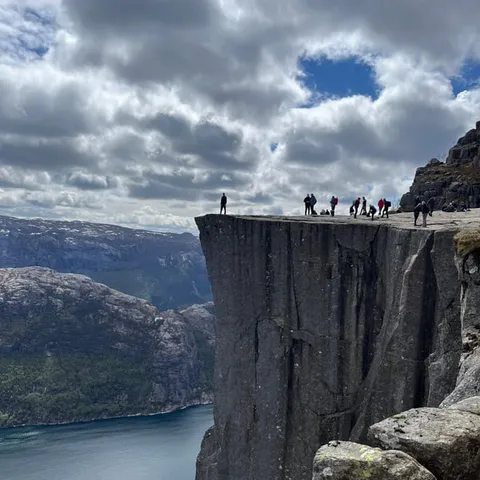
The hike to the Pulpit Rock is also relatively easy, being less than 10km (or 6.2 miles) long and with an elevation gain of just over 600m, which can be completed in about 3 or 4 hours.
Our verdict: a guided Preikestolen hike
Pre-booking checklist
On the trail
- Shoes with grip, water and a snack for the climb
- A warm layer and a waterproof, whatever the morning looks like
- Sunglasses and sun cream for long summer evenings on the plateau
- Stay back from the cliff edge and take care on wet rock
Why the Lysefjord is a hiker's fjord
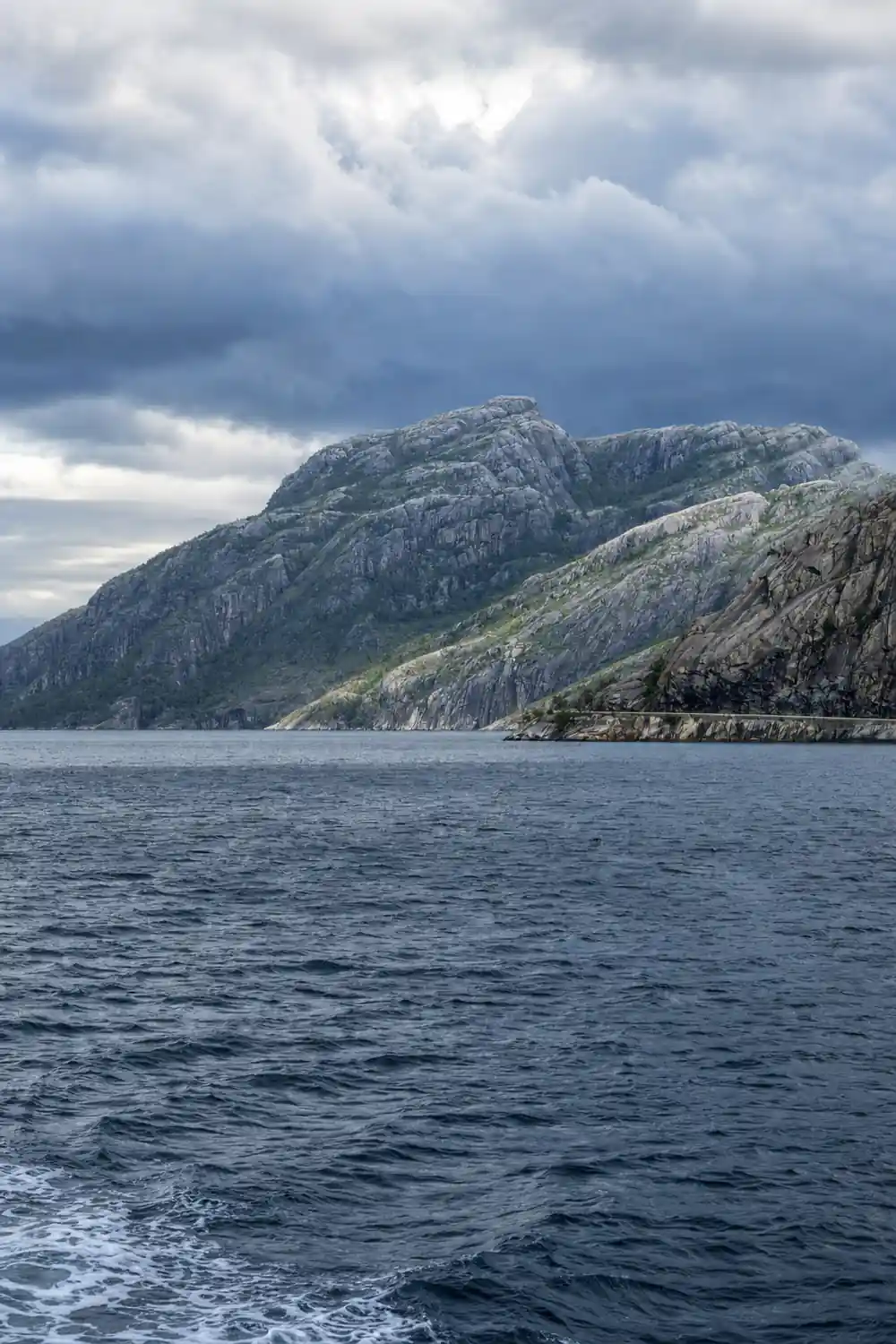
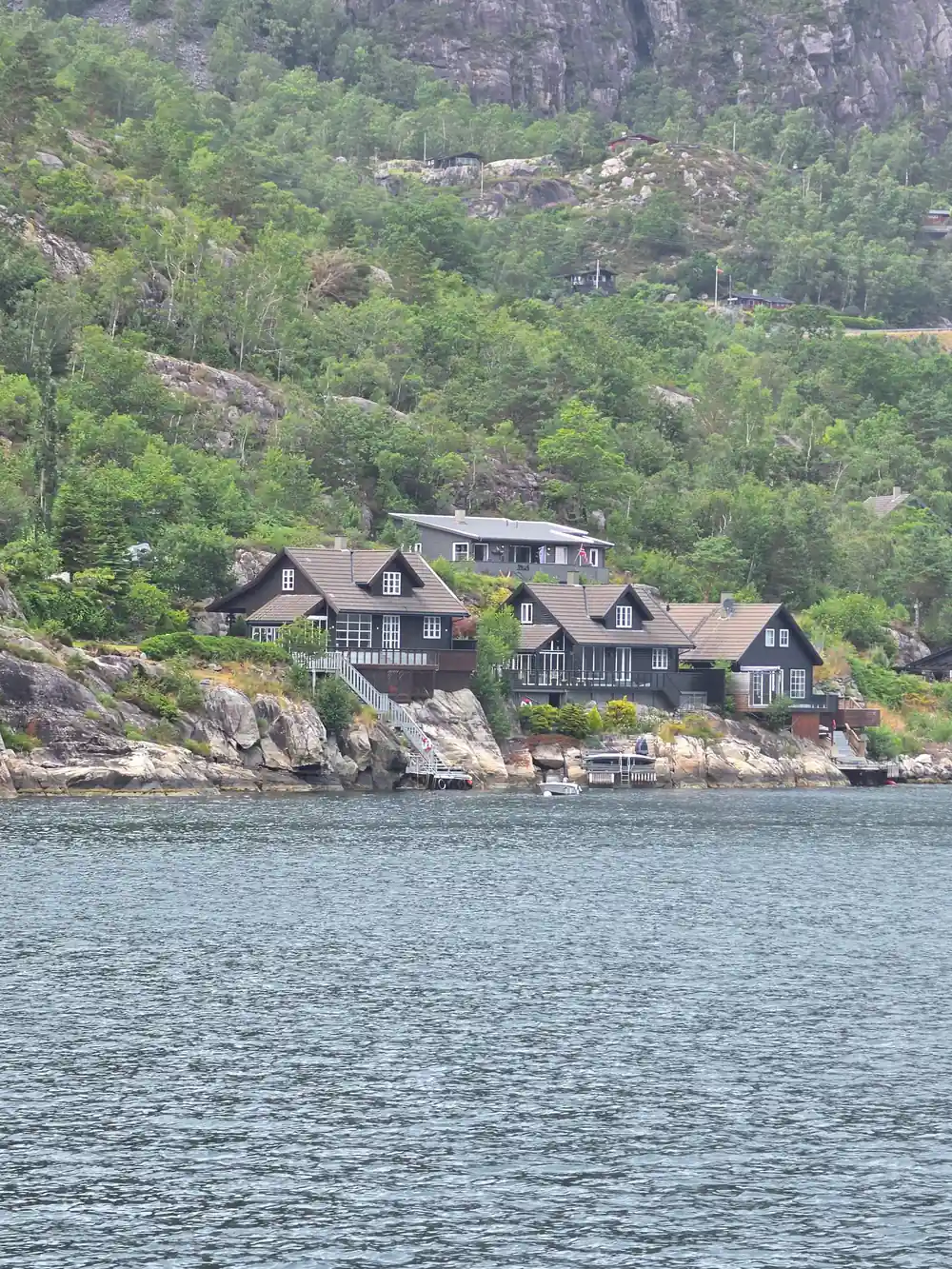
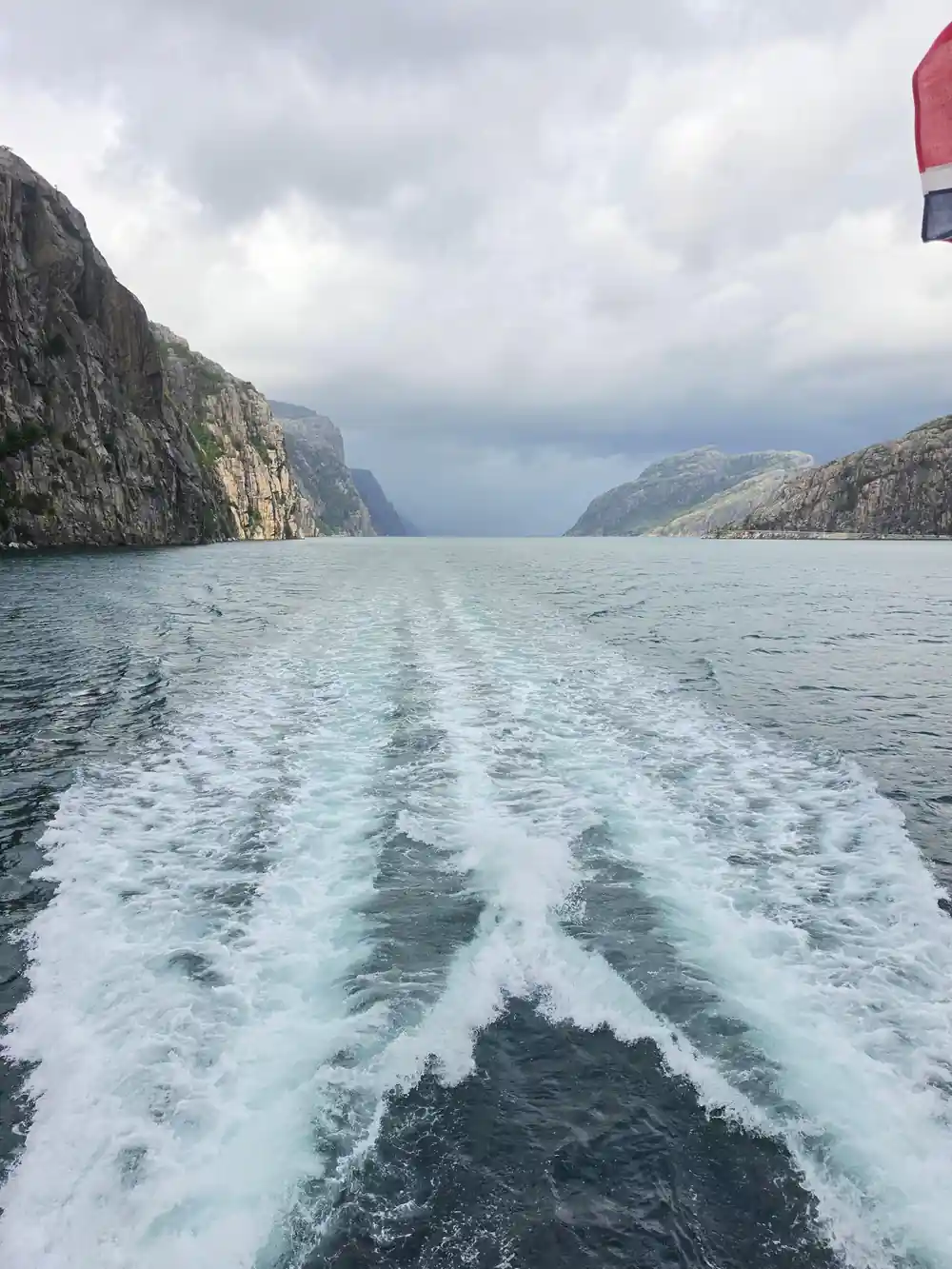
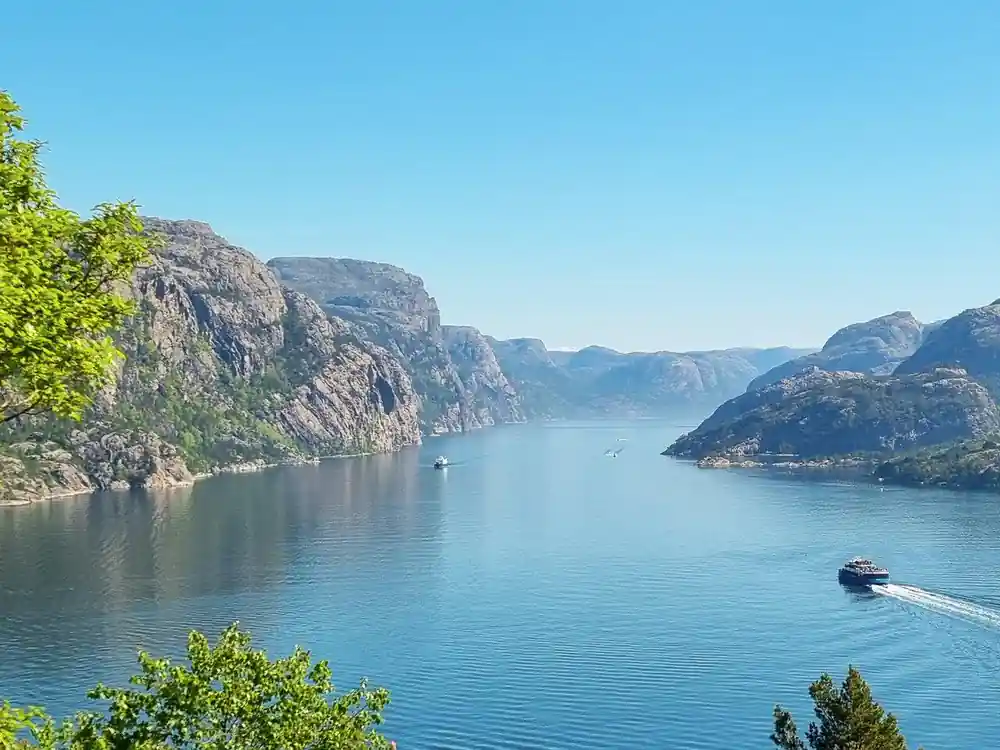
The Lysefjord was formed during the last Ice Age, about 10,000 years ago, when colossal glaciers carved deep valleys into the landscape.[11] Today the fjord is approximately 40 kilometres long and up to 422 metres deep, though it shallows to only 13 metres near Oanes and Forsand.[12] On the ground that means a long, narrow channel of dark water with grey rock walls that rise almost vertically instead of sloping back. From a boat the scale is hard to judge, because there are few trees and no buildings to compare against. From the trails above, the water looks like a road laid out far below you.
Above the water the rock keeps climbing. Preikestolen (the Pulpit Rock) rises 604 metres above the Lysefjord in Ryfylke.[1] The cliff is a flat shelf with a sheer drop on three sides, and the walk to it is short enough for travellers who hike a few times a year. Weather matters more than fitness here. Cloud can sit in the fjord one hour and lift the next, so build some slack into your day and be ready to wait for the view. Hiking Lysefjord is really about timing as much as legs.
Preikestolen: the classic Lysefjord hike
The Preikestolen hike is less than 10km (6.2 miles) long with an elevation gain of just over 600m and takes about 3 to 4 hours to complete.[2] The path leaves the trailhead through birch and bog, then climbs rock steps and stone stairways built up to cope with the traffic. It is a walk rather than a climb: no ropes, no scrambling, but a steady pull uphill almost the whole way. The hiking trail to Preikestolen is open year-round, including during the winter off-season,[7] so you can walk it in snow and ice if you have the gear and the experience.
If you would rather not work out bus times, trail conditions and timing, Stavanger: Preikestolen (Pulpit Rock) Hike with Local Guide takes 6 hours and costs from US$168.[8] A live guide leads in English, Norwegian, Danish and Swedish, and the day includes a transfer, a viewpoint stop and time at Pulpit Rock itself.[8] The tour is rated 4.80 from 439 reviews, you can reserve now and pay later, and free cancellation is available up to 24 hours in advance for a full refund.[8] That flexibility matters in a place where the forecast changes hourly.
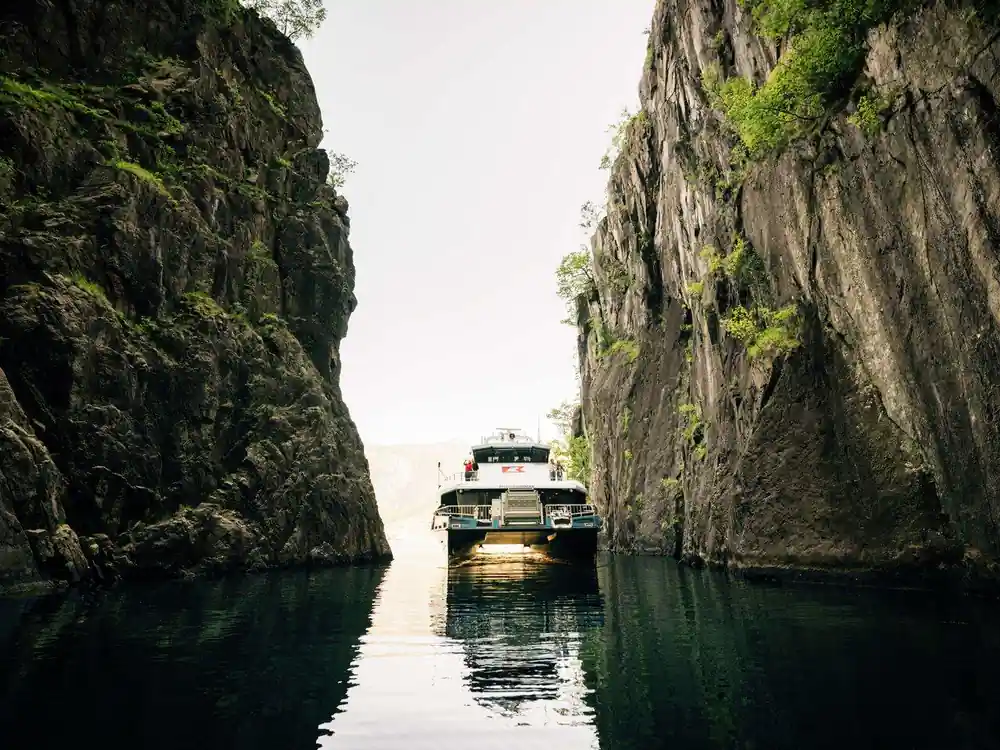
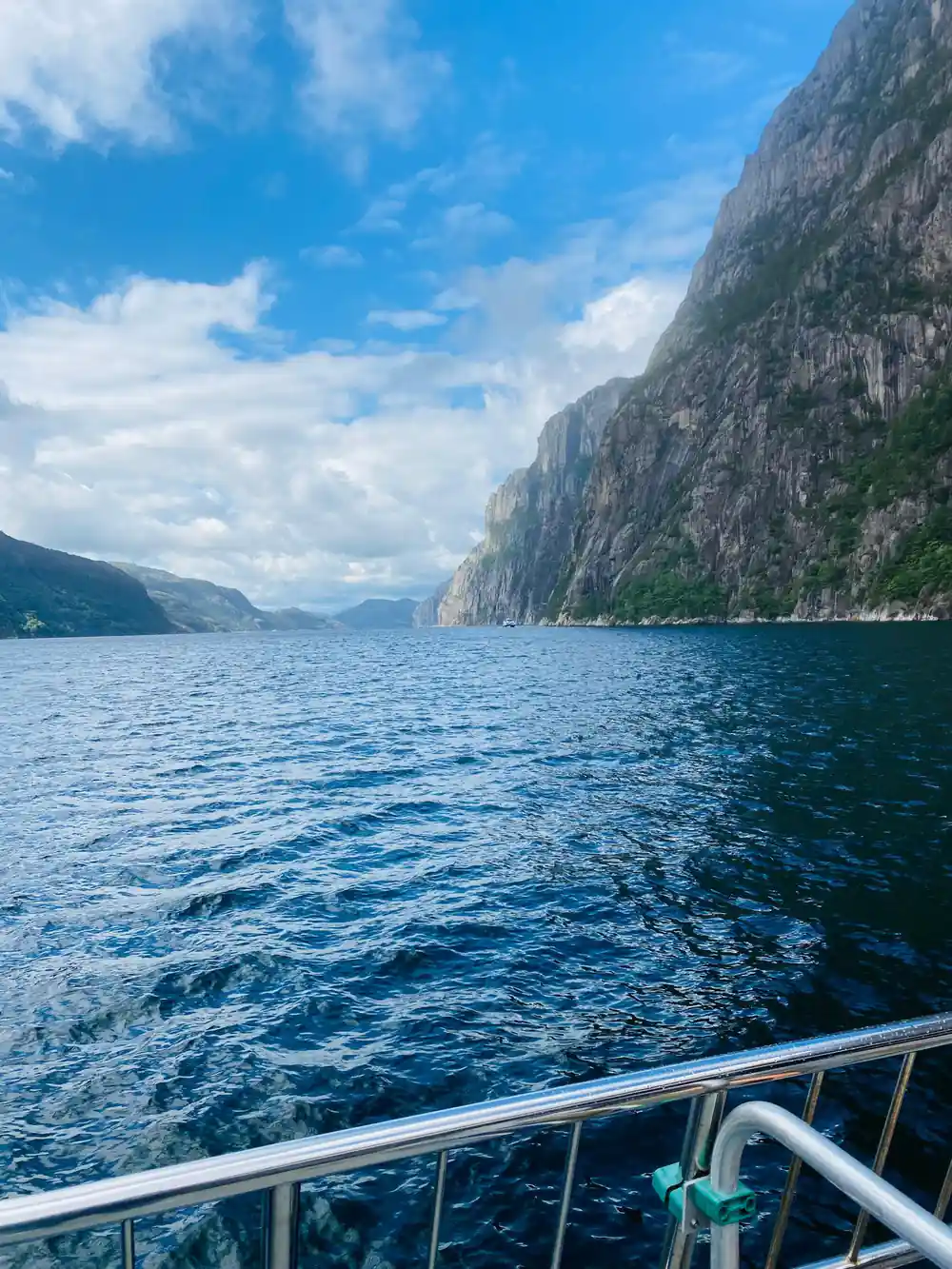
Calm water between high rock walls on the Lysefjord.
Kjerag and the boulder above the fjord
Kjerag is the bigger, harder day out. The hike to Kjeragbolten is a strenuous 12 km trail, and Kjeragbolten is a boulder wedged 1,000 meters above Lysefjord.[3] The route climbs several steep sections with chains bolted into the rock, crosses bare slabs and finishes on a plateau where the boulder sits jammed in a crevice. Stepping out onto it is optional, and plenty of people simply sit and look at it instead. A Kjerag Lysefjord day needs an early start, dry weather and real hiking shoes.
Reaching the trailhead is part of the adventure. You drive to Lysebotn at the head of the fjord, then climb the mountain road out of the village. Lysevegen, the road that winds from Lysebotn, has 27 hairpin bends,[5] and the surface is narrow enough that passing places matter. Below you, boats come and go on the fjord all day. Without a car, the Kolumbus local ferry service on the Lysefjord to Lysebotn runs year-round,[13] which keeps this side of the fjord reachable outside the summer season too.
The Flørli stairs in Lysefjord
Flørli is the odd one out: a small former power station village on the fjord shore with a wooden staircase heading straight up the mountain behind it. The Flørli stairs consist of 4444 steps,[4] and the climb is a proper workout with a long, tiring descent. The reward is one of the strangest views in the fjord, looking down on Lysebotn, the water and the road you arrived on. Take your time, carry water, and turn back at any point if the weather closes in.
Getting there is part of the plan. The Kolumbus local ferry service on the Lysefjord to Lysebotn runs year-round,[13] so the village works as a day trip in most seasons rather than only in midsummer. Flørli is tiny, the stairway is steep and the only way back down is the way you came, so pace yourself and start earlier than you think you need to. A boat trip along the fjord on the same day works nicely if the timetable allows it.
from US$168
The guided Preikestolen hike takes 6 hours, with a live guide in English, Norwegian, Danish and Swedish, and free cancellation.[8]
Getting to the trailheads from Stavanger
Stavanger is the natural base for all of this. The Lysefjord is 41 miles (66 km) from Stavanger, and the drive takes around an hour and a half,[6] through tunnels and along the fjord arm to the Preikestolen trailhead, or on to Lysebotn for Kjerag and Flørli. If you arrive by ship, cruise ships dock at Skagenkaien, Strandkaien or Skansekaien in Vågen, Stavanger's city-centre inner harbour.[14] From there you are already in the middle of town, which makes an early start for the trailhead straightforward.
Without a car, the options are thinner but workable. You can travel from Oslo to Stavanger by train on the Vy-operated Sørlandsbanen, which takes around seven to eight hours,[15] and the fjord itself is served by a year-round local ferry.[13] For a short trip, the simplest approach is a guided hike that includes transfers, which removes the need for a rental car or a timetable. Otherwise, look at shuttle seats and boat departures from the city centre piers.
Guided hikes, boat trips and multi day plans
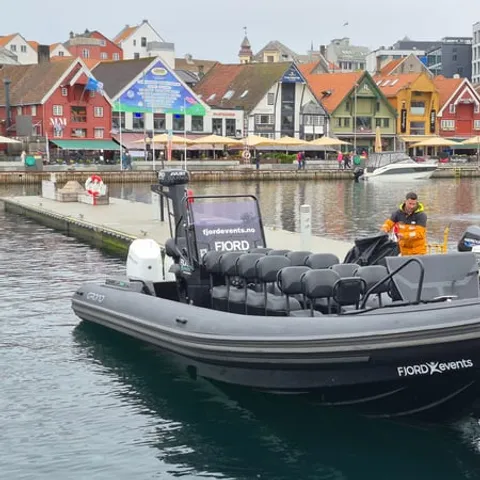
Boat trips pair well with hiking, and they show you the fjord from a completely different angle. From Stavanger a RIB tour to Lysefjord and Preikestolen takes 2 hours and costs from US$126.[9] The electric fjord cruise to Lysefjord and Preikestolen takes 3.5 hours and costs from US$75,[10] and it is the calmest way to see the cliff and the Hengjanefossen waterfall from below. Neither replaces the walk, but together they let you see Preikestolen from both the water and the top.
Longer programmes exist for walkers who want more than a single day on the trails. Stavanger: 2-Day Adventure with Preikestolen & Kjerag Hikes runs 2 days and costs from US$1047,[16] linking Pulpit Rock and Kjeragbolten with a sightseeing cruise between them. A lysefjord multi day hike like this saves the back and forth from Stavanger. Whichever you choose, the guided Preikestolen hike can be reserved now and paid later, with free cancellation up to 24 hours in advance for a full refund.[8]
When to go and what to pack
The hiking trail to Preikestolen is open year-round, including during the winter off-season.[7] Summer brings very long daylight and the busiest paths, so an early start pays off. Spring and autumn are quieter and often clearer, with snow still lying on the high ground well into spring. Winter is beautiful and serious: ice on the rock steps, short days and a need for spikes, warm layers and a head torch. Whichever season you pick, check the forecast on the morning of the hike rather than a week ahead.
Pack light but pack for rain. A waterproof shell, a warm mid layer, gloves, a hat and spare socks cover most days, and shoes with real grip are worth more than anything else in your bag. Carry water and food, since there is little on the trails, and keep a charged phone with you. On the cliff, stay well back from the edge, especially when the rock is wet or the wind is up, and give yourself time to enjoy the view rather than rushing the last few metres.
Heights above the Lysefjord
Height in metres from[1] for Preikestolen above the Lysefjord,[3] for Kjeragbolten above the Lysefjord, and[17] for Hengjanefossen waterfall.
What a day on the fjord costs
From-prices in US dollars from these GetYourGuide listings:[8][9][10].
When to book your hike
Plan your Lysefjord hike
Choose your hike
Preikestolen is the classic cliff walk, Kjerag the long strenuous one, and Flørli the climb of 4444 wooden steps.[4]
Check the season
The Preikestolen trail is open year-round, so you can walk it outside the crowded summer weeks if you pack for the weather.[7]
Sort out transport
The Lysefjord is 41 miles (66 km) from Stavanger, around an hour and a half by car, or you can join a hike with transfers.[6]
Book the guided hike
The guided Preikestolen hike takes 6 hours and costs from US$168, with free cancellation up to 24 hours before.[8]
Pack for wet rock
Grippy shoes, a waterproof shell and a warm layer make the difference between a great day and a cold one on the plateau.
Walk to the Pulpit Rock with a local guide
from US$168