Worth remembering
- Lysefjord is the fjord you can see in half a day from Stavanger, on a 3.5-hour electric cruise to Preikestolen and Hengjanefossen Waterfall.[1]
- The Lysefjord is 41 miles (66 km) from Stavanger and the drive takes around an hour and a half, so it fits a port call or a short break.[2]
- Preikestolen rises 604 metres above the fjord, and the cruise passes Fantahala, Pulpit Rock and Hengjanefossen Waterfall.[1][3]
- The Preikestolen trail is open year-round, and the hike is less than 10km long with just over 600m of ascent.[4][5]
- The electric cruise is rated 4.62 from 9,730 reviews, with free cancellation up to 24 hours in advance for a full refund.[1]
- Top choice Electric fjord cruise from US$75 Duration3.5 hours[1]Rating4.62 from 9,730 reviews[1]StyleQuiet electric boatAccessWheelchair accessible[1]CancellationCancel up to 24 hours in advance[1] Check availability
- Low-emission cruise from US$76 Duration2.5 hours[6]Rating4.81 from 2,256 reviews[6]StyleLow-emission vesselAccessWheelchair accessible[6]CancellationCancel up to 24 hours in advance[6] See this tour
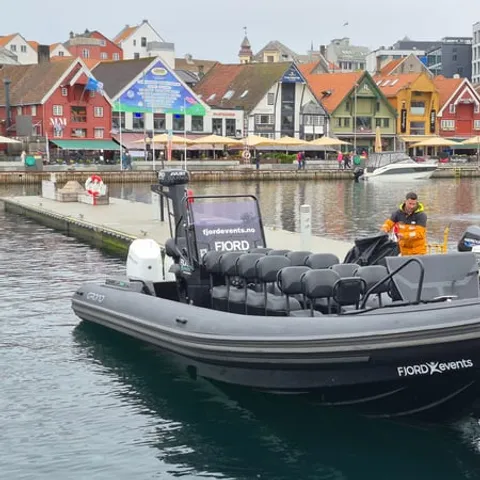
- RIB to Lysefjord from US$126 Duration2 hours[7]Rating4.92 from 1,526 reviews[7]StyleOpen RIB speedboatAccessSkip the ticket line[7]CancellationCancel up to 24 hours in advance[7] See this tour
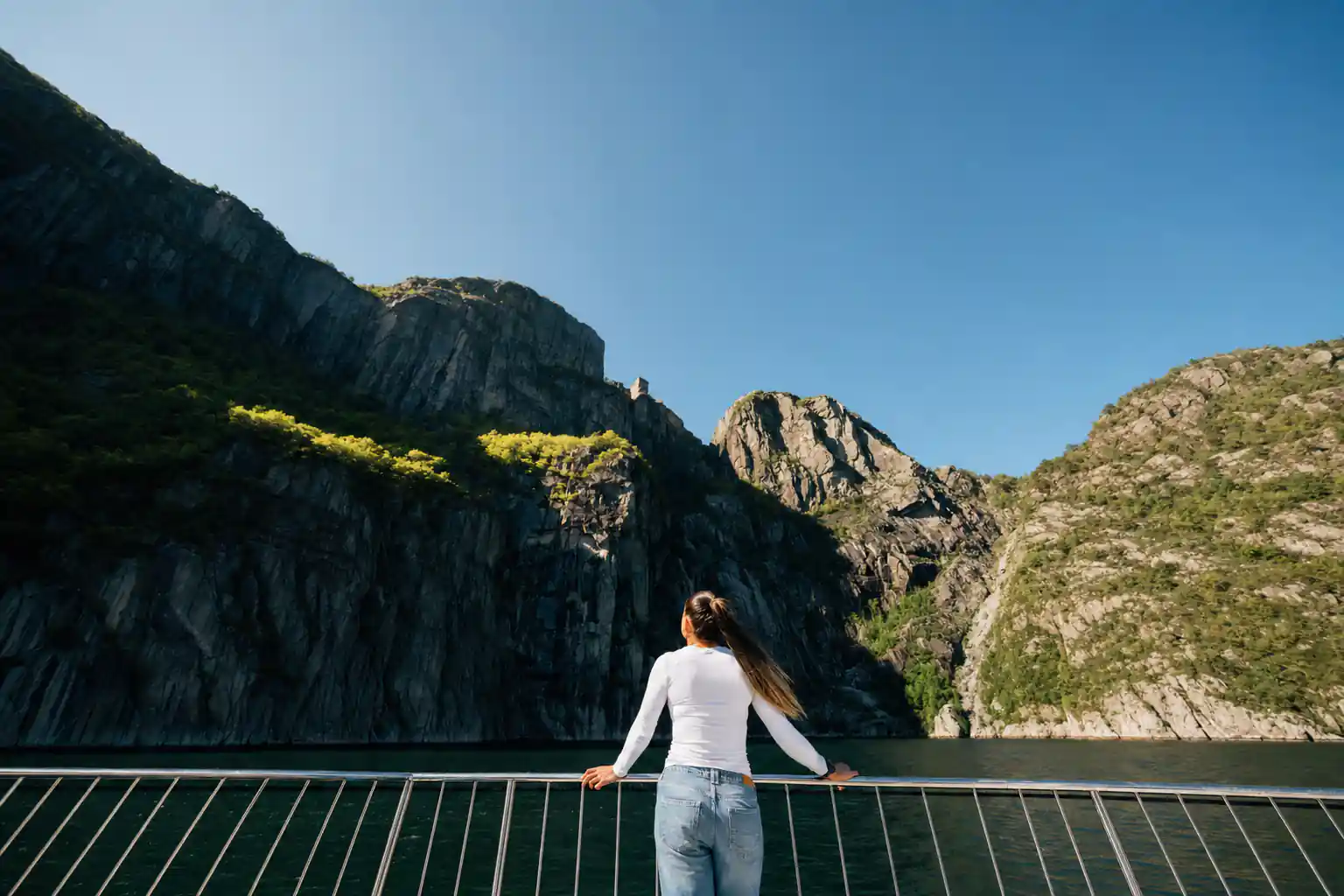
The hiking trail to Preikestolen is open year-round. Hiking Preikestolen off-season is a unique experience that offers different views and challenges.
Worth it? Lysefjord over Geirangerfjord
Pre-booking checklist
Lysefjord vs Geirangerfjord: The Short Answer
Both fjords were cut into the same kind of west Norwegian rock, and from the water they give you the same sensation: a flooded valley with walls rising on either side and no way to see around the next bend. The difference for a traveller is access. Lysefjord sits close to Stavanger, and the electric fjord cruise from the city takes 3.5 hours[1], so it fits comfortably into a port day or a free morning. From US$75[1], it is an easy first fjord trip.
Geirangerfjord is the one people picture when they close their eyes: a narrow channel, waterfalls threading down the rock, small farms on ledges above the water. Hardangerfjord is wider and gentler, with orchards and villages along its edges, and it suits travellers who want to combine a fjord with a few days in the fruit districts. Lysefjord is more vertical. Its signature sight, Preikestolen, is a flat shelf of rock that you can walk out onto, and that is what gives it a different feel from the other two.
If your trip starts and ends in Stavanger, Lysefjord is the sensible pick. If you are travelling between Bergen and Ålesund, or you have a week for western Norway, Geirangerfjord and Hardangerfjord are the ones your route will naturally pass. You can see Lysefjord while you are in Stavanger and add a longer fjord further north later in the same holiday.
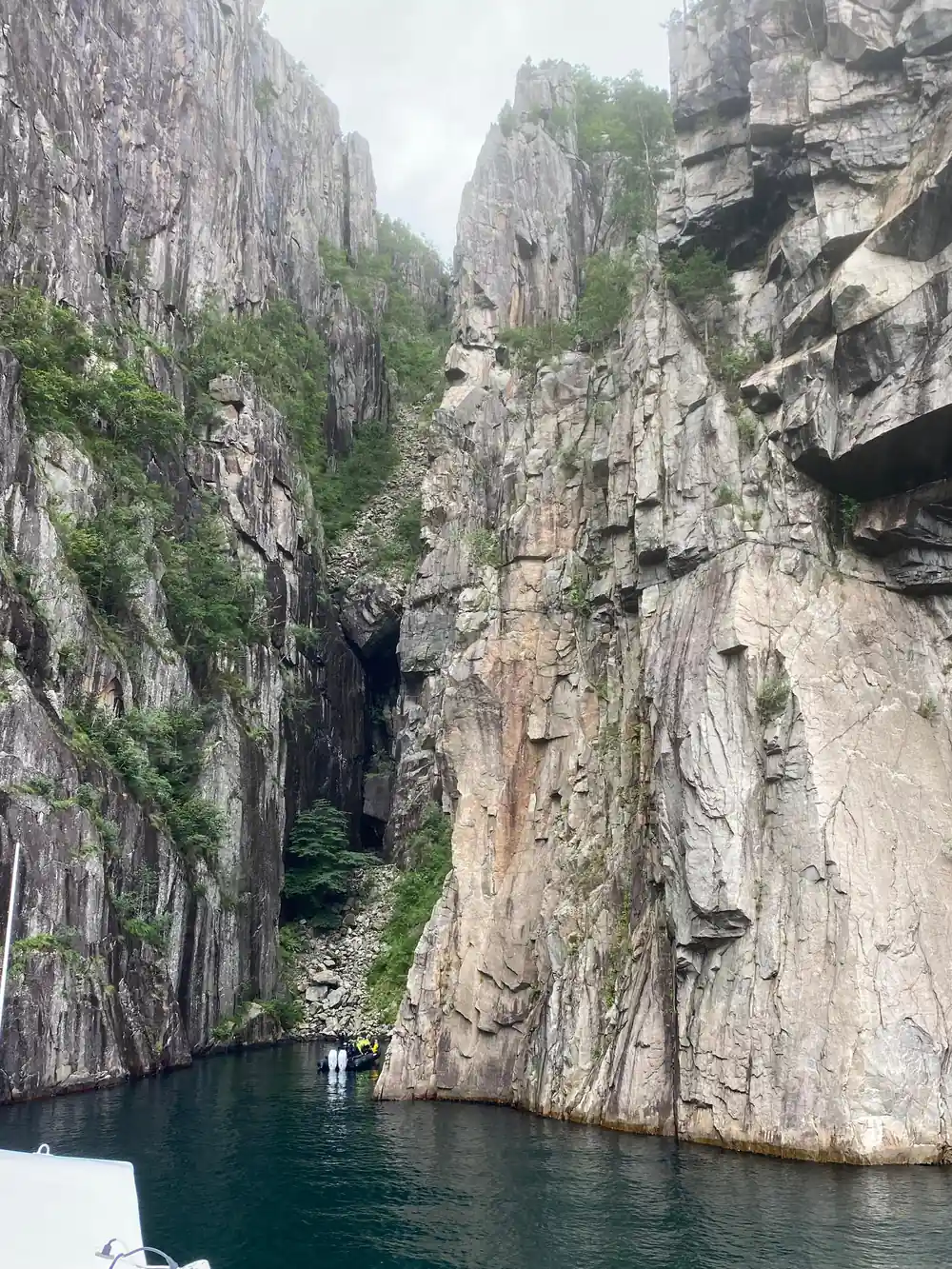
What Lysefjord Looks Like From the Water
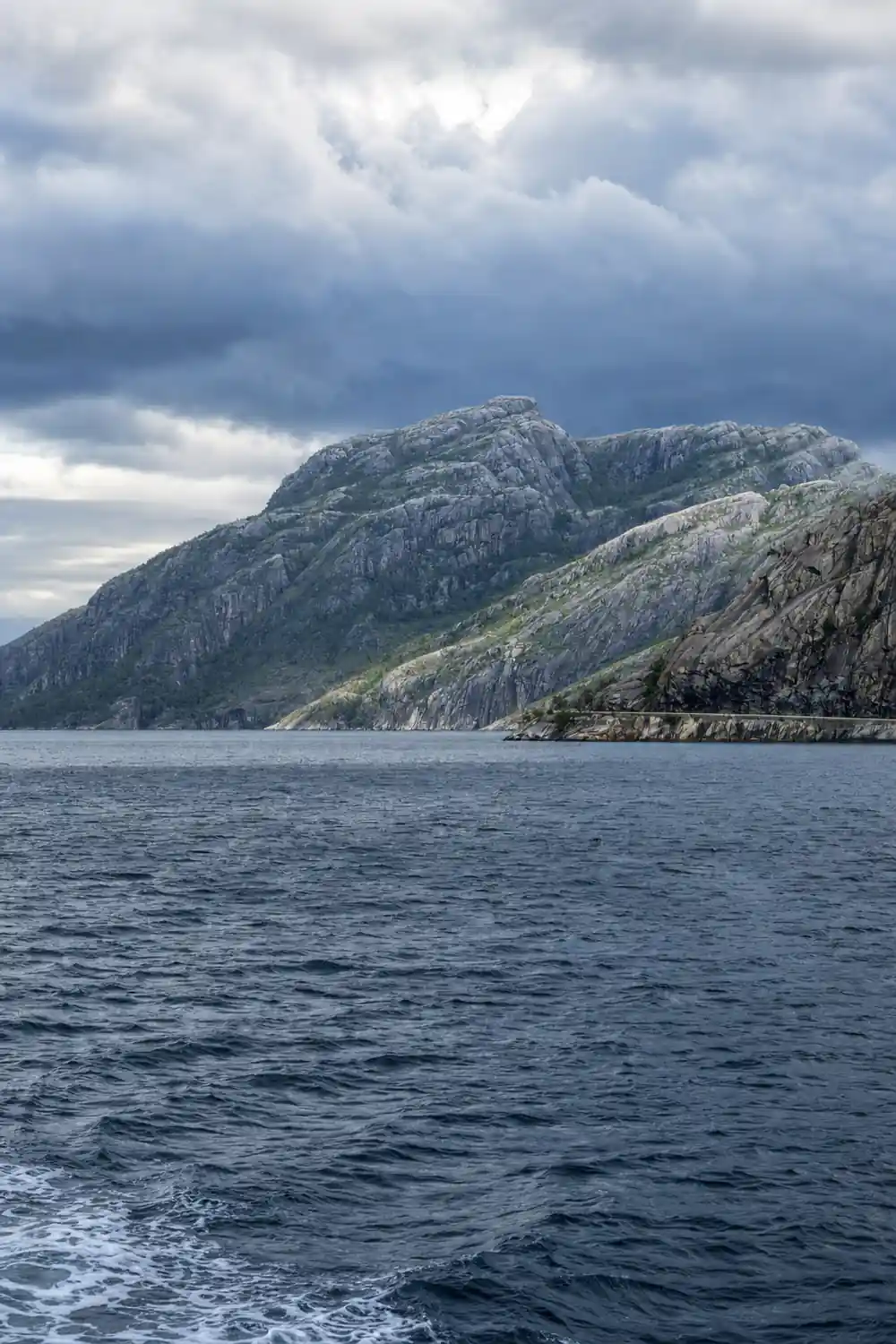
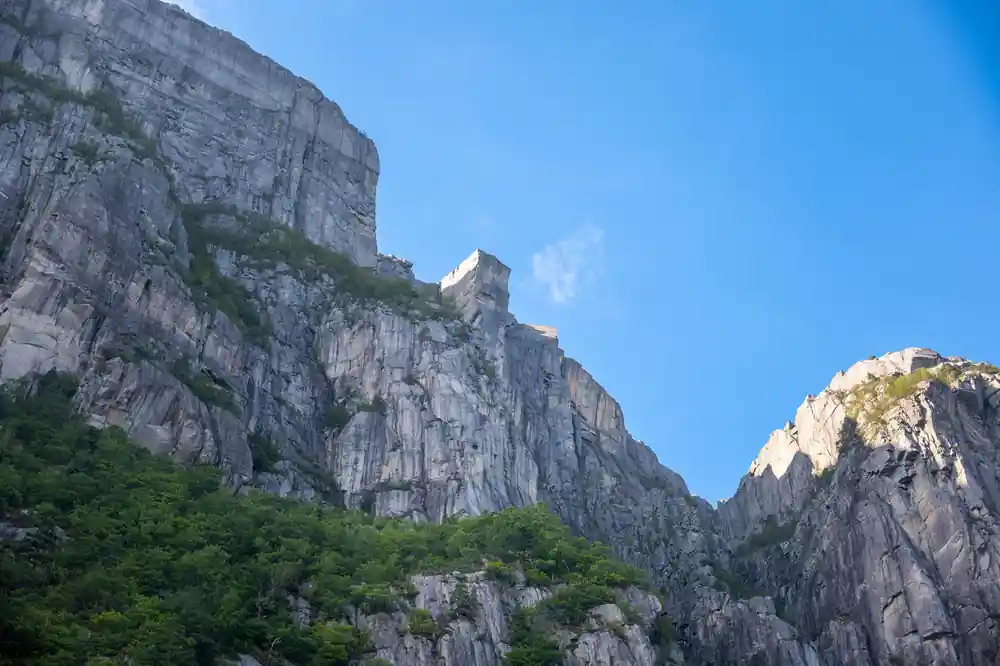
Lysefjord is approximately 40 kilometres long and up to 422 metres deep, though it shallows to only 13 metres near Oanes and Forsand.[9] That shallow sill is one reason the water inside the fjord behaves differently from the open sea, and it is a clue to how the whole valley was carved. The fjord was formed during the last Ice Age, approximately 10,000 years ago, when colossal glaciers carved deep valleys into the landscape.[10] Preikestolen itself rises 604 metres above the Lysefjord in Ryfylke.[3]
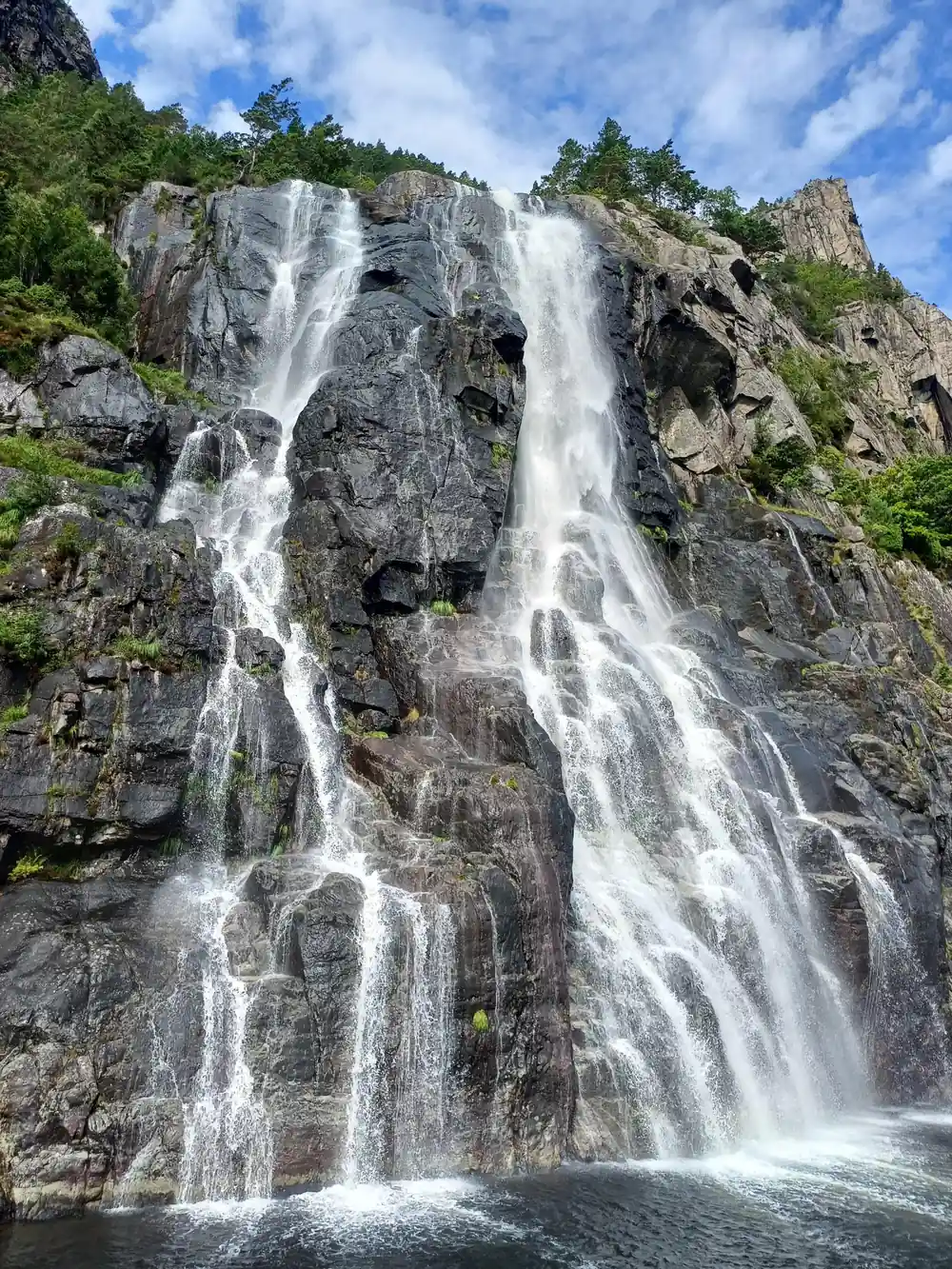
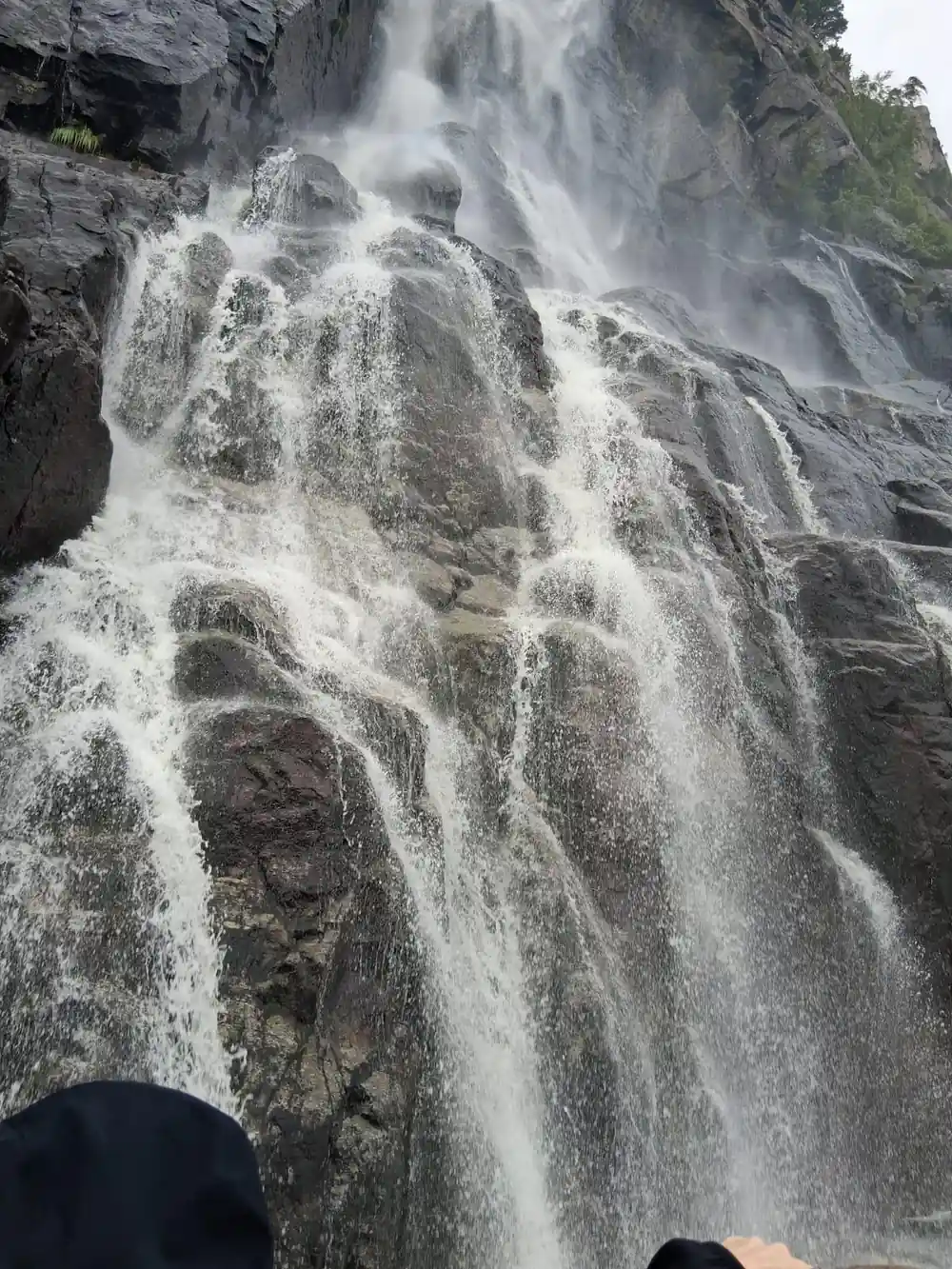
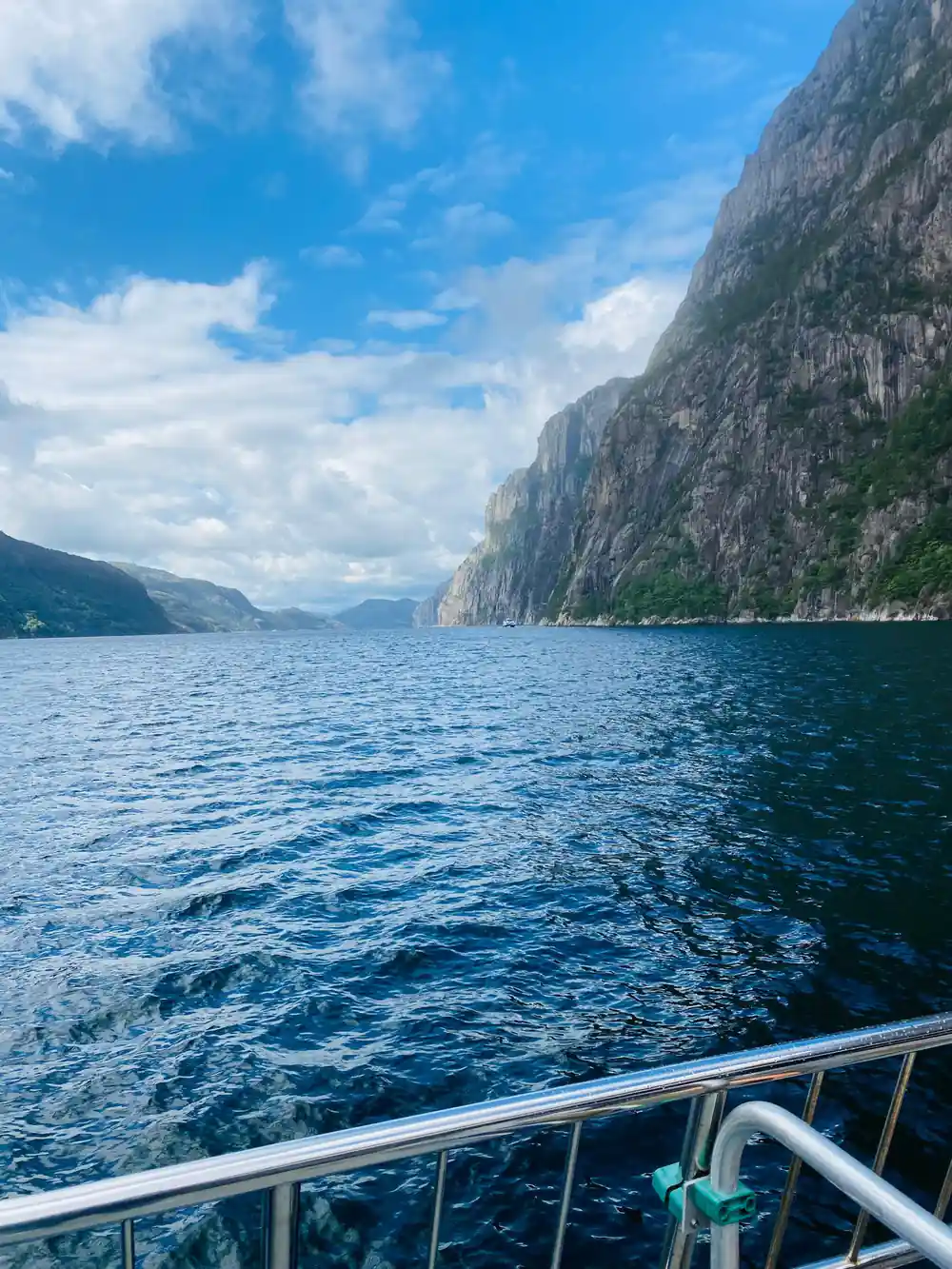
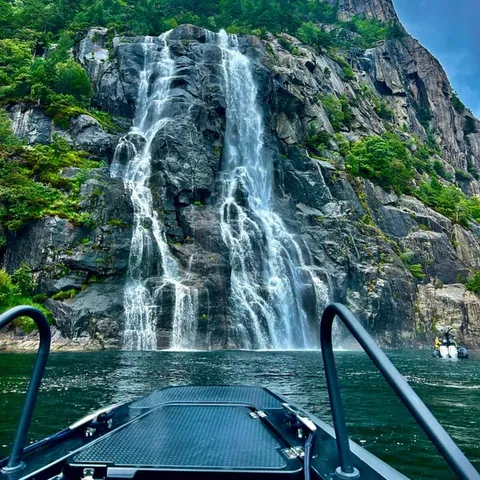
From the deck, that number matters. The cliff does not look like a viewpoint from below; it looks like a thin ledge pinned to a wall of grey rock, and the people standing on it are barely visible. The route calls at Fantahala in Rogaland, then Pulpit Rock, then Hengjanefossen Waterfall.[1] Hengjanefossen is the grand finale, a long fall that drops straight into the fjord, and a user tip on Komoot puts its height at around 400 metres.[11]
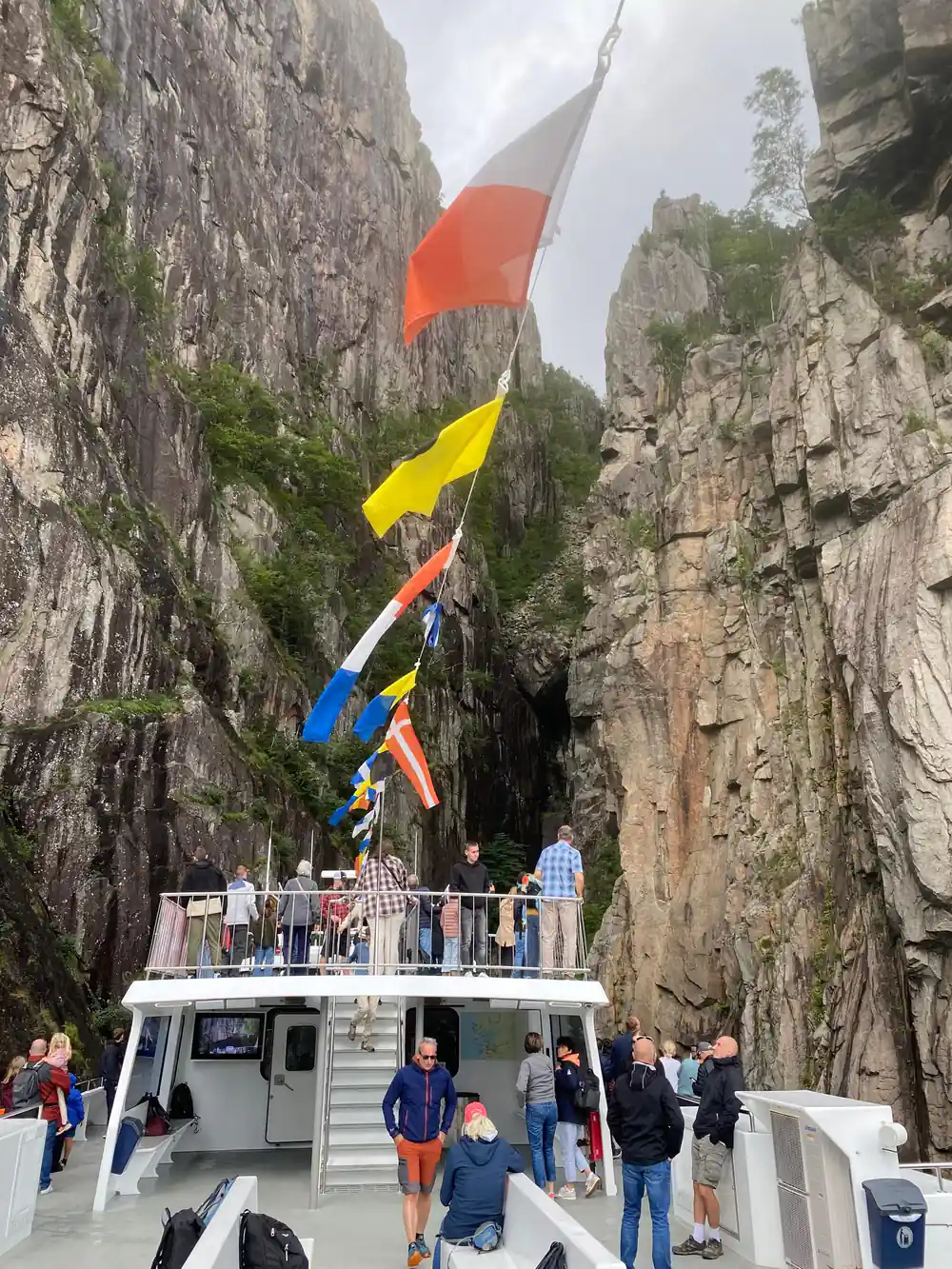
The boat itself is part of the experience. Brim Explorer's electric Lysefjord cruise is a 3.5-hour silent, hybrid-electric fjord cruise from Stavanger to see Preikestolen from the water.[12] With no engine noise, you hear the waterfalls before you see them, and conversation on deck stays easy. Bring a layer you can zip up, because the temperature drops once the boat is moving and the fjord shade does the rest.
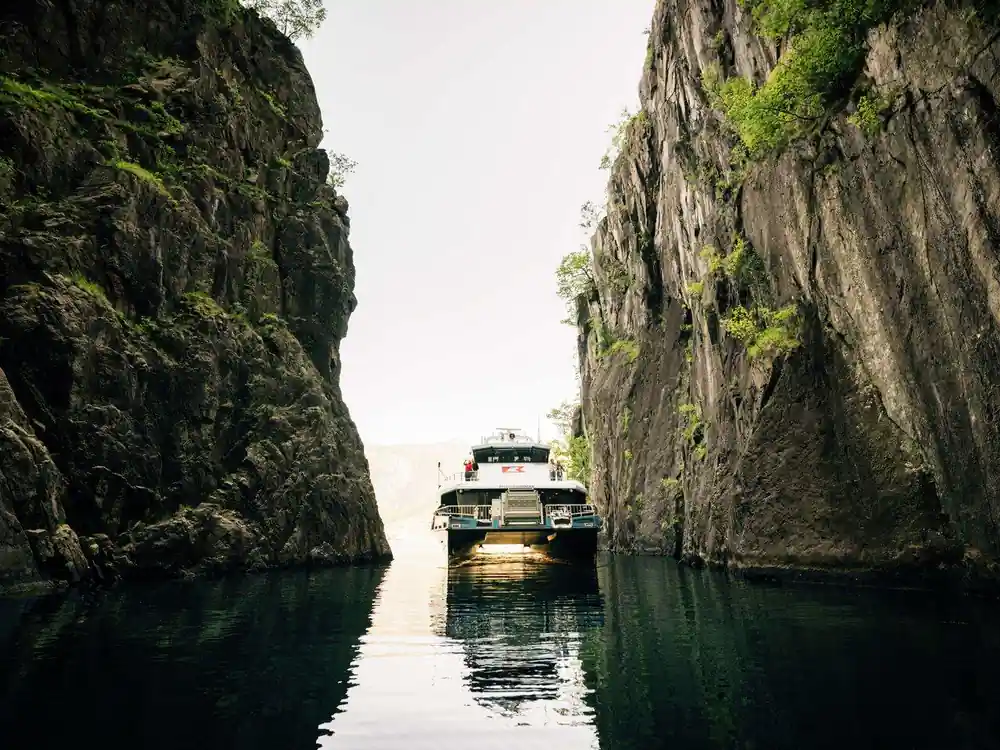
Preikestolen seen from the water on the Lysefjord cruise
What Geirangerfjord and Hardangerfjord Offer
Geirangerfjord is a narrow arm of water with steep sides that leave little room for roads, so it is mostly seen from a boat or from the viewpoints above the village of Geiranger. The waterfalls come in ribbons rather than single drops, and the old farms on the high ledges are the detail people remember longest. It is a place that rewards slow travel: a ferry ride through, a climb to a viewpoint, an evening on the water when the light softens.
Hardangerfjord spreads out more generously. Its slopes are gentler and there is more room for villages, orchards and quiet roads along the water. That makes it a good choice if you want to drive, cycle or walk beside a fjord rather than only cruise it, and it pairs naturally with a stay in Bergen. It is less dramatic in a single glance, but it gives you more variety over several days.
Hardangerfjord vs Lysefjord: Which Suits Your Trip
Hardangerfjord vs Lysefjord comes down to how much time you have and what you want to do at the end of the boat ride. Lysefjord is compact and close to a city: from Stavanger the Lysefjord is 41 miles (66 km) away and the drive takes around an hour and a half.[2] You can be on the water by mid-morning and back in the city for dinner, which is why it works so well for cruise passengers and short breaks.
Lysefjord is also unusually rich in things to do on foot. Preikestolen is the headline, but there is more: the Flørli stairs consist of 4444 steps[13], Lysevegen winds from Lysebotn with 27 hairpin bends[14], and the hike to Kjeragbolten is a strenuous 12 km trail to a boulder wedged 1,000 meters above Lysefjord.[15] Hardangerfjord gives you orchards, ferries and long shoreline walks instead. Choose Lysefjord for height and adrenaline, Hardangerfjord for space and a slower rhythm.
from US$75
The electric fjord cruise to Preikestolen runs 3.5 hours and is wheelchair accessible, with audio guides on board.[1]
Lysefjord or Geirangerfjord: Getting There From Stavanger
If you are arriving by ship, you are already in the right place. Cruise ships dock at Skagenkaien, Strandkaien or Skansekaien in Vågen, Stavanger's city-centre inner harbour.[8] The fjord boats leave from the same waterfront, so there is no transfer to arrange. Coming by train, the Sørlandsbanen from Oslo to Stavanger is operated by Vy and takes around seven to eight hours[16]. A long day, but a scenic one, and it drops you in the centre.
Geirangerfjord is a longer journey from Stavanger, and you usually reach it as part of a wider loop through western Norway, often with a night or two along the way. Local ferries and sightseeing boats do the work for you once you are there. On Lysefjord, the Kolumbus local ferry service runs year-round and calls at Lysebotn among other stops[17], which means the fjord is not only a summer destination.
Boat, RIB, Kayak or Hike: Choosing Your Day
Most people see Lysefjord from a boat, and there is plenty of choice. The electric cruise runs 3.5 hours[1]; the low-emission cruise to Lysefjord and Preikestolen runs 2.5 hours[6]; a RIB tour to Lysefjord and Preikestolen runs 2 hours[7]. RIB trips are fast and open, and the Lysefjord RIB safari is a two-hour boat trip[18] that puts you close to the rock walls. If you would rather paddle, Nordic Paddling organises private guided kayak tours on the Lysefjord for groups of up to 12 people.[19]
On foot, the Preikestolen hike is less than 10km (6.2 miles) long with an elevation gain of just over 600m, and takes about 3 to 4 hours to complete.[5] Guided versions take the logistics off your plate: a local guide hike runs 6 hours from US$168[20], and a small-group winter hike runs 9 hours from US$147[21]. The hiking trail to Preikestolen is open year-round, including during the winter off-season.[4]
What to Wear, When to Go and How to Book
Layers work better than one heavy jacket. Fjord weather changes quickly, the shade of the walls is cold even on a bright day, and spray from a RIB soaks anything loose. Waterproof shoes with grip matter on the Preikestolen trail, where the rock is worn smooth in places. Winter walking on the same trail needs proper boots, spikes and, for most visitors, a guide. The trail stays open all year[4], and the local ferry on the fjord runs year-round too[17], so a winter trip is genuinely possible.
For booking, the electric fjord cruise is rated 4.62 from 9,730 reviews[1], with reserve now and pay later and free cancellation up to 24 hours in advance for a full refund[1]. It is wheelchair accessible[1] and has an audio guide in English and Norwegian[1], which helps if you want the geology explained as you go. If you would rather sleep beside the water, The Bolder lodges are architecturally unique cabins in Lysefjorden designed to minimize environmental impact.[22]
Lysefjord boat trips from Stavanger by duration
What a Lysefjord day costs, in US dollars
Adult from-prices from each GetYourGuide listing. No separate child rate is listed, so the same from-price sits in the child field.[1][6][7][24]
When to go and when to book
How to plan your fjord day
Decide which fjord fits
If you are in Stavanger for a day, Lysefjord works; Geirangerfjord and Hardangerfjord need a longer loop through western Norway.
Pick your boat
Electric cruise, low-emission cruise, RIB or kayak all leave from the Stavanger waterfront, and the electric cruise takes 3.5 hours.[1]
Add the hike if you have legs left
The Preikestolen hike is less than 10km with just over 600m of ascent, and guided versions run from US$168.[5][20]
Dress for the water
Layers, a windproof outer shell and shoes with grip cover almost every fjord day, and spray is part of any RIB trip.
Book with flexibility
The electric cruise offers reserve now and pay later with free cancellation up to 24 hours in advance for a full refund.[1]
Ready to see Preikestolen from the water?
from US$76Reserve now & pay later